
Experiment Videos and Materials
Experiment Videos
When using these videos or other materials in public settings, please click on “Application for Use of Video Materials” at the bottom of each experiment introduction page. After agreeing to the “Terms of Use” described on the application page, submit your application for use.
-
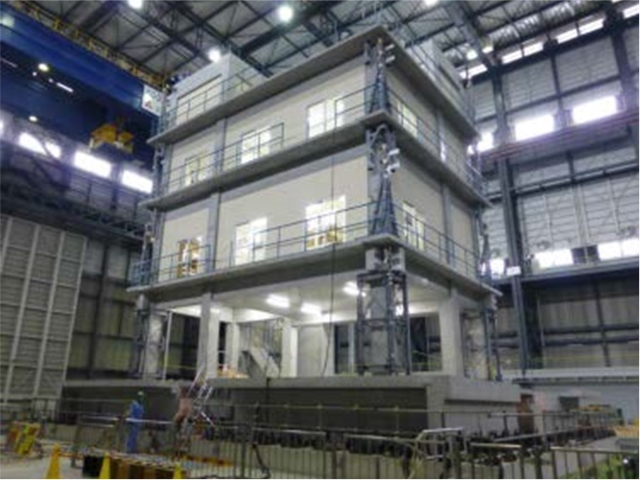
1301 Shake Table Test for Development of the Measure to Mitigate the Damage by Collision of Base-isolation Building to Retaining Wall
(Aug. 2013) ( Test Number: E201301 )Reinforced Concrete Isolation/Damping - Input Ground Motion
-
Aug. 26 - K-NET Furukawa motion (the 2011 off the Pacific coast of the Tohoku earthquake) 136%
Overall view: E201301_130826_1.mp4
Isolated building and retaining wall: E201301_130826_2.mp4
4F Art room: E201301_130826_3.mp4
4F Classroom: E201301_130826_4.mp4
-
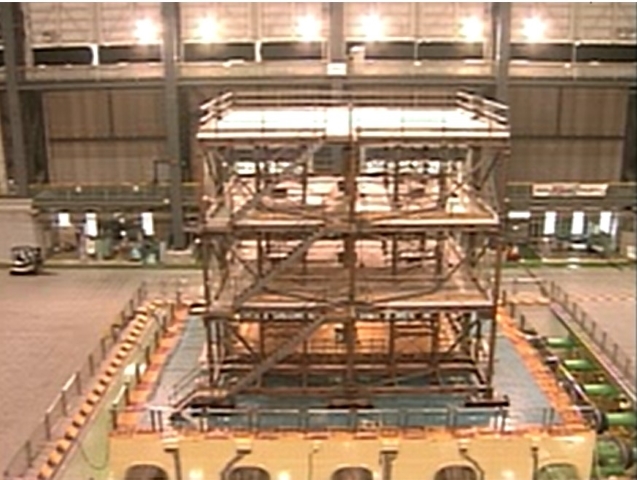
1303 Experimental Study on Seismic Measures for Steel Frame Buildings damaged by Past Earthquakes
(Oct. 2013) ( Test Number: E201303 )Steel Frame - Input Ground Motion
-
Oct. 10 - JR Takatori motion (the 1995 Southern Hyogo Prefecture Earthquake) 100%
Bird view: E201303_131010_ 1.mpeg
Overall view: E201303_131010_2.mpeg
Beam-end joint: E201303_131010_3.mpeg
-
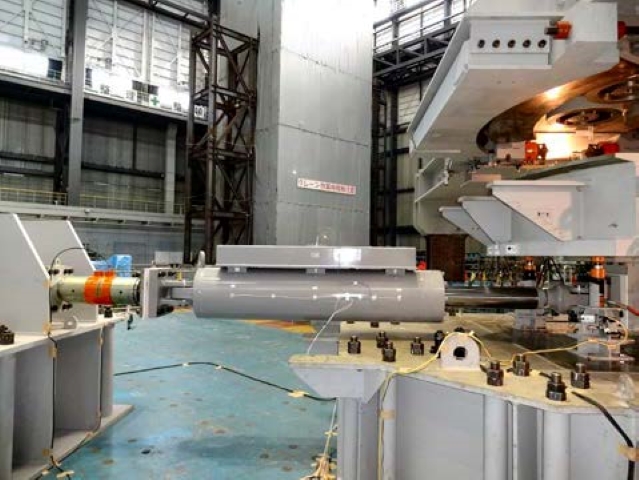
1304 Study on Verification Methods for Isolated Buildings in Long-period Earthquakes, Part 3
(Nov. 2013) ( Test Number: E201304 )Isolation/Damping - Input Ground Motion
-
Nov. 18 - Response displacement motion of seismic isolation buildings due to four-linked earthquakes
Overall view: E201304_131118_1.mp4
Oil damper: E201304_131118_2.mp4
Detailed view of oil damper: E201304_131118_3.mp4
-
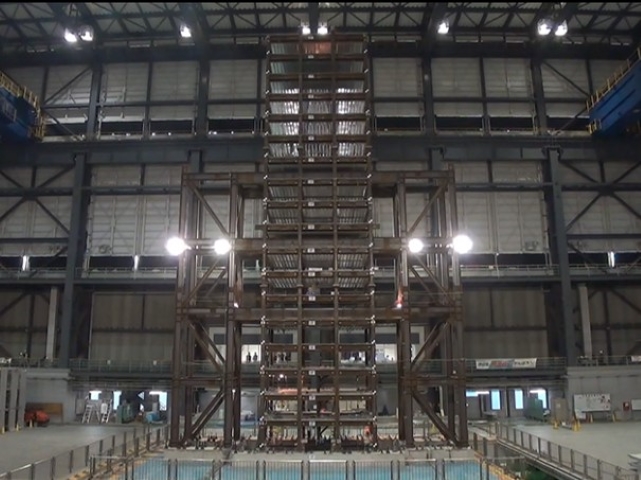
1305 Study for Quantifying Margin to Collapse of Steel Frame High-rise Buildings
(Dec. 2013) ( Test Number: E201305 )Steel Frame - Input Ground Motion
-
Dec. 11 - Nankai Trough Triple Earthquake 227.3 %
Overall view: E201305_131210_1.mp4
Column base at the 1st Floor: E201305_131210_2.mp4
Beam-column joint at the 2nd Floor: E201305_131210_3.mp4
-
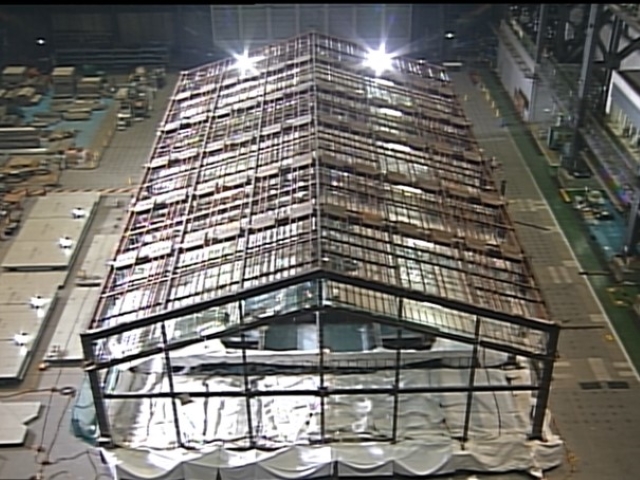
1306 Experiment on Non-Structural Components Installed in Large-Spanned Building Structures
(Jan. & Feb. 2014) ( Test Number: E201306 )Steel Frame Non-structural - Input Ground Motion
-
Jan. 28, Non-seismic-resistant ceiling
The 1st input of K-NET Sendai motion (the 2011 off the Pacific coast of the Tohoku earthquake) 50%: E201306_140128_1.wmv
The 2nd input of K-NET Sendai motion 50%: E201306_140128_2.wmv
Feb. 27, Seismic-resistant ceiling
K-NET Sendai motion 50%: E201306_140227.wmv
Feb. 28, Seismic-resistant ceiling
K-NET Sendai motion 100%: E201306_140228_1.wmv
JMA Kobe motion (the 1995 Southern Hyogo Prefecture Earthquake)100%: E201306_140228_2.wmv
JMA Kobe motion 150%: E201306_140228_3.wmv
-
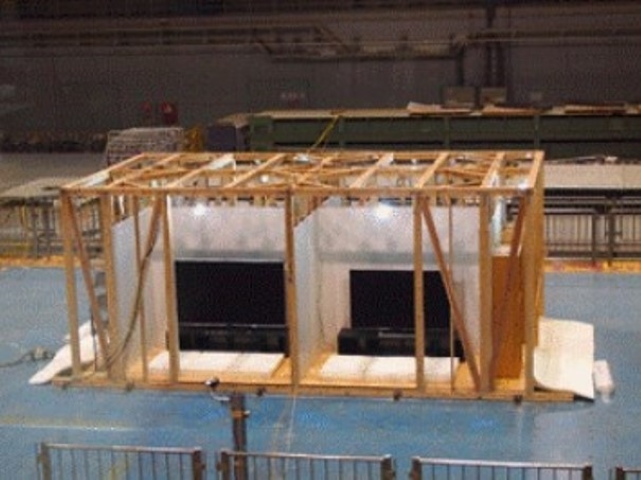
1307 Experiments to confirm Motion Reproducibility prior to Renovation Work on E-Defense Shake Table and to verify Performance under Future Anticipated Seismic Motions
(Mar. 2014) ( Test Number: E201307 )Furniture - Input Ground Motion
-
Mar. 19 - JR Takatori motion (the 1995 Southern Hyogo Prefecture Earthquake) 100%
Large televisions: E201307_140319_1.mp4
Bookshelves and refrigerators: E201307_140319_2.mp4
-
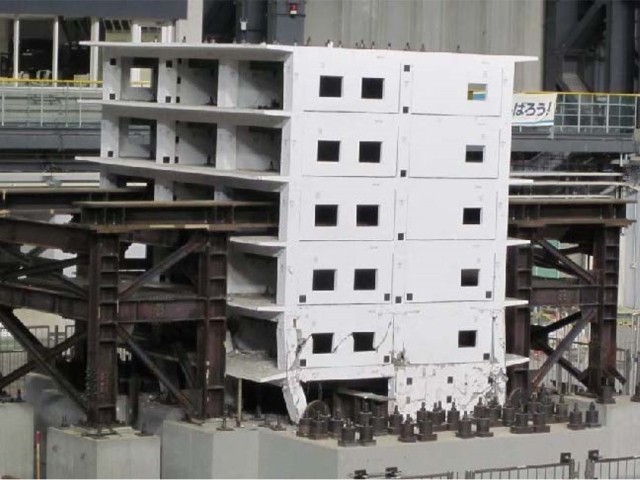
1401 Shake Table Experiment of Downsized 6-story RC Building with Earthquake Resisting Wall Frame
(Jan. 2015) ( Test Number: E201401 )Reinforced Concrete - Input Ground Motion
-
Jan. 22 - JMA Kobe motion (the 1995 Southern Hyogo Prefecture Earthquake) 140%
Overall view: E201401_150122_1.mp4
Wall at the 1st floor: E201401_150122_2.mp4
Wall at the 2nd floor: E201401_150122_3.mp4
-
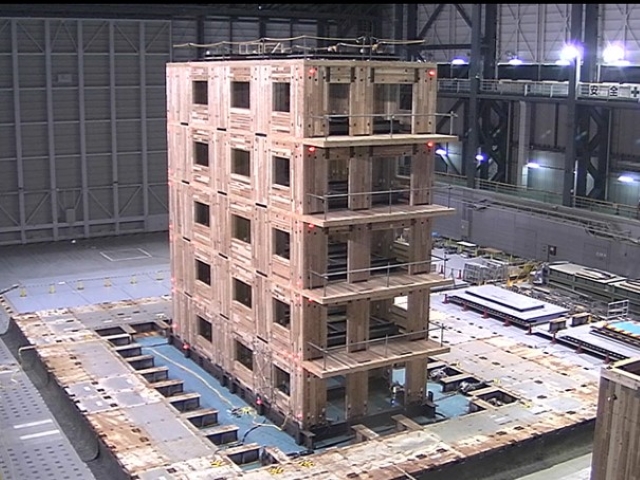
1402 Shaking Table Testing to verify the Seismic Performance of CLT Buildings
(Feb. 2015) ( Test Number: E201402 )Timber - Input Ground Motion
-
Feb. 10, 2015 5-story CLT building - JMA Kobe motion (the 1995 Southern Hyogo Prefecture Earthquake) 100%
Overall view: E201402_150210_1.wmv
Around the opening: E201402_150210_2.wmv
-
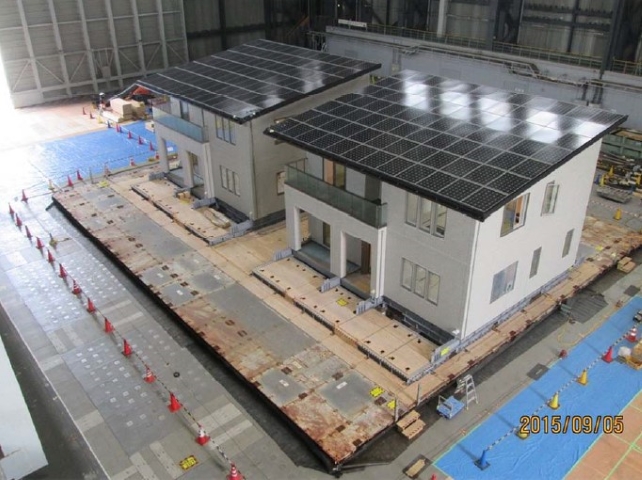
1504 Verification of Seismic Behavior and Structural Integrity of Single-Family Houses subjected to Large Earthquakes
(Aug. & Sep. 2015) ( Test Number: E201504 )Timber Isolation/Damping - Input Ground Motion
-
Sep. 1, Seismic control house specimens - JR Takatori motion (the 1995 Southern Hyogo Prefecture Earthquake) 100%
Overall view E201504_150901_1.wmv
In-room 1: E201504_150901_2.wmv
In-room 2: E201504_150901_3.wmv
-
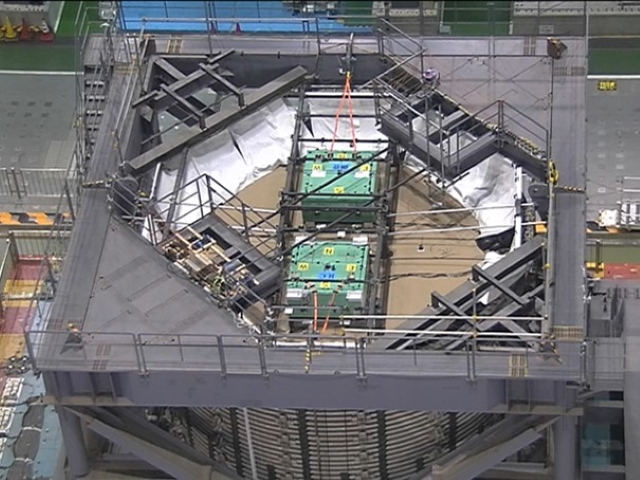
1505 Shaking Table Experiment to verify Monitoring Technology of Earthquake-induced Damage along Pile Foundation
(Oct. 2015) ( Test Number: E201505 )Geotech - Input Ground Motion
-
Oct. 20 - JR Takatori motion (the 1995 Southern Hyogo Prefecture Earthquake) 60%
Superstructure and footing: E201505_151020_1.mp4 )
Superstructure supported by RC piles: E201505_151020_2.mp4
Overall view from North: E201505_151020_3.mp4
Overall view from East: E201505_151020_4.mp4
-
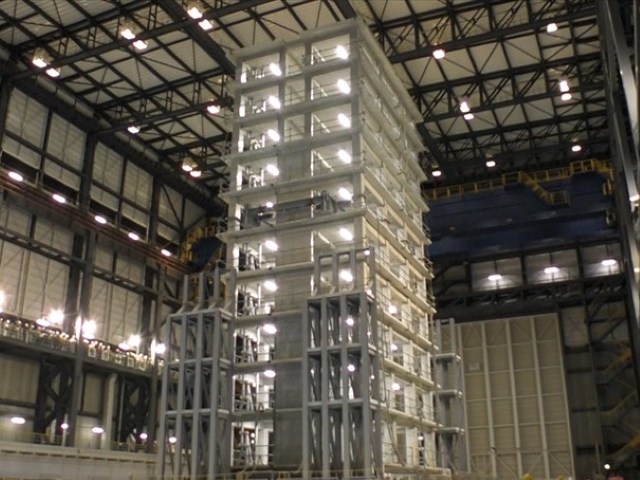
1506 Experiments on the Collapse Mechanism of a 10-story RC Structure based on the Current Seismic Design Standards and on Popular High-seismic-resistant Technology
(Dec. 2015) ( Test Number: E201506 )Reinforced Concrete - Input Ground Motion
-
Dec. 11 - JMA Kobe motion (the 1995 Southern Hyogo Prefecture Earthquake) 100%
Overall view: E201506_151211_1.wmv
Beam-column joint at the fourth floor: E201506_151211_2.wmv
-
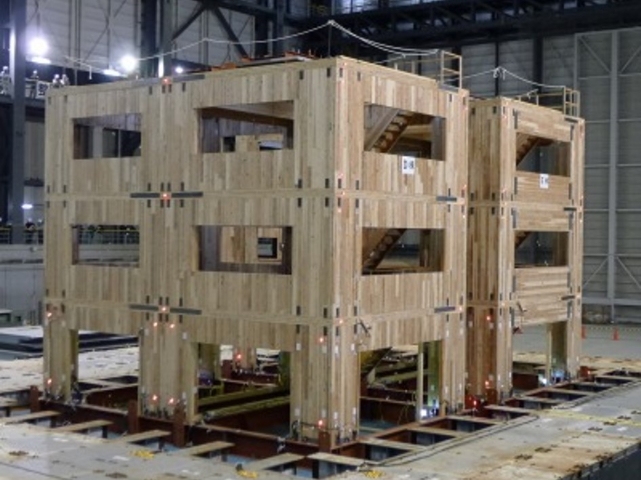
1508 Verification Experiments on Seismic Performance of CLT Buildings
(Jan. 2016) ( Test Number: E201508 )Timber - Input Ground Motion
-
Jan. 26 - JMA Kobe motion (the 1995 Southern Hyogo Prefecture Earthquake) 120%
Overall view: E201508_160126_01.wmv
Around the opening: E201508_160126_02.wmv
-
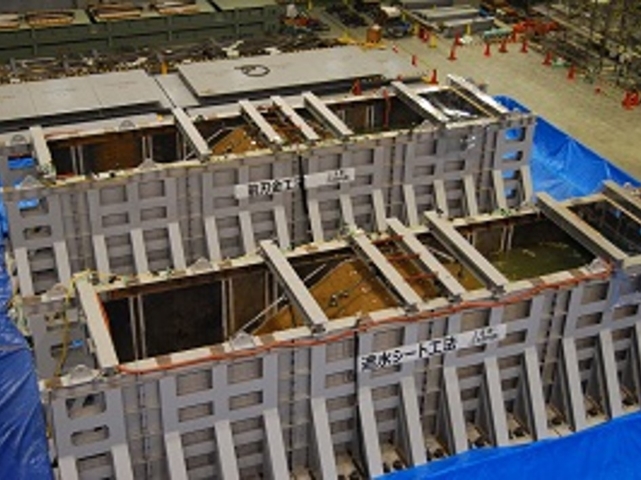
1511 Verification Experiment on Seismic Performance of Embankment with Impermeable Sheet for Irrigation Pond
(Mar. 2016) ( Test Number: E201511 )Geotech - Input Ground Motion
-
Mar. 18 - 60 cycles of 5 Hz sinusoidal motion
Top view: E201511_160318_1.wmv
Bird view from West: E201511_160318_2.wmv
Bird view from the South: E201511_160318_3.wmv
Right behind the embankment: E201511_160318_4.wmv
- Compilation Video
-
E201511_sum.mp4 -
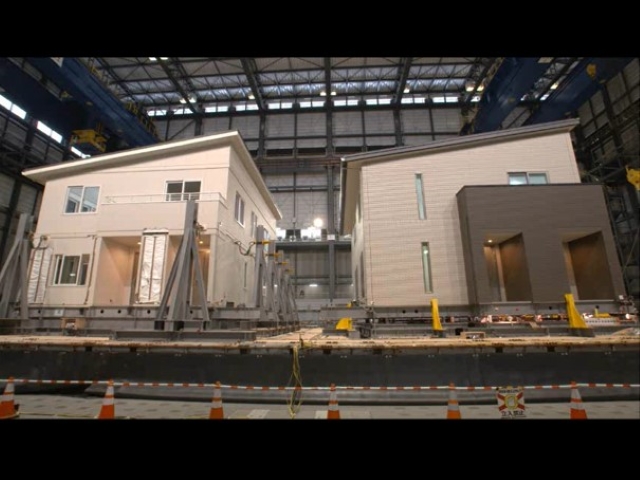
1601 Seismic Performance Evaluation Tests of Wooden Houses and Carports in Recent Large Earthquakes
(Jan. 2017) ( Test Number: E201601 )Timber Isolation/Damping Equipment - Input Ground Motion
-
Jan. 23, seismically reinforced house and isolated house - JMA Mashiki (aftershock in the 2016 Kumamoto Earthquake) 100 %
Bird view from North-east: E201601_170123_1.mp4
Overall and isolation layer: E201601_170123_2.mp4
Indoor at the 1st floor in the reinforced house: E201601_170123_3.mp4
Indoor at the 1st floor in the isolated house: E201601_170123_4.mp4
-
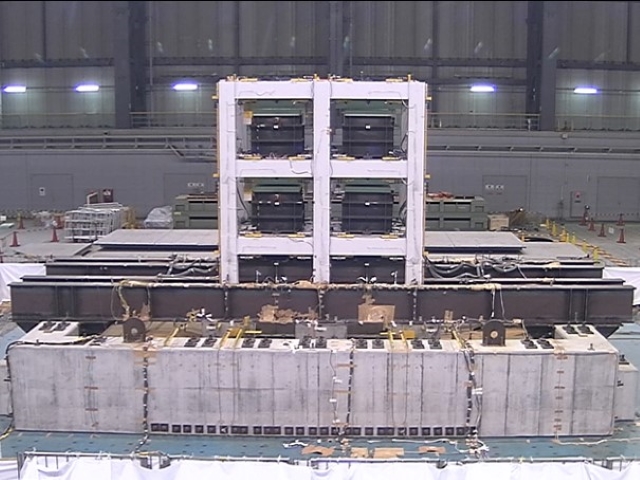
1602 Shake Table Experiment of RC Frame Building and Pile Foundation to verify Monitoring Technology
(Feb. 2017) ( Test Number: E201602 )Reinforced Concrete Geotech - Input Ground Motion
-
Feb. 6 - Artificial motion simulated by assuming Magnitude 8.0, Depth of epicenter 30 km, and Distance from epicenter 50 km 300%
Column base at the first floor: E201602_170206_1.mp4
Footing: E201602_170206_2.mp4
Steel beam close to the top of the soil container: E201602_170206_3.mp4
Overall view from North: E201602_170206_4.mp4
-
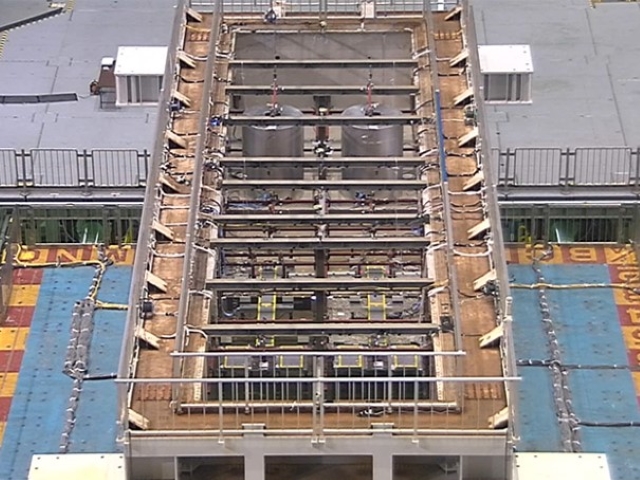
1603 Large-scale Verification Experiment of Diagnosis of Liquefaction (Earthquake Resistance) and Technological Measures to Industrial Complex in Coastal Reclaimed Land
(Feb. 2017) ( Test Number: E201603 )Geotech - Input Ground Motion
-
Feb.23 - Expected motion from a Mw7.3 near-field earthquake in Tokyo Bay area 100%
Pier-type quay wall: E201603_170223_1.mp4
Oil storage tank: E201603_170223_2.mp4
Right behind the seawall (in the section with countermeasure): E201603_170223_3.mp4
Right behind the seawall (in the section without countermeasure): E201603_170223_4.mp4
-
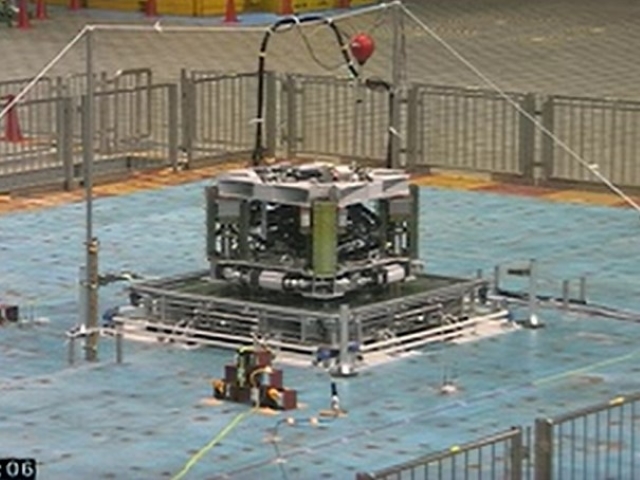
1701 Verification Experiment of Super Base-isolation System
(Jun. 2017) ( Test Number: E201701 )Isolation/Damping - Input Ground Motion
-
Jun. 16 - JR Takatori motion (the 1995 Southern Hyogo Prefecture Earthquake) 100%
Overall view from North-west: E201701_170616.mpeg
-
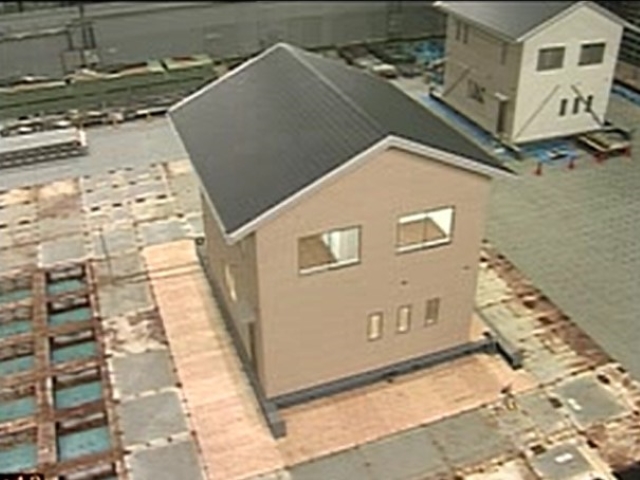
1703 Experiments on Verification of Seismic Performance of Wooden Houses with Different Seismic Grades
(Oct. 2017) ( Test Number: E201703 )Timber - Input Ground Motion
-
Oct. 31, The house with seismic grade 5 - KiK-net Mashiki motion (mainshock in the Kumamoto Earthquake) 100 %
Bird view from South-east: E201703_171031_1.wmv
Bird view from West: E201703_171031_2.wmv
-
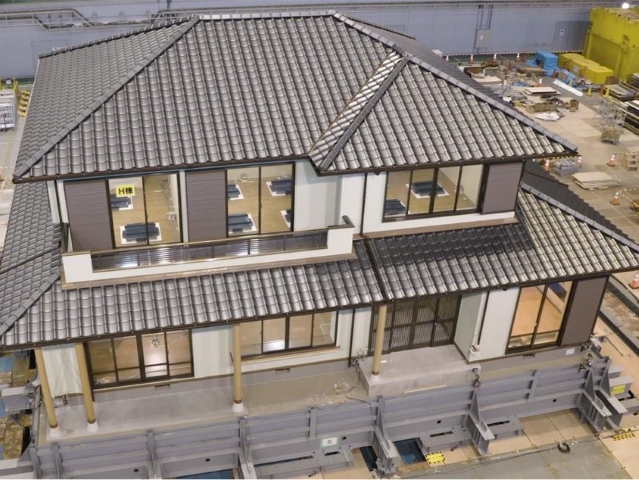
1704 Evaluation of Seismic Performance of Wooden Houses in Recent Large Earthquakes
(Nov. 2017) ( Test Number: E201704 )Timber - Input Ground Motion
-
Nov. 9, the houses with seismic grade 3 and seismic grade 5 - Simulated motion in Nankai Trough Earthquake in Nagoya 100 %
Overall view from South: E201704_171109_1.mpeg
Indoor at the 1st floor in the house with seismic grade 3: E201704_171109_2.mpeg
Indoor at the 1st floor in the house with seismic grade 5: E201704_171109_3.mpeg
-
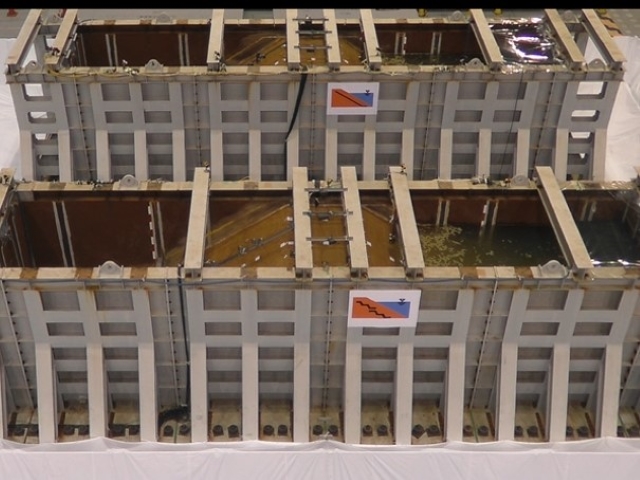
1706 Study on Seismic Performance of Embankment for Irrigation Pond with Impermeable Sheet Method
(Jan. 2018) ( Test Number: E201706 )Geotech - Input Ground Motion
-
Jan. 12 - 60 cycles of 5 Hz sinusoidal motion
Bird view from West: E201706_180112_1.wmv
Bird view from East: E201706_180112_2.wmv
Top of embankment in the straight sheet laying: E201706_180112_3.wmv
Top of embankment in the stepped sheet laying: E201706_180112_4.wmv
-
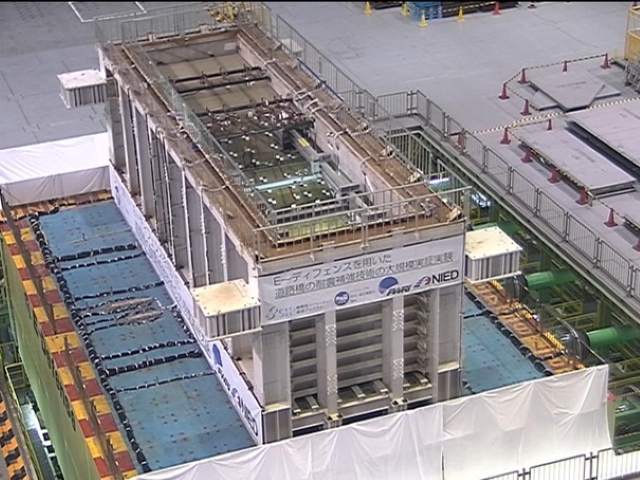
1707 Large-scale Verification Experiment on Seismic Retrofitting Technology of Road Bridge Foundation on Liquefiable Ground
(Feb. 2018) ( Test Number: E201707 )Geotech - Input Ground Motion
-
Feb. 15 - Equivalent to Level 2 seismic motion as defined in the Specifications for Highway Bridges
Overall view: E201707_180215_1.wmv
Top view: E201707_180215_2.wmv
Bridge abutment (reinforced section): E201707_180215_3.wmv
Front of the slope: E201707_180215_4.wmv )
-
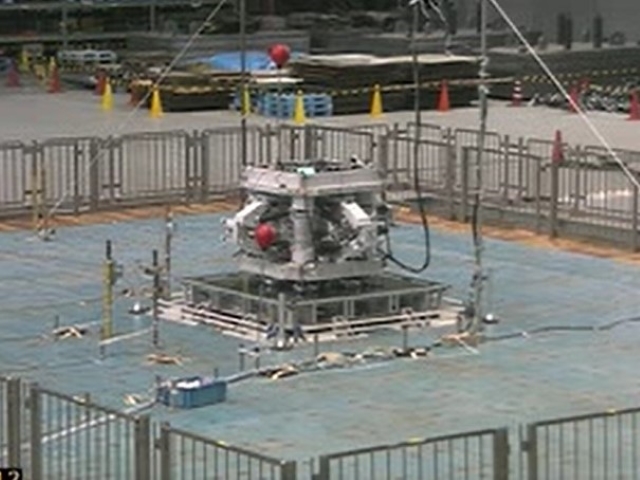
1709 Test for Improvement in Vertical Isolation Performance of Small Seismic Isolation Device
(Mar. 2018) ( Test Number: E201709 )Isolation/Damping - Input Ground Motion
-
Mar. 20 - JR Takatori motion (the 1995 Southern Hyogo Prefecture Earthquake) 100%: E201709_180320.mpeg
-
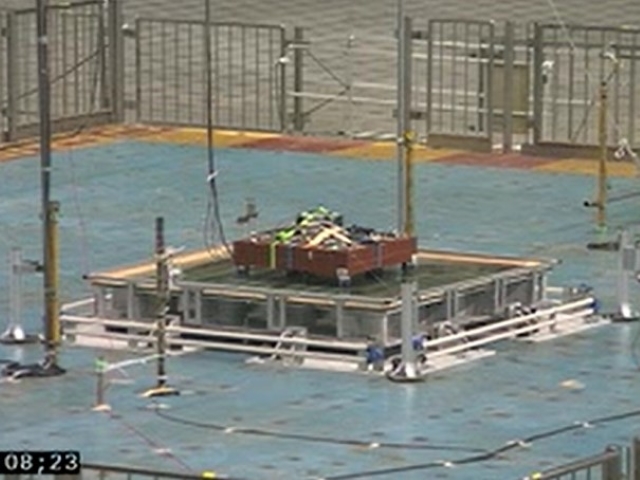
1803 Performance Verification Test of Small Seismic Isolation Device under High Vertical Loading
(Aug. 2018) ( Test Number: E201803 )Isolation/Damping - Input Ground Motion
-
Aug. 9 - Kumamoto Foreshock (the 2016 Kumamoto Earthquake) 120%: E201803_180809.mpeg
-
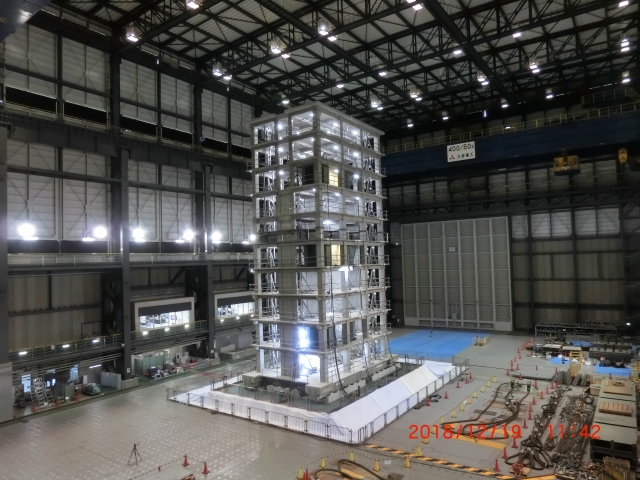
1805 Experiment on Seismic Performance of High Earthquake Resistance RC Building and Popular-type High Seismic Performance Technology
(Dec. 2018 & Jan. 2019) ( Test Number: E201805 )Reinforced Concrete - Input Ground Motion
- Jan. 9 - JMA Kobe motion (the 1995 Southern Hyogo Prefecture Earthquake) 100%: E201805_190109.mpeg
-
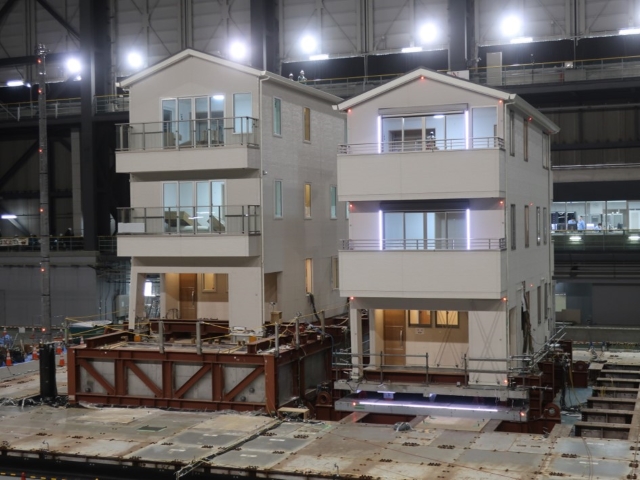
1806 E-Defense Experiment to verify the Function of 3-story Wooden Building including Underground Piping Equipment
(Jan. & Feb. 2019) ( Test Number: E201806 )Timber Geotech Isolation/Damping Non-structural Equipment Furniture - Input Ground Motion
-
Jan. 31 - JMA Kobe motion (the 1995 Southern Hyogo Prefecture Earthquake) 100%
Overall view from North E201806_190131_1.mp4
Overall view from South: E201806_190131_2.mp4
Dining room at the first floor of the isolated house: E201806_190131_3.mp4
Bedroom at the second floor of the seismic-resistant house: E201806_190131_4.mp4
-
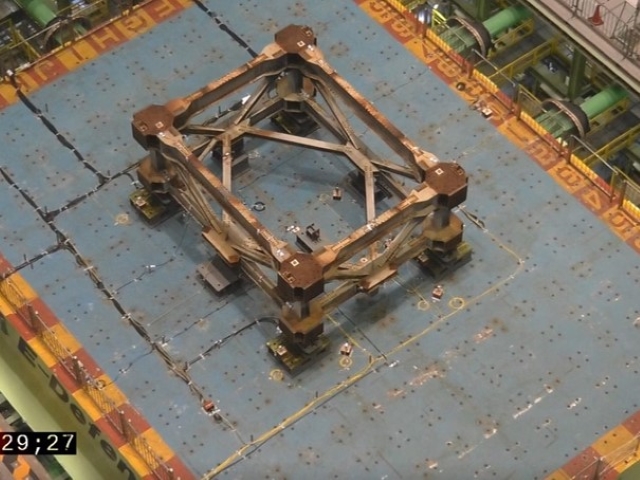
1901 Shaking Table Tests of Semi-active Seismic Isolation Structures for Performance Evaluation of Seismic Control Systems
(Jul. 2019) ( Test Number: E201901 )Isolation/Damping - Input Ground Motion
-
Jul. 5 - JR Takatori motion (the 1995 Southern Hyogo Prefecture Earthquake) NS-component in Y-direction 40%: E201901_190705.mp4
-
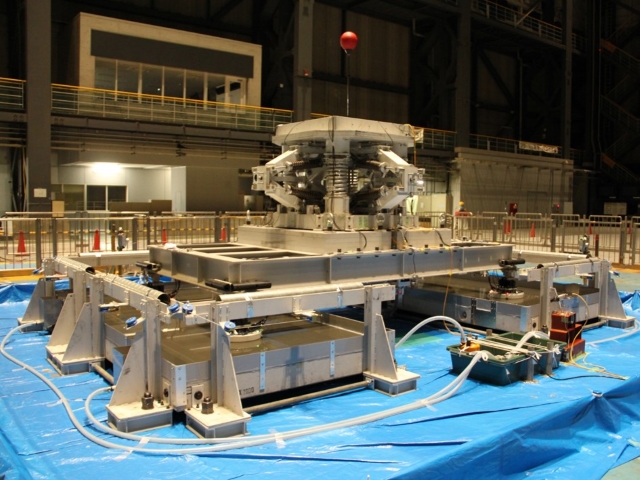
1902 Performance Verification Test of Seismic Isolation Device Installed under Steel Stand
(Jul. 2019) ( Test Number: E201902 )Isolation/Damping - Input Ground Motion
-
Jul. 18 - Kumamoto mainshock (the 2016 Kumamoto Earthquake) 100%: E201902_190718.mp4
-
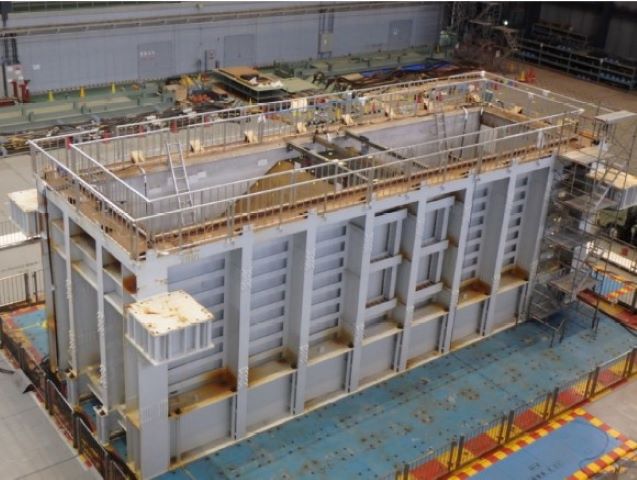
1904 Verification Experiment for Practical Implementation of Economical Seismic Retrofitting Method for Existing Embankment by using Sandbag Structure
(Nov. 2019) ( Test Number: E201904 )Geotech - Input Ground Motion
-
Oct. 15- 5Hz Sine motion 450Gal
Bird view: E201904_191015_1.mp4
Front of the slope on the side of one-step-type sandbag: E201904_191015_2.mp4
Front of the slope on the side of two-step-type sandbag: E201904_191015_3.mp4
Pavement of the top of the embankment: E201904_191015_4.mp4
-
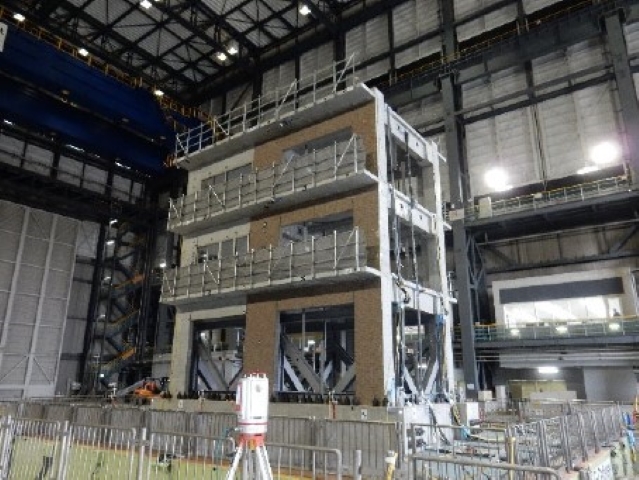
1905 Shaking Experiment to develop the Method for Evaluation of Safety and Continuous Usage of Disaster Bases
(Dec. 2019) ( Test Number: E201905 )Reinforced Concrete - Input Ground Motion
-
Dec. 4 - Artificial motion in Y-direction
Overall view from South: E201905_191204_1.wmv.wmv
Above ceiling at the second floor: E201905_191204_2.wmv.wmv
The first and the second floors from South: E201905_191204_3.wmv.wmv
-
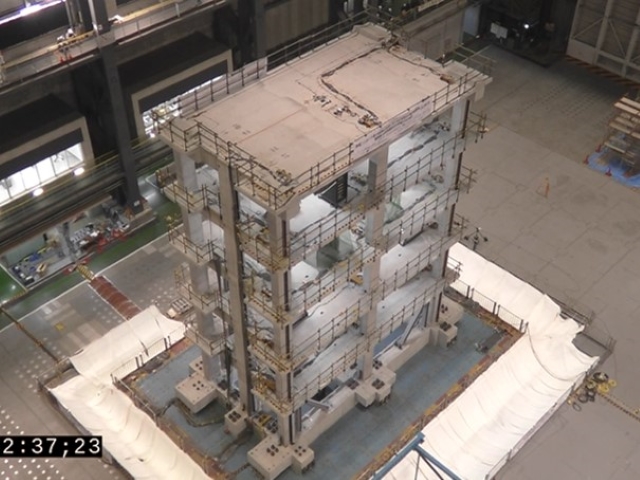
2002 Experiment of Evaluation of Yield Point and Attenuation of 5-story RC Construction Building / Medium-rise RC Construction Building
(Oct. 2020) ( Test Number: E202002 )Reinforced Concrete - Input Ground Motion
-
Oct. 19 - Notice wave El Centro NS-component wave phase 125%
Overall view: E202002_201019_1.mp4
4F & 5F: E202002_201019_2.mp4
1301
Shake Table Test for Development of the Measure to Mitigate the Damage by Collision of Base-isolation Building to Retaining Wall
(Aug. 2013) (
Test Number: E201301 )
Seismic isolation technology is one of the most effective methods for not only reducing damage to buildings during earthquakes, but also for maintaining the functionality of buildings. Some of the seismic isolation buildings experienced the 2011 off the Pacific coast of Tohoku Earthquake, and they greatly contributed to reducing the damage to the buildings. However, there were some cases where the damage had a negative impact on the functionality of the buildings, such as the runaway of equipment with casters inside the room, and it has become clear that earthquake countermeasures are also necessary for seismic isolation buildings. In addition, in recent years, there have been concerns about the lack of verification of the safety of seismic isolation devices that are repeatedly subjected to large deformations due to long-period, long-duration seismic motion, which has not been considered in most designs to date. Therefore, a seismic isolation building and retaining wall were placed on the E-Defense shake table, and seismic motions observed in the 1995 Southern Hyogo Prefecture Earthquake and the 2011 Tohoku Pacific Offshore Earthquake were input. As a result, it became clear that if the clearance between the base-isolated building and the surrounding retaining wall is not designed appropriately, there is a possibility that the base-isolated building will collide with the retaining wall.
Detailed information and acquired data and images from this experiment are available in E-Defense Data Archive, ASEBI.
DOI: https://doi.org/10.17598/NIED.0020-E201301
Experiment Overview: E201301.pdf
Application for Use of Video Materials
×
1303
Experimental Study on Seismic Measures for Steel Frame Buildings damaged by Past Earthquakes
(Oct. 2013) (
Test Number: E201303 )
In the 1995 Southern Hyogo Prefecture Earthquake, there were cases of damage associated with the rupture of beam end welded joints in steel-frame buildings with new seismic design standards. On the other hand, there were many cases where the damage to the exterior materials was relatively minor, and it was difficult to detect damage to the joints just by visual inspection of the exterior, and there were concerns that undetected damage remained. In light of this background, this experimental research was conducted with the aim of developing technology to estimate the soundness of steel-frame buildings and estimating the extent of damage to steel-frame buildings damaged in past earthquakes when the Nankai Trough Mega Earthquake occurs as collaboration with Hyogo Prefecture and Kobe University. In the experiment, a full-scale three-story steel-frame building was constructed, and the JR Takatori motion and expected motion in the Nankai Trough earthquake in Kobe area were input to the building. The measurement data and images obtained in this experiment are available.
Detailed information and acquired data and images from this experiment are available in E-Defense Data Archive, ASEBI.
DOI: https://doi.org/10.17598/NIED.0020-E201303
Experiment Overview: E201303.pdf
Application for Use of Video Materials
×
1304
Study on Verification Methods for Isolated Buildings in Long-period Earthquakes, Part 3
(Nov. 2013) (
Test Number: E201304 )
In past earthquake disasters, seismic isolation buildings have demonstrated their performance and significantly contributed to mitigating damage. However, in the anticipated Nankai Trough mega-earthquake, long-period ground motions with durations of several seconds to tens of seconds are expected to occur, and the duration of seismic ground motion could extend to several minutes to tens of minutes. This could result in ground motions exceeding those experienced during the 2011 off the Pacific coast of the Tohoku earthquake, potentially subjecting seismic isolation buildings to more severe shaking. To prepare for such earthquakes, it is an urgently required task to evaluate the performance of seismic isolation components, ensure their quality, and establish testing methods.
In light of the above, as part of the Ministry of Land, Infrastructure, Transport and Tourism's Building Standards Improvement Promotion Project, a series of repeated shaking tests were conducted using E-Defense to evaluate the long-period and long-duration seismic motion response of full-scale seismic isolation components. The tests aimed to thoroughly understand the repeated deformation capacity and energy dissipation performance of these components under long-period and long-duration seismic motions. The seismic isolation damping components tested in this experiment were lead dampers and two types of oil dampers. Typically, in E-Defense experiments, a full-scale building is mounted on a shake table and shaken with seismic motions to reproduce the behavior of the building and earthquake-induced damage phenomena. However, a distinctive feature of this experiment is that the shake table was used as a dynamic loading device. Through this experiment, the load-displacement relationship and energy dissipation characteristics of various seismic isolation and damping components were confirmed.
Detailed information and acquired data and images from this experiment are available in E-Defense Data Archive, ASEBI.
DOI: https://doi.org/10.17598/NIED.0020-E201304
Experiment Overview: E201304.pdf
Application for Use of Video Materials
×
1305
Study for Quantifying Margin to Collapse of Steel Frame High-rise Buildings
(Dec. 2013) (
Test Number: E201305 )
As part of the Ministry of Education, Culture, Sports, Science and Technology (MEXT)-commissioned research project titled “Special Project for Reducing Vulnerability in Urban Mega Earthquake Disasters - develop technology for rapid damage assessment of high-rise office buildings which may be damaged during earthquakes,” for the purposes of “quantifying the collapse margin of steel-framed high-rise buildings” and “developing a monitoring system for evaluating building integrity,” the E-Defense shake table experiment was conducted on steel-framed high-rise buildings. This experiment involved gradually inducing damage until collapse to verify the building's margin of safety, etc. As the test specimen, a 1/3-scale model of an 18-story steel-frame building designed and constructed in the 1980s to 1990s was fabricated (1×3 spans, plan dimensions 5×6 m, height 25.3 m, weight approximately 420 tons). This test specimen was the world's largest of its kind for shake table testing. When the simulated earthquake motions developed for the “Nankai Trough Triple Earthquake” were applied to the test specimen, collapse modes similar to those expected were confirmed.
Detailed information and acquired data and images from this experiment are available in E-Defense Data Archive, ASEBI.
DOI: https://doi.org/10.17598/NIED.0020-E201305
Experiment Overview: E201305.pdf
Application for Use of Video Materials
×
1306
Experiment on Non-Structural Components Installed in Large-Spanned Building Structures
(Jan. & Feb. 2014) (
Test Number: E201306 )
In a project to experimental research large-scale buildings in school facilities, shaking tests were conducted using a test specimen that simulated a gymnasium with the world's largest area of ceiling test specimen, and the damage caused by the falling of suspended ceilings in many facilities during the 2011 Tohoku Pacific Offshore Earthquake was reproduced. Through this experiment, it was possible to capture on film for the first time in the world the process of the metal fittings of suspended ceilings attached to actual buildings coming loose and the ceiling falling. In addition, the effectiveness of the fail-safe function, which prevents human injury by catching the falling ceiling and stopping it from reaching the floor, was also confirmed. Experiments were also conducted on ceilings (earthquake-resistant ceilings) that complied with the technical standards enacted in April 2014, and it was confirmed that they were able to withstand the shaking of the 2011 Tohoku Earthquake, which was more than double that assumed in the design.
Detailed information and acquired data and images from this experiment are available in E-Defense Data Archive, ASEBI.
DOI: https://doi.org/10.17598/NIED.0020-E201306
Experiment Overview: E201306.pdf
Application for Use of Video Materials
×
1307
Experiments to confirm Motion Reproducibility prior to Renovation Work on E-Defense Shake Table and to verify Performance under Future Anticipated Seismic Motions
(Mar. 2014) (
Test Number: E201307 )
【Experiment in renting extra space by Kitagawa Industries Co., Ltd.】
Prior to the renovation of the E-Defense shaking table, a shake table test was conducted to confirm the reproducibility of the input ground motion. At that time, the extra space on the shaking table was used to conduct verification tests on furniture and fixture anti-tip devices. Test specimens consisting of large televisions, bookshelves, refrigerators, and racks were placed on the table, and the performance of the anti-tip devices was verified by comparing cases with and without the devices.
Detailed information and acquired data and images from this experiment are available in E-Defense Data Archive, ASEBI.
DOI: https://doi.org/10.17598/NIED.0020-E201307
Application for Use of Video Materials
×
1401
Shake Table Experiment of Downsized 6-story RC Building with Earthquake Resisting Wall Frame
(Jan. 2015) (
Test Number: E201401 )
The 2011 off the coast of Tohoku earthquake, the largest earthquake ever recorded in Japan, caused unprecedented damage mainly in eastern Japan, disrupting business and daily life in the Tokyo metropolitan area for an extended period and highlighting the vulnerability of large cities. As part of the Ministry of Education, Culture, Sports, Science and Technology (MEXT)-commissioned research project titled “Special Project for Reducing Vulnerability in Urban Mega Earthquake Disasters - develop technology for rapid damage assessment of high-rise office buildings which may be damaged during earthquakes,” a large-scale shake table experiment was conducted at the E-Defense facility. The experiment aimed to verify the detailed damage progression characteristics of buildings until full collapse, quantify the collapse margin of reinforced concrete buildings, and validate a monitoring system for assessing building integrity. In this experiment, reinforced concrete buildings were subjected to gradual destruction until collapse to verify their residual capacity and other characteristics.
A 30% scaled-down test specimen of a six-story reinforced concrete building (plan dimensions: 4.6 m × 5.4 m, height: 6.5 m, weight: approximately 320 tons) designed and constructed in accordance with current building codes was constructed. The test specimen was subjected to input of seismic waves observed during the 1995 Great Hanshin Earthquake (JMA Kobe motion). The results of the experiment provided a large amount of data on the damage progression process leading to collapse of structural members, as well as the relationship between the failure of walls and columns and the overall safety of the building.
Detailed information and acquired data and images from this experiment are available in E-Defense Data Archive, ASEBI.
DOI: https://doi.org/10.17598/NIED.0020-E201401
Application for Use of Video Materials
×
1402
Shaking Table Testing to verify the Seismic Performance of CLT Buildings
(Feb. 2015) (
Test Number: E201402 )
CLT (Cross Laminated Timber) is a wood-based material created by bonding layers of sawn boards (laminas) at right angles to each other to form panels. In Europe and North America, there are numerous examples of mid- to high-rise buildings constructed using CLT panels. In Japan as well, CLT panels are regarded as a promising building material for enabling mid-to-high-rise wooden buildings; however, to realize this in earthquake-prone Japan, it is necessary to establish new structural design methods. In light of the circumstances described above, an E-Defense experiment was conducted to collect data aimed at developing structural design methods for buildings using CLT panels. Two test structures were constructed: a five-story mid-rise building and a three-story low-rise building. Earthquake motions specified by the Building Standards Law and observed seismic motions from the 1995 Southern Hyogo Prefecture Earthquake were input into the structures.
Detailed information and acquired data and images from this experiment are available in E-Defense Data Archive, ASEBI.
DOI: https://doi.org/10.17598/NIED.0020-E201402
Application for Use of Video Materials
×
1504
Verification of Seismic Behavior and Structural Integrity of Single-Family Houses subjected to Large Earthquakes
(Aug. & Sep. 2015) (
Test Number: E201504 )
【Facility Rental Experiment Conducted by H.R.D. Singapore Pte. Ltd., Ichijo Housing Research Institute Co., and Ichijo Co., Ltd.】
To verify the seismic damping effects, the performance of high-strength load-bearing walls, and the maintenance of airtightness and thermal insulation performance after an earthquake in single-family wooden houses, E-Defense experiments were conducted on seven full-scale wooden house specimens over a period of approximately two months. The results clearly indicate that there is no significant difference in building damage with or without seismic damping devices, as well as many other findings.
Detailed information and acquired data and images from this experiment are available in E-Defense Data Archive, ASEBI.
DOI: https://doi.org/10.17598/NIED.0020-E201504
Application for Use of Video Materials
×
1505
Shaking Table Experiment to verify Monitoring Technology of Earthquake-induced Damage along Pile Foundation
(Oct. 2015) (
Test Number: E201505 )
It is important to assess the state of the ground, foundation structure and lifelines after a major earthquake to determine whether the building can be used as it is or whether repairs are needed, and to maintain the building's functionality and achieve early recovery. However, since these are buried under the ground and the damage cannot be seen, it takes a lot of time and money to assess their integrity. Therefore, in October 2015, the E-Defense shaking table experiment was conducted with Taisei Corporation for the purpose of developing a monitoring system to immediately assess the health condition of the ground, foundation structure, and lifelines as a part of the Special Project for Reducing Vulnerability in Urban Mega Earthquake Disasters. In this experiment, the shaking level was gradually increased to progressively damage the pile foundations supporting the building, and the damage was monitored. In addition, the validity of the monitoring system was verified by comparing the results of the damage assessment using the monitoring system with the actual damage. The series of experiments confirmed that the system can be used to monitor the health of the piles. To put the system to practical use, the appropriate threshold values for assessing the health of the piles and the building will be a future issue.
Detailed information and acquired data and images from this experiment are available in E-Defense Data Archive, ASEBI.
DOI: https://doi.org/10.17598/NIED.0020-E201505
Experiment Overview: E201505.pdf
Application for Use of Video Materials
×
1506
Experiments on the Collapse Mechanism of a 10-story RC Structure based on the Current Seismic Design Standards and on Popular High-seismic-resistant Technology
(Dec. 2015) (
Test Number: E201506 )
Since the Southern Hyogo Prefecture Earthquake, there have been demands not only for the seismic performance, but also for the continued usability of important facilities such as hospitals and city halls. Since then, Japan has experienced a number of earthquakes, and in recent years there has been a growing demand for buildings such as houses and offices to be able to withstand earthquakes and continue to be used, in order to ensure the continuity of economic activity and rapid recovery.
In order to improve the seismic resilience of reinforced concrete buildings, which are often used for housing complexes, in November 2015 a shaking table test was conducted on a model of a housing complex, with a cast iron bearing (cast iron plate) installed at the base of the foundation. In addition, in December 2015, a shaking table test was conducted using the same specimen, but this time with the base of the specimen fixed to the shaking table. The series of tests confirmed that damage to the building structure could be mitigated by allowing the foundation to slip, and confirmed the building response characteristics during a major earthquake and the process by which the building structure reaches the point of damage.
Detailed information and acquired data and images from this experiment are available in E-Defense Data Archive, ASEBI.
DOI: https://doi.org/10.17598/NIED.0020-E201506
Experiment Overview: E201506.pdf
Application for Use of Video Materials
×
1508
Verification Experiments on Seismic Performance of CLT Buildings
(Jan. 2016) (
Test Number: E201508 )
CLT (Cross-Laminated Timber) is a wood-based material created by bonding layers of sawn boards (laminas) at right angles to each other to form panels. In Europe and North America, there are numerous examples of mid- to high-rise buildings constructed using CLT panels. In Japan, CLT panels are also regarded as a promising building material for mid-to-high-rise wooden buildings. However, to realize this in earthquake-prone Japan, it is necessary to establish new structural design standards. Regarding buildings using CLT panels in Japan, a full-scale shake table test was conducted in the 2014 fiscal year, and some insights into structural seismic performance have been obtained. To further collect data toward the development of structural design methods for CLT panel buildings, a second E-Defense experiment was conducted. A three-story CLT residential test structure compliant with the 2014 experiment was subjected to seismic motions specified by the Building Standards Law and observed seismic motions from the 1995 Southern Hyogo Prefecture Earthquake.
Detailed information and acquired data and images from this experiment are available in E-Defense Data Archive, ASEBI.
DOI: https://doi.org/10.17598/NIED.0020-E201508
Application for Use of Video Materials
×
1511
Verification Experiment on Seismic Performance of Embankment with Impermeable Sheet for Irrigation Pond
(Mar. 2016) (
Test Number: E201511 )
There are around 200,000 agricultural reservoirs in Japan, but as around 70% of them were built before the Edo period, many of them are now dilapidated. In Hyogo Prefecture, there are the largest number of reservoirs in Japan, with around 38,000, so there are many reservoirs that need to be repaired. In the past, repairs have been carried out using the “Hagane-do” method, which uses impermeable soil layer to prevent water from seeping through. In cases where this method is difficult to apply, there has been an increase in the number of cases using a bentonite-based impermeable sheet method. However, since it is not yet clear how the impermeable sheet and the surrounding embankment behave during an earthquake, and whether they can maintain their water-proofing and durability after an earthquake, a shaking table experiment using a full-scale model was conducted as collaborative research with Hyogo Prefecture and Kobe University to compare the Hagane-do method and the impermeable sheet method. As a result of the experiment, cracks appeared on the top of the embankment in the impermeable sheet method. However, as there was no leakage or collapse after the seismic motion, it was found that the impermeable sheet itself maintained its function.
Detailed information and acquired data and images from this experiment are available in E-Defense Data Archive, ASEBI.
DOI: https://doi.org/10.17598/NIED.0020-E201511
Experiment Overview: E201511.pdf
Application for Use of Video Materials
×
1601
Seismic Performance Evaluation Tests of Wooden Houses and Carports in Recent Large Earthquakes
(Jan. 2017) (
Test Number: E201601 )
【Facility Rental Experiment Conducted by H.R.D. Singapore Pte. Ltd., Ichijo Housing Research Institute Co., and Ichijo Co., Ltd.】
In the 2016 Kumamoto earthquake, it was learned that some wooden houses built before the revision of the Building Standard Law in 2000 and wooden houses built after that time with little extra strength, even if they satisfied the Building Standard Law, could not hold up structurally. The Nankai Trough and earthquake beneath the Tokyo metropolitan area, which are anticipated to occur in the future, are expected to exceed the Kumamoto earthquake in terms of seismic intensity, duration, and frequency of aftershocks, and could cause extensive damage to buildings. In light of this, E-Defense experiments were conducted to 1) evaluate the seismic performance of existing buildings, develop realistic seismic reinforcement methods, and verify the effectiveness of the reinforcement, and 2) determine the limit state of seismically isolated buildings against huge earthquakes that exceeded expectations. 3) Seismic evaluation of a solar carport considering snow loads was also conducted. The test specimens were subjected to multiple inputs of seismic motions of seismic intensity classes 6+ to 7 observed in Japan to collect detailed data on the damage process of wooden houses and the carport.
Detailed information and acquired data and images from this experiment are available in E-Defense Data Archive, ASEBI.
DOI: https://doi.org/10.17598/NIED.0020-E201601
Application for Use of Video Materials
×
1602
Shake Table Experiment of RC Frame Building and Pile Foundation to verify Monitoring Technology
(Feb. 2017) (
Test Number: E201602 )
In the face of the major earthquake that could strike in the near future, improving the resilience of cities has become an urgent issue. In order to improve resilience, it is essential to be able to assess the structural condition of buildings immediately after a major earthquake. As part of the “the Special Project for Reducing Vulnerability in Urban Mega Earthquake Disasters”, in February 2017 an experiment was conducted to verify the structural health monitoring technology for buildings and foundation structures. The experiment was conducted on a reinforced concrete building supported by pile foundations in the ground, with the structure, piles and ground as a single coupled system. In this experiment, two stages of shaking table tests were conducted, consisting of damage to the soil-pile coupled system and damage to the superstructure. In the first stage, damage to the soil-pile coupled system was reproduced by conducting coupled system tests of the superstructure, soil and pile, and in the second stage, damage to the superstructure was reproduced by conducting tests on a building with a fixed foundation. The shaking level was gradually increased, and detailed data was measured until the pile itself and the building were damaged. The series of experiments has provided valuable data that is necessary for understanding the behavior of the coupled system of soil-pile-structure and the process by which each part reaches the point of damage.
Detailed information and acquired data and images from this experiment are available in E-Defense Data Archive, ASEBI.
DOI: https://doi.org/10.17598/NIED.0020-E201602
Experiment Overview: E201602.pdf
Application for Use of Video Materials
×
1603
Large-scale Verification Experiment of Diagnosis of Liquefaction (Earthquake Resistance) and Technological Measures to Industrial Complex in Coastal Reclaimed Land
(Feb. 2017) (
Test Number: E201603 )
As one of the important facilities, the industrial complex is often located on reclaimed land in coastal areas, and as liquefaction damage is predicted to occur during earthquakes, urgent countermeasures are required. Therefore, as a part of “Cross-ministerial Strategic Innovation Promotion Program (SIP)”, a large-scale experiment was conducted in collaboration with the Port and Airport Research Institute and National Research Institute of Fire and Disaster, with the aim of promoting liquefaction countermeasures for industrial complexes on reclaimed land in coastal areas. Two 1/8 scale model structures were built inside a rectangular container, consisting of a pier-type quay, a bridge, and an oil storage tank. The model structures were then subjected to a simulated motion from a Mw7.3 near-field earthquake. The measurement data and images obtained from this experiment are available.
Detailed information and acquired data and images from this experiment are available in E-Defense Data Archive, ASEBI.
DOI: https://doi.org/10.17598/NIED.0020-E201603
Experiment Overview: E201603.pdf
Application for Use of Video Materials
×
1701
Verification Experiment of Super Base-isolation System
(Jun. 2017) (
Test Number: E201701 )
In response to the national innovation mission, NIED is exploring the development of high-performance seismic isolation devices to realize "earthquake-free spaces." In this experimental study, a mock-up (approximately 1.3 m × 1.3 m × H 1 m, supporting a load of 1,000 kg) was constructed by combining an air-levitation horizontal seismic isolation device with a vertical vibration isolation system composed of a negative-stiffness spring linkage and an air damper mechanism that releases air through narrow gaps. Shaking tests were conducted using seismic waveforms such as the 1995 Southern Hyogo Prefecture Earthquake (JR Takatori record). As a result, the system demonstrated the ability to reduce horizontal accelerations to less than one-tenth and vertical accelerations to less than one-third of their original values under strong ground motions observed in past earthquakes, thereby achieving the target performance goals.
Detailed information and acquired data and images from this experiment are available in E-Defense Data Archive, ASEBI.
DOI: https://doi.org/10.17598/NIED.0020-E201701
Application for Use of Video Materials
×
1703
Experiments on Verification of Seismic Performance of Wooden Houses with Different Seismic Grades
(Oct. 2017) (
Test Number: E201703 )
【Facility Rental Experiment Conducted by Tama Home Co., Ltd】
Three buildings with different seismic performance (a standard sales house with an seismic grade of 3, a high seismic resistance house equivalent to seismic grade 5, and a house with a seismic grade 1 as defined by the Building Standard Law) were constructed and subjected to multiple strong earthquake excitations recorded at the 1995 Southern Hyogo Prefecture Earthquake and 2016 Kumamoto Earthquake levels to compare their different seismic performance. Based on the data obtained from the experiments, analysis and verification have been conducted with greater precision and are utilized for future home sales and seismic design. In addition, by collecting visual data that is easy to understand and visualize even intuitively without specialized knowledge, it was possible to reemphasize the importance of the seismic performance of the houses.
Detailed information and acquired data and images from this experiment are available in E-Defense Data Archive, ASEBI.
DOI: https://doi.org/10.17598/NIED.0020-E201703
Application for Use of Video Materials
×
1704
Evaluation of Seismic Performance of Wooden Houses in Recent Large Earthquakes
(Nov. 2017) (
Test Number: E201704 )
【Facility Rental Experiment Conducted by H.R.D. Singapore Pte. Ltd., Ichijo Housing Research Institute Co., and Ichijo Co., Ltd.】
In the 2016 Kumamoto earthquake, it was learned that some wooden houses built before the revision of the Building Standard Law in 2000 and wooden houses built after that time with little extra strength, even if they satisfied the Building Standard Law, could not hold up structurally. The Nankai Trough and earthquake beneath the Tokyo metropolitan area, which are anticipated to occur in the future, are expected to exceed the Kumamoto earthquake in terms of seismic intensity, duration, and frequency of aftershocks, and could cause extensive damage to buildings. In light of this, an E-Defense experiment was conducted to 1) evaluate the seismic performance of existing buildings, study realistic seismic reinforcement methods, and verify the effectiveness of reinforcement, and 2) comprehensively verify the damage condition of new buildings to be constructed in the future, including interior, exterior, housing equipment, and furniture damage, as well as building damage. The test specimens were subjected to multiple inputs of seismic motions of seismic intensity 6+ to 7 class observed in Japan, and detailed data on the damage process of wooden houses were collected.
Detailed information and acquired data and images from this experiment are available in E-Defense Data Archive, ASEBI.
DOI: https://doi.org/10.17598/NIED.0020-E201704
Application for Use of Video Materials
×
1706
Study on Seismic Performance of Embankment for Irrigation Pond with Impermeable Sheet Method
(Jan. 2018) (
Test Number: E201706 )
Prior to this experiment, a collaborative E-Defense experiment on an embankment for irrigation ponds with an impermeable sheet (E201511) was conducted with Hyogo Prefecture and Kobe University on March 17-18, 2016, and it was confirmed that there was no leakage after the vibration and that it was safe.
In this experiment, in order to further confirm the safety of the impermeable sheet method, a comparison experiment was conducted based on different sheet laying methods that considered conditions closer to the actual site and construction conditions again with Hyogo Prefecture and Kobe University. The experimental conditions were a stepped sheet laying method, which is a typical construction cross-section, and a straight sheet laying method. For the stepped sheet laying method, the effects of deliberately modeling the sheet joints that could occur in actual construction were confirmed. In this experiment, cracks eventually occurred in both embankments. Extremely large cracks appeared in the embankment where the sheet was laid in a straight line, and the difference in the stability of the embankment due to the difference in the method of laying the sheet was apparent. However, since there was no leakage in either embankment, it was confirmed that the impermeable sheet itself was functioning.
Detailed information and acquired data and images from this experiment are available in E-Defense Data Archive, ASEBI.
DOI: https://doi.org/10.17598/NIED.0020-E201706
Experiment Overview: E201706.pdf
Application for Use of Video Materials
×
1707
Large-scale Verification Experiment on Seismic Retrofitting Technology of Road Bridge Foundation on Liquefiable Ground
(Feb. 2018) (
Test Number: E201707 )
Roads are an essential infrastructure for transporting supplies and providing relief to disaster areas even right after a major earthquake, and it is essential that road bridges can be used immediately after a major earthquake. However, in past earthquakes, there have been many road bridges that have been damaged by liquefaction of the ground caused by the earthquake, and it has taken a long time to restore them. Based on the experience, as part of the Strategic Innovation Program (SIP), a large-scale shaking table test was conducted for road bridges in collaboration with the Public Works Research Institute in February 2018. The aim of this experiment was to clarify the behavior of bridges during earthquakes and to verify the effectiveness of seismic reinforcement techniques. Unreinforced and reinforced test specimens were prepared, with the former simulating old road bridges that are at risk of being fatally damaged by liquefaction, and the latter simulating bridges that have been reinforced using a seismic reinforcement method that can be implemented while ensuring the flow of road traffic, and they were shaken using seismic motion as defined in the design standards. A series of experiments has provided useful data for clarifying the behavior of road bridges during earthquakes. It has also become clear that it is possible to reduce damage to road bridges by using the seismic reinforcement methods tested.
Detailed information and acquired data and images from this experiment are available in E-Defense Data Archive, ASEBI.
DOI: https://doi.org/10.17598/NIED.0020-E201707
Experiment Overview: E201707.pdf
Application for Use of Video Materials
×
1709
Test for Improvement in Vertical Isolation Performance of Small Seismic Isolation Device
(Mar. 2018) (
Test Number: E201709 )
In response to the national innovation mission, NIED is exploring the development of high-performance seismic isolation devices to realize "earthquake-free spaces." In this experimental study, a prototype developed during the 2017 research project (E201701) was re-evaluated with improvements made to the guide mechanism and stiffness of the vertical elements. The mock-up, consisting of an air-levitation horizontal seismic isolation device combined with a vertical vibration isolation device composed of a negative-stiffness spring linkage and an air damper, measures approximately 1.3 m × 1.3 m × h 1.0 m and supports a load of 1,000 kg. Shaking tests were conducted using seismic waveforms such as the 1995 Southern Hyogo Prefecture Earthquake (JR Takatori). As a result, the improvements were confirmed to enhance the performance under strong ground motions observed in past earthquakes, achieving the target performance of reducing horizontal accelerations to less than one-tenth and vertical accelerations to less than one-third.
Detailed information and acquired data and images from this experiment are available in E-Defense Data Archive, ASEBI.
DOI: https://doi.org/10.17598/NIED.0020-E201709
Application for Use of Video Materials
×
1803
Performance Verification Test of Small Seismic Isolation Device under High Vertical Loading
(Aug. 2018) (
Test Number: E201803 )
In response to the national innovation mission, NIED is exploring the development of high-performance seismic isolation devices to realize "earthquake-free spaces." This experimental study expanded the support load of the prototype developed in the 2017 project (E201709) by a factor of two. The mock-up, which combines an air-levitation horizontal seismic isolation device with a vertical seismic isolation system composed of a negative-stiffness spring linkage and coil springs, measures 1.3 m × 1.3 m × h 1.0 m and supports a load of 2,000 kg. Shaking tests were conducted using seismic waveforms such as the 1995 Southern Hyogo Prefecture Earthquake (JR Takatori motion). As a result, the system demonstrated the ability to reduce horizontal accelerations to less than one-tenth and vertical accelerations to less than one-third under strong ground motions observed in past earthquakes, thus achieving the target performance. Additionally, using an auxiliary index to evaluate the device's motion in terms of seismic intensity, Additionally, as a convenience measure, the motion of the device was evaluated in terms of seismic intensity, and it was estimated that the vibration could be reduced to a level below seismic intensity 4, where infrastructure is unlikely to fail. Measurement data and images obtained from this experiment have been made publicly available.
Detailed information and acquired data and images from this experiment are available in E-Defense Data Archive, ASEBI.
DOI: https://doi.org/10.17598/NIED.0020-E201803
Application for Use of Video Materials
×
1805
Experiment on Seismic Performance of High Earthquake Resistance RC Building and Popular-type High Seismic Performance Technology
(Dec. 2018 & Jan. 2019) (
Test Number: E201805 )
Even if buildings do not collapse after a major earthquake, damage may occur that renders them unusable, causing significant disruptions to post-earthquake life. The National Research Institute for Earth Science and Disaster Resilience aim to develop new seismic resistance technologies that will enable buildings to continue to be used even after a major earthquake. In fiscal 2015, shake table tests (E201506) were conducted on a 10-story reinforced concrete structure designed for mid-rise apartment buildings in the current design standard to verify the damage process of test specimens. Based on the results of this experiment, another experiment was conducted to verify the new seismic resistance technology, the foundation sliding method developed through research and development in fiscal 2018.
The test specimen used in this experiment is the same as that used in the 2015 experiment: a 10-story reinforced concrete building (plan shape: 13.5 m × 9.5 m, height: 27.45 m, weight: approximately 930 tons). In the experiment, seismic motions observed in the Southern Hyogo Prefecture earthquake were reproduced on a shaking table to obtain further data for the promotion of the foundation sliding method and to verify a construction method that suppresses damage to the joints between columns and beams, which was observed in the previous experiment. The results of the experiment confirmed that the sliding and uplift behavior of the foundation of the building with the foundation sliding method was observed, and that the deformation of the building was suppressed by the sliding of the foundation. Additionally, after multiple inputs of the seismic ground motion observed during the Southern Hyogo Prefecture earthquake, no significant cracks were observed in the column-beam joints reinforced with additional bracing.
Detailed information and acquired data and images from this experiment are available in E-Defense Data Archive, ASEBI.
DOI: https://doi.org/10.17598/NIED.0020-E201805
Application for Use of Video Materials
×
1806
E-Defense Experiment to verify the Function of 3-story Wooden Building including Underground Piping Equipment
(Jan. & Feb. 2019) (
Test Number: E201806 )
In the “Tokyo Metropolitan Resilience Project ” - a project subsidized by the Ministry of Education, Culture, Sports, Science and Technology - E-Defense is being used to collect and maintain data on the maintenance of building functions, including interior and exterior materials, furniture, fixtures, and piping, and on the seismic margin of buildings until they collapse, with the aim of quickly restoring urban functions in the event of a major earthquake, identifying damage, and carrying out repairs.
In this experiment, two three-story wooden houses were tested on a shake table: one with an earthquake-resistant structure that had been reinforced to improve its earthquake resistance, and the other with a seismic isolation structure, which is known to be effective for earthquake countermeasures, from the perspective of ensuring the living functions of residential buildings in densely populated residential areas. The size of the test specimen was 4.5 m x 10 m in plan and approximately 10 m in height. For the seismic-resistant structure, a large-scale soil container with internal dimensions of 7 m x 13 m and a height of 2.5 m was constructed, and a 1.3 m deep soil layer was built inside the container to faithfully reproduce the building conditions from the solid foundation to be constructed on top of the soil layer. Valuable data was collected by inputting observation waves from the 1995 Southern Hyogo Prefecture Earthquake, etc.
Detailed information and acquired data and images from this experiment are available in E-Defense Data Archive, ASEBI.
DOI: https://doi.org/10.17598/NIED.0020-E201806
Application for Use of Video Materials
×
1901
Shaking Table Tests of Semi-active Seismic Isolation Structures for Performance Evaluation of Seismic Control Systems
(Jul. 2019) (
Test Number: E201901 )
Seismic control structures have been developed to reduce the displacement response of structures and floor accelerations during earthquakes. In the 1990s, buildings incorporating various passive dampers, as well as active and semi-active control systems, were successfully developed. Many of these structures have been applied to high-rise buildings and tower structures to suppress resonance responses during strong winds and small to moderate earthquakes. On the other hand, following the 1995 Southern Hyogo Prefecture Earthquake, the number of seismic isolation buildings has increased rapidly, with over 5,000 completed structures in Japan. Efforts have begun to apply semi-active control to seismic isolation structures to reduce floor response acceleration in the superstructure while maintaining the performance of seismic isolation structures, and these efforts have been applied to actual buildings. However, there are still few cases of applying semi-active control to seismic isolation structures, and unlike passive seismic control, there are no established methods for evaluating the seismic control effects of semi-active control using simple indicators such as changes in the apparent period or damping of the building. Therefore, in E-Defense, a single-mass seismic isolation structure test specimen was used as a benchmark test specimen, and benchmark experiments were conducted using dampers filled with magnetorheological fluid (MR fluid) to evaluate multiple semi-active control systems.
Detailed information and acquired data and images from this experiment are available in E-Defense Data Archive, ASEBI.
DOI: https://doi.org/10.17598/NIED.0020-E201901
Application for Use of Video Materials
×
1902
Performance Verification Test of Seismic Isolation Device Installed under Steel Stand
(Jul. 2019) (
Test Number: E201902 )
In response to the national innovation mission, NIED is exploring the development of high-performance seismic isolation devices to realize "earthquake-free spaces." In this experimental study, the prototype developed in the 2018 project (E201803) was expanded from a single-legged vibration reduction device to a four-legged configuration, bringing it closer to real-world usage scenarios. The support load was also increased to 10 tons. The frame stand (4m × 2m) is equipped with four fluid-levitation horizontal vibration reduction devices. Previously, differential fluids were limited to easily manageable "air," but for future large-capacity applications, "water" was also compared. The results showed that there was no significant difference in vibration reduction performance, yielding good results comparable to related studies. A unique finding was that "water" made it more difficult to separate from the sliding surface, which differentiates it from air. The measurement data and images obtained from this experiment are available.
Detailed information and acquired data and images from this experiment are available in E-Defense Data Archive, ASEBI.
DOI: https://doi.org/10.17598/NIED.0020-E201902
Application for Use of Video Materials
×
1904
Verification Experiment for Practical Implementation of Economical Seismic Retrofitting Method for Existing Embankment by using Sandbag Structure
(Nov. 2019) (
Test Number: E201904 )
There are many road and residential embankments in Hyogo Prefecture that are not earthquake-resistant. During the 1995 Southern Hyogo Prefecture Earthquake, there were large-scale collapses of such embankments. The current situation is that it takes a great deal of time and money to fully restore damaged embankments. As part of the national effort to make the country more resilient, there is a great need for research and development into low-cost, quick-response methods of reinforcing embankments to make them more earthquake-resistant.
In light of the above, in collaboration with Hyogo Prefecture and Kobe University, verification tests were conducted using E-Defense to test a new earthquake-resistant reinforcement method for road embankments using sandbag structures. This method involves constructing a rigid structure by piling up large sandbags made by excavating the soil at the foot of the embankment, sandwiching them between upper and lower pressure steel plates, and tightening them with prestressed steel bars. The process of damage development was investigated by repeatedly inputting 5Hz sine waves with gradually increasing amplitude to a 4m high embankment test specimen. As a result, it was possible to verify the effectiveness of the seismic reinforcement method using sandbag structures.
Detailed information and acquired data and images from this experiment are available in E-Defense Data Archive, ASEBI.
DOI: https://doi.org/10.17598/NIED.0020-E201904
Application for Use of Video Materials
×
1905
Shaking Experiment to develop the Method for Evaluation of Safety and Continuous Usage of Disaster Bases
(Dec. 2019) (
Test Number: E201905 )
In the “Tokyo Metropolitan Resilience Project ” - a project subsidized by the Ministry of Education, Culture, Sports, Science and Technology - E-Defense is being used to collect and maintain data on the maintenance of building functions, including interior and exterior materials, furniture, fixtures, and piping, and on the seismic margin of buildings until they collapse, with the aim of quickly restoring urban functions in the event of a major earthquake, identifying damage, and carrying out repairs.
In this experiment, focusing on buildings that serve as bases in the event of a disaster, shaking table experiments were conducted on a three-story reinforced concrete structure with reinforced earthquake resistance, from the perspective of ensuring the continued usability of base buildings after an earthquake, and data was collected and organized that would contribute to the development of a system for assessing the functionality of non-structural components such as ceilings, windows, exterior wall tiles, and rooftop piping, as well as for assessing damage to structural and non-structural components. The test specimen is a three-story building that is almost the same size as a full-scale building, and is designed to be a disaster response base. It is designed in accordance with the Design Guideline for Buildings at Disaster Bases, and has a floor plan of 1 x 2 spans, with a size of approximately 5m x 10m. It is vibrated in the two-span direction. The floor height is 4m on the first floor and 3.2m on the second floor and above, based on a typical government office building.
Detailed information and acquired data and images from this experiment are available in E-Defense Data Archive, ASEBI.
DOI: https://doi.org/10.17598/NIED.0020-E201905
Application for Use of Video Materials
×
2002
Experiment of Evaluation of Yield Point and Attenuation of 5-story RC Construction Building / Medium-rise RC Construction Building
(Oct. 2020) (
Test Number: E202002 )
In disaster base facilities, where strong continuity of function after an earthquake is required, not only is a careful damage assessment of the structural framework supporting the building, such as columns and walls, important, but the building's response deformation from the perspective of the deformation followability of non-structural components and equipment is also an important design criterion. Structural analysis for determining the ultimate capacity of buildings is the only structural analysis method that can clearly evaluate the seismic response deformation of buildings, except for time-history response analysis, which requires certification by the Minister of Land, Infrastructure, Transport and Tourism. However, the verification accuracy of the calculated response deformation varies significantly depending on the evaluation method for seismic damping characteristics, which is derived from the plasticity ratio of members. Based on the above, an E-Defense experiment was conducted in collaboration with the Horie Architectural Engineering Research Institute, Chubu University, the Earthquake Research Institute of the University of Tokyo, and others, with the aim of developing a new evaluation method for the yield point of members, the primary cause of variability and improving the accuracy of response deformation calculations in limit load capacity assessments. A test specimen was fabricated with a scale of 80%, consisting of a five-story reinforced concrete pure frame structure, weighing approximately 660 tons, with a standard floor area of 12 m × 6 m = 72 m², and a height of 17.6 m. The specimen was subjected to the maximum acceleration of approximately 600 gal of the El Centro NS wave phase of the notice wave. The data obtained from the experiment were analyzed, and the results were used to make recommendations for the current design method.
Detailed information and acquired data and images from this experiment are available in E-Defense Data Archive, ASEBI.
DOI: https://doi.org/10.17598/NIED.0020-E202002
Application for Use of Video Materials
×