
Experiment Videos and Materials
Experiment Videos
When using these videos or other materials in public settings, please click on “Application for Use of Video Materials” at the bottom of each experiment introduction page. After agreeing to the “Terms of Use” described on the application page, submit your application for use.
-
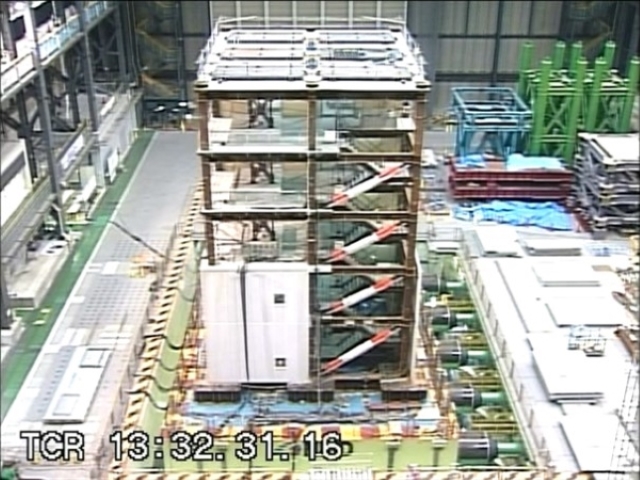
0807 Five-story Steel Building with Supplemental Dampers
(Mar. 2009) ( Test Number: E200807 )Steel Frame - Input Ground Motion
-
Mar. 5, Steel damper - JR Takatori motion (the 1995 Southern Hyogo Prefecture Earthquake) 100%
E200807_090305.wmv
Mar. 12, Viscous damper - JR Takatori motion 100%:
E200807_090312.wmv
Mar. 19, Oil damper - JR Takatori motion 100%
E200807_090319.wmv
Mar. 27, Viscoelastic damper - JR Takatori motion 100%
E200807_090327.wmv
-
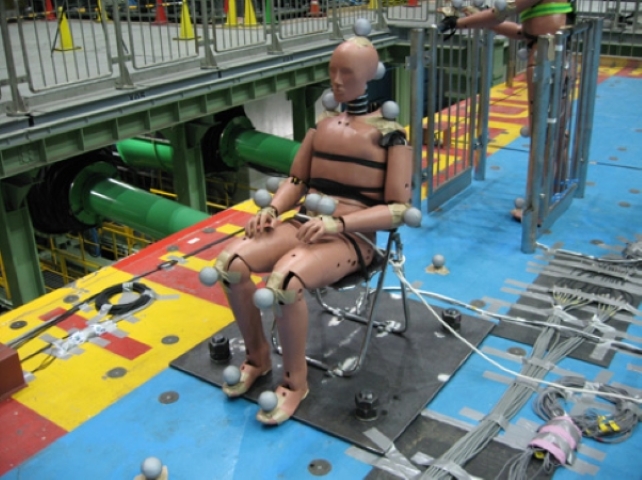
0901 Human Body Dummy Test
(Jun. 2009) ( Test Number: E200901 )Others - Input Ground Motion
-
Jun.10 - JMA Kobe motion (the 1995 Southern Hyogo Prefecture Earthquake) 155%
A male pedestrian type & a male seated type: E200901_090610_1.mpeg
A female seated type, and a 3-year-old child seated type: E200901_090610_2.mpeg
-
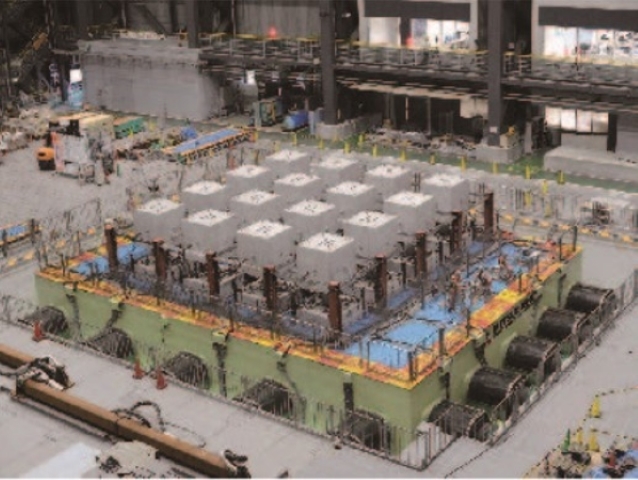
0902 Study on Operation and Control of Shaking Table in Structural Failure Process
(Jun. 2009) ( Test Number: E200902 )Reinforced Concrete - Input Ground Motion
-
Jun. 18 - JR Takatori motion (the 1995 Southern Hyogo Prefecture Earthquake) 150%
Overall view: E200902_090618_1.mpg
Detailed view of column specimens: E200902_090618_2.mpg
-
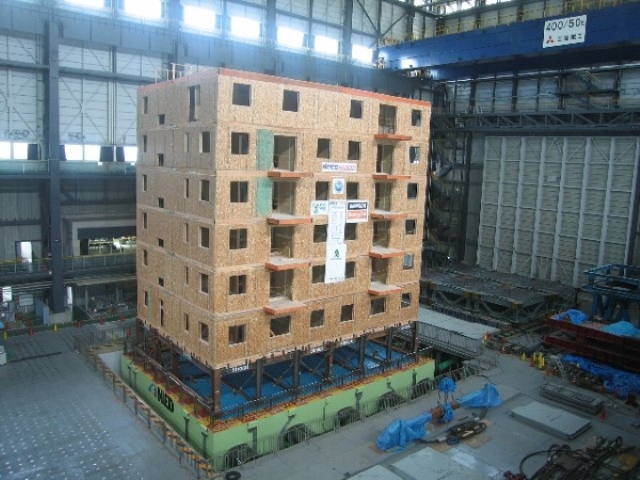
0903 NEES Wood Project “7-story Building using Wooden Panel Construction Method” Experiment of Full-scale Building
(Jul. 2009) ( Test Number: E200903 )Timber - Input Ground Motion
-
July 14 - Canoga Park motion (1994 Northridge Earthquake) 180%
Panoramic view: E200903_090714_1.wmv
Inside of a room on the 7th floor: E200903_090714_2.wmv
-
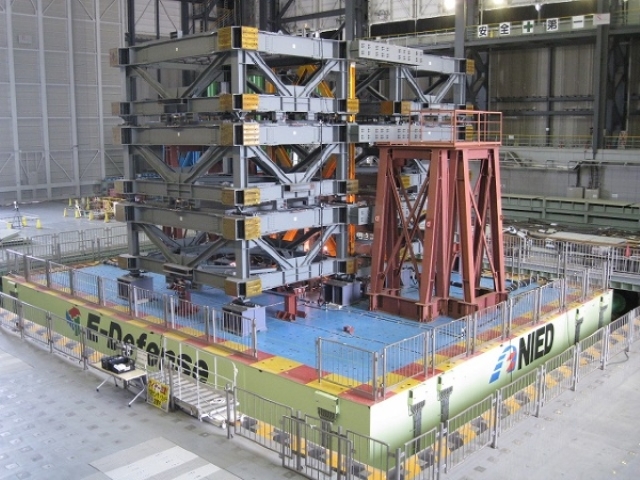
0904 NEES/E-Defense Collaborative Experimental Study on Controlled Steel Rocking Frame
(Aug. 2009) ( Test Number: E200904 )Steel Frame - Input Ground Motion
-
Aug. 10, FUSE-A1 - JMA Kobe motion (the 1995 Southern Hyogo Prefecture Earthquake) 65%
E200904_090810.wmv -
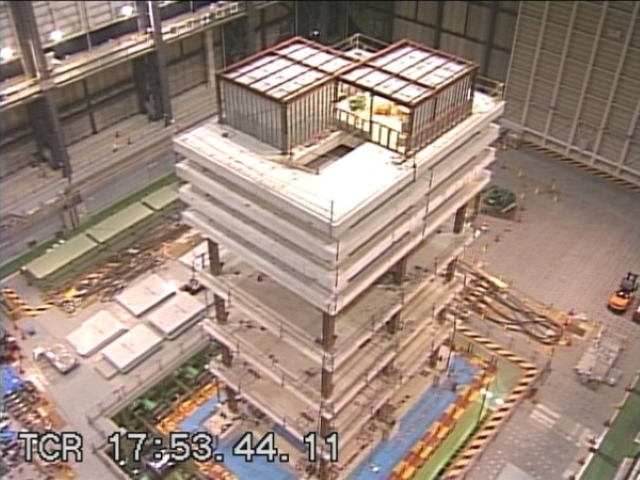
0905 Development of Response Mitigation Methods for High-rise Buildings subject to Long-period Ground Motion
(Sep. & Oct. 2009) ( Test Number: E200905 )Steel Frame Furniture - Input Ground Motion
-
Case 1 :
Sep. 15 - Expected ground motion for Nagoya from a scenario Tokai-Tonankai earthquake
Overall view of test structure:E200905_case1-4.wmv
Steel frames in lower part: E200905_case1-12.wmv
Brace steel damper: E200905_case1-19.wmv
Steel damper in upper substitute layer: E200905_case1-24.wmv
Meeting room on the roof level corresponding to 19th floor: E200905_case1-room.wmv
Case 2 : Sep. 18 - Expected ground motion for Nagoya from a scenario Tokai-Tonankai earthquake
Overall view of test structure: E200905_case2-4.wmv
Steel frames in lower part: E200905_case2-12.wmv
Brace steel damper: E200905_case2-19.wmv
Meeting room on roof level corresponding to 19th floor: E200905_case2-room.wmv
Case 3 : Sep. 25 - Expected ground motion for Nagoya from a scenario Tokai-Tonankai earthquake
Overall view of test structure: E200905_case3-4.wmv
Steel frames in lower part: E200905_case3-12.wmv
Oil brace damper: E200905_case3-19.wmv
Office room on roof level corresponding to 19th floor: E200905_case3-room.wmv
Case 4 : Oct. 2 - Expected ground motion for Nagoya from a scenario Tokai-Tonankai earthquake
Overall view of test structure:E200905_case4-4.wmv
Dining room on roof level corresponding to 19th floor: E200905_case4-room.wmv
-
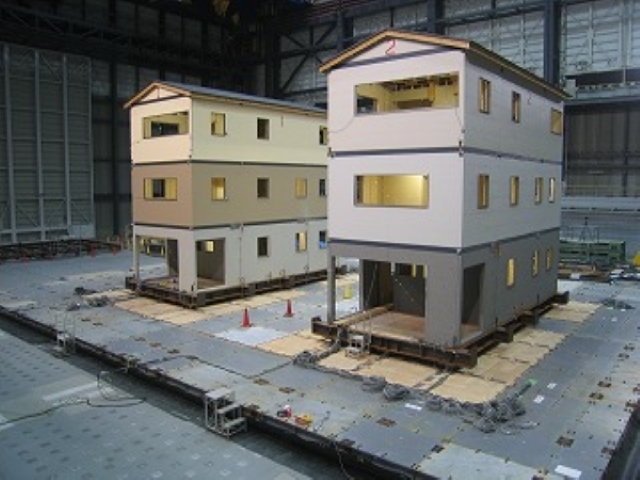
0906 Verification Experiment on the Design Method for Three-story Traditional Wooden Frame Structure
(Oct. 2009) ( Test Number: E200906 )Timber - Input Ground Motion
-
Test date: October 27, 2009
Imposed ground motions: Artificial ground motion 160%
E200906_091027.wmv
-
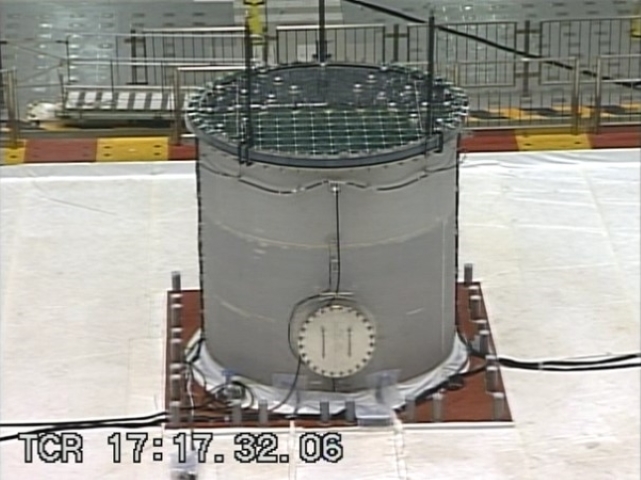
0907 Research on the Tank Sloshing Effect
(Nov. 2009) ( Test Number: E200907 )Equipment - Input Ground Motion
-
Nov. 20 - Resonant Sinusoidal Motion 0.55 Hz, 2-horizontal direction, X-displacement 4.2 cm & Y-displacement 10 cm
Bird view from South-west: E200907_091120_1.mpg
Bird view from East: E200907_091120_2.mpg )
-
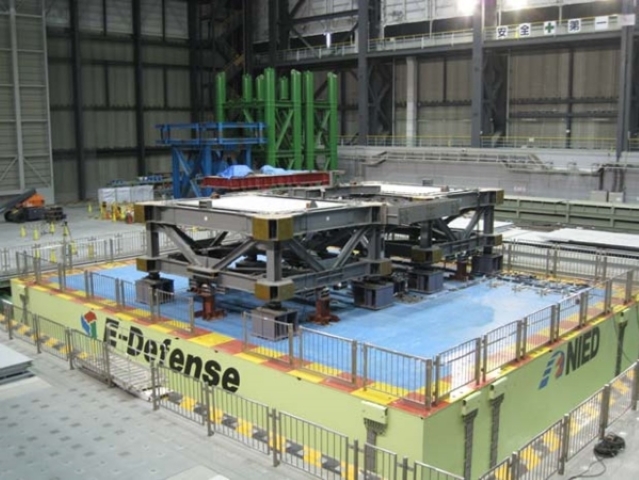
0908 Experiment Study of Steel Frame Building, Innovative Experiment
(Dec. 2009) ( Test Number: E200908 )Steel Frame Isolation/Damping - Input Ground Motion
-
Dec. 15, Plane frame with buckling-constrained braces - JR Takatori motion (the 1995 Southern Hyogo Prefecture Earthquake) EW-component 100%
Overall view: E200908_091215_1.mpg
Detailed view of buckling-constrained braces: E200908_091215_2.mpg
-
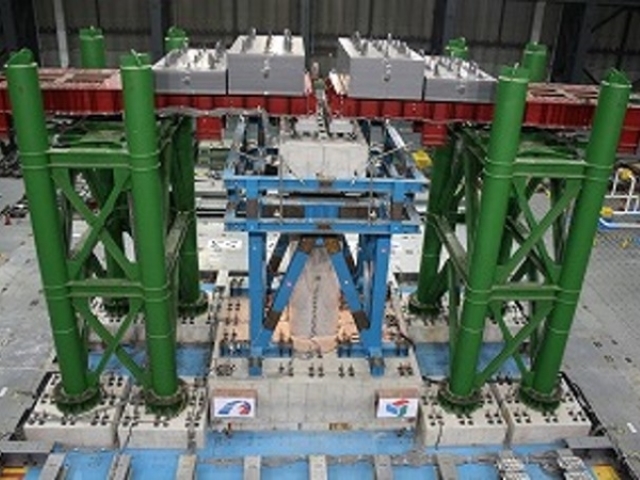
0909 Experimental Study of Seismic Performance of Bridge Component (C1-6)
(Feb. & Mar. 2010) ( Test Number: E200909 )Reinforced Concrete - Input Ground Motion
-
Feb. 26 - The 2nd excitation of JR Takatori motion (the 1995 Southern Hyogo Prefecture Earthquake) 100%
E200909_100226_1.wmv
E200909_100226_2.wmv
Mar. 2 - The 4th excitation of JR Takatori motion 125%
E200909_100302_1.wmv
E200909_100302_2.wmv
-
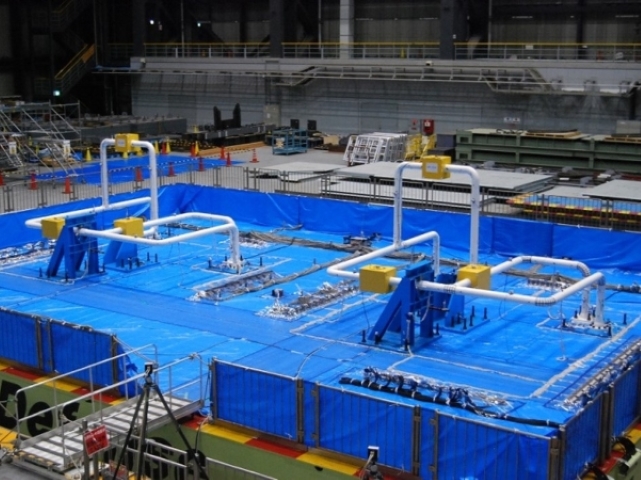
1001 Research on Quantitative Evaluation of Seismic Performance of Aging Piping System
(Aug. 2010) ( Test Number: E201001 )Equipment - Input Ground Motion
-
Aug. 5 - Simulated seismic motion 560%
Overall view: E201001_100805_1.mpeg
T-joint of the health specimen: E201001_100805_2.mpeg
T-joint of the reduced-wall-thickness specimen: E201001_100805_3.mpeg
-
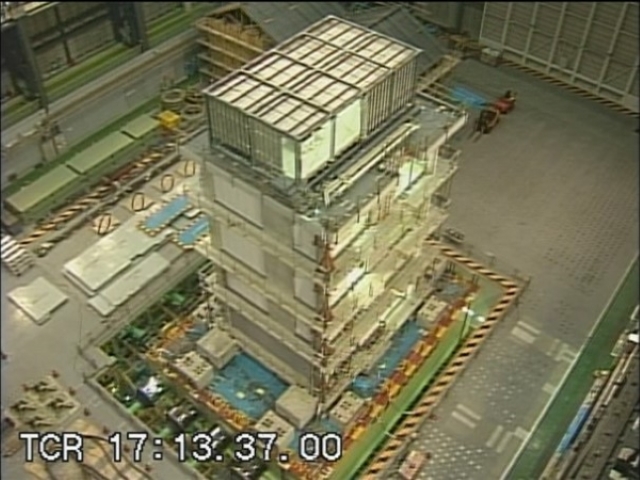
1002 Shaking Table Experiments for Enhancing the Functional Integrity of Important Facilities
(Aug. & Oct. 2010) ( Test Number: E201002 )Reinforced Concrete Isolation/Damping Equipment Furniture - Input Ground Motion
-
Oct. 10, Seismic-resistant structure - JMA Kobe motion (the 1995 Southern Hyogo Prefecture Earthquake) 2-horizontal directions 80%
Overall view: E201002_101021_1.mpeg
Staff station at the 2nd floor: E201002_101021_2.mpeg
Operation room at the 3rd floor: E201002_101021_3.mpeg
-
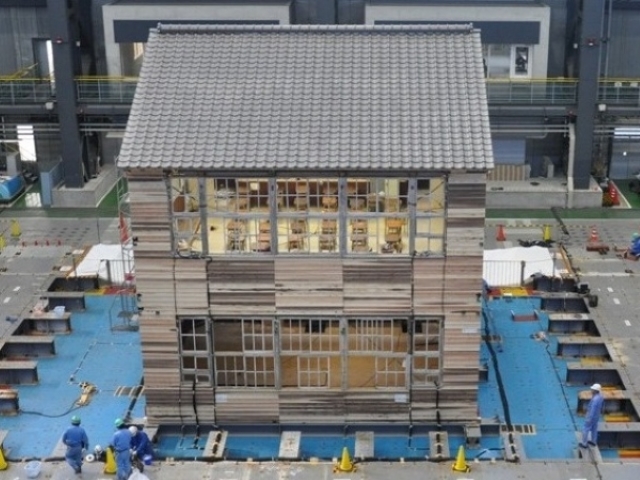
1003 Experimental Study on Development of Seismic Retrofitting Method for Existing Wooden School
(Nov. 2010) ( Test Number: E201003 )Timber - Input Ground Motion
-
Nov. 4, Existing structure - Notice motion in Y-direction, 600 Gal
Overall view: E201003_101104_1.mpeg
Around a column base at the 1st floor: E201003_101104_2.mpeg
Nov. 10, Reinforced structure - Notice motion in Y-direction, 600 Gal
Overall view: E201003_101110_1.mpeg )
Staff station at the 2nd floor: E201003_101110_2.mpeg
- Summary
- E201003_木造校舎 実大震動実験.mpeg
-
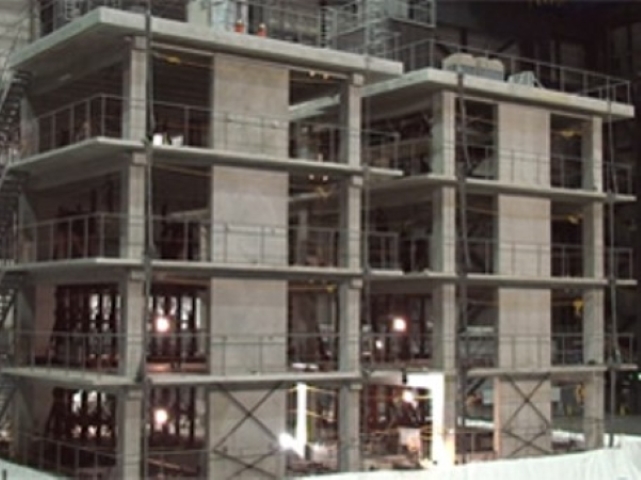
1004 Experiment of Concrete Building, Equipment and Piping
(Dec. 2010) ( Test Number: E201004 )Reinforced Concrete Equipment - Input Ground Motion
-
Dec. 13 - JMA Kobe motion (the 1995 Southern Hyogo Prefecture Earthquake) 50%
E201004_101213.wmv
-
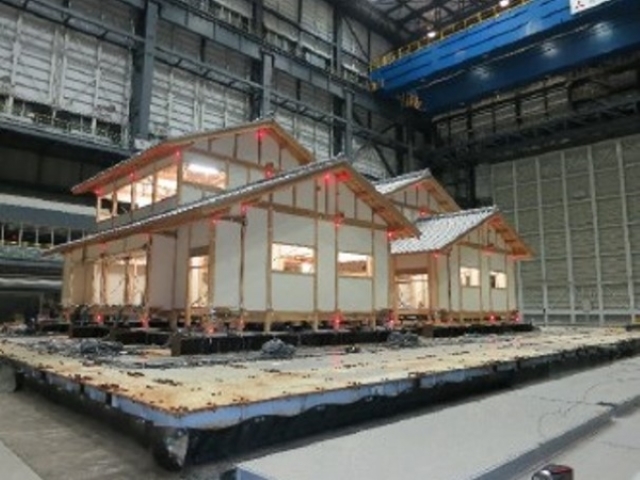
1005 Verification Experiment on Seismic Performance of Wooden Building built by Traditional Frame Construction Method, Part 2
(Jan. 2011) ( Test Number: E201005 )Timber - Input Ground Motion
-
Jan. 21 - JMA Kobe motion (the 1995 Southern Hyogo Prefecture Earthquake)
Overall view: E201005_110121_1.mpg
Detailed view of a column base on a base stone: E201005_110121_2.mpg
-
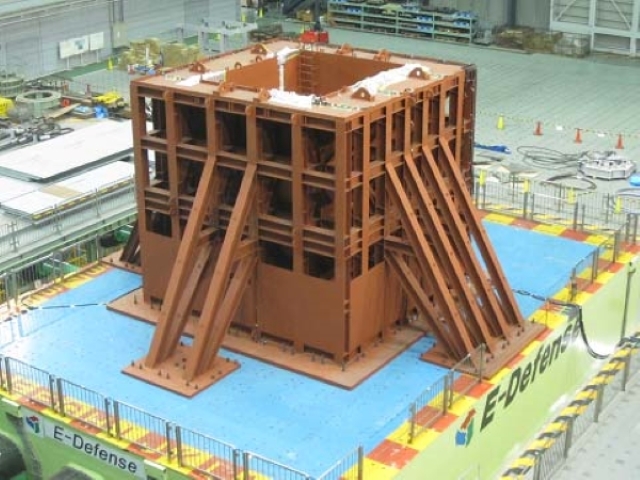
1006 Verification Test of High Seismic Resistance PWR Spent Fuel Rack
(Feb. & Mar. 2011) ( Test Number: E201006 )Equipment - Input Ground Motion
-
Mar. 1, Case with rack installed in water - 2-horizontal direction motion
Top view: E201006_110301_1.mpg
Bird view from West: E201006_110301_2.mpg )
-
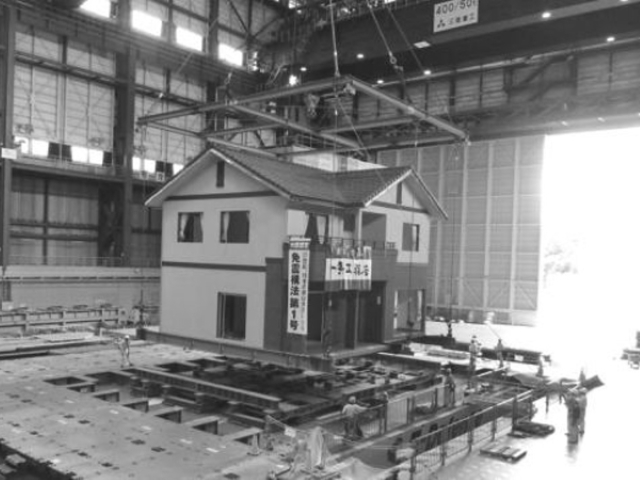
1101 Characteristics of Dynamic Behavior of Small-Scale Base-Isolated Structures under Long-Period Earthquake Motion, Part 1
(Jul. 2011) ( Test Number: E201101 )Timber Isolation/Damping Furniture - Input Ground Motion
-
Jul. 25, Isolated house with no displacement restraint device - Kashiwazaki motion (the Niigataken Chuetsu-oki Earthquake in 2007) 100%
Top view: E201101_110725_1.mpg
Around a base isolation device: E201101_110725_2.mpg
Indoor: E201101_110725_3.mpg
-
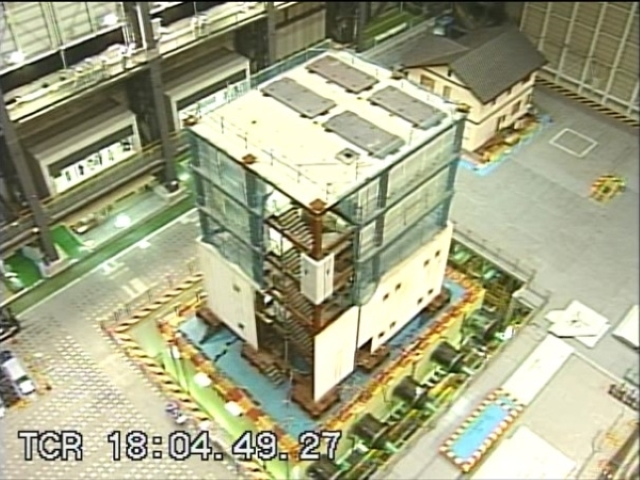
1102 Japan-US Collaborative Research on Innovative Seismic Isolation Solution
(Aug. 2011) ( Test Number: E201102 )Steel Frame Isolation/Damping Non-structural Furniture - Input Ground Motion
-
Aug. 18, 26 and 31 - K-NET Iwanuma motion (the 2011 off the Pacific Coast of Tohoku Earthquake) 70% and 100%:
E201102_1108en.mpeg
-
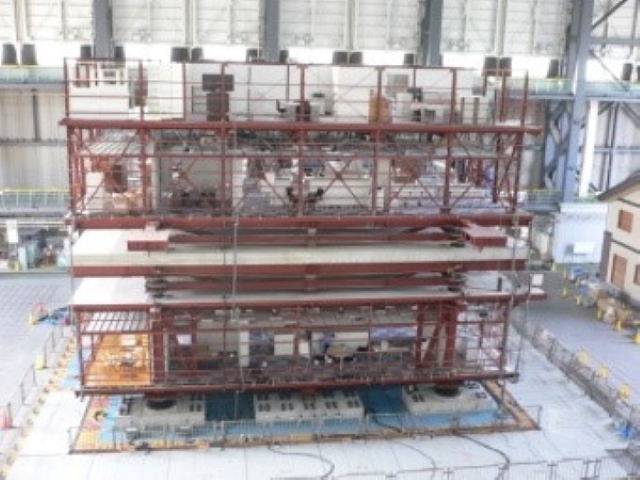
1103 Research and Development of the Measures for Damage Mitigation caused by Long-period Ground Motion
(Oct. 2011) ( Test Number: E201103 )Non-structural Equipment Furniture - Input Ground Motion
-
Oct. 7, Case 1 The high-rise building model
Nishi-Shinjuku motion (aftershock in the 2011 Off the Pacific Coast of Tohoku Earthquake) 330%
1007Shinjuku330_CCD1.wmv: E201103_1007_1.wmv
1007Shinjuku330_CCD4.wmv: E201103_1007_2.wmv
1007Shinjuku330_HV1.wmv: E201103_1007_3.wmv
1007Shinjuku330_HV3.wmv: E201103_1007_4.wmv
Oct. 12, Case 2 The low-rise building model
JMA Kobe motion (the 1995 Southern Hyogo Prefecture Earthquake) 75%
1012Kobe75_CCD1.wmv: E201103_1012_1.wmv
1012Kobe75_CCD4.wmv: E201103_1012_2.wmv
1012Kobe75_HV1.wmv: E201103_1012_3.wmv
1012Kobe 75_HV3.wmv: E201103_1012_4.wmv
Comparison between the high- and low-rise building models
Shinjuku330%_CCD.wmv: E201103_1007.wmv
Kobe25%_CCD.wmv: E201103_1012.wmv
-
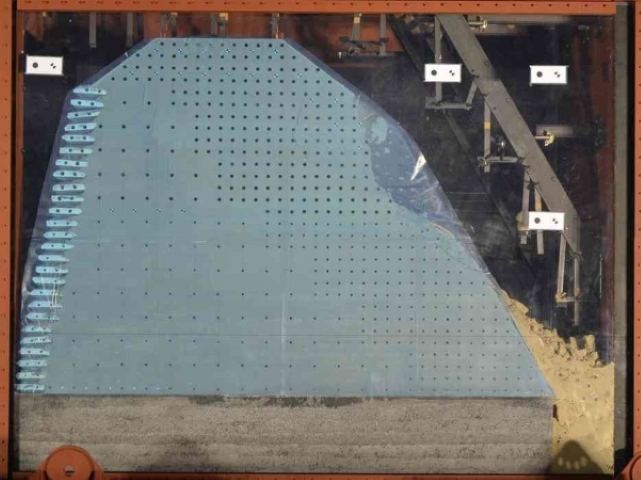
1104 Shake Table Experiments on Slopes around Nuclear Power Plant
(Dec. 2011) ( Test Number: E201104 )Geotech - Input Ground Motion
-
Dec. 6 - Sinusoidal motion 5 Hz, 800 Gal
Top view: E201104_111206_1.mpg
Bird view from North: E201104_111206_2.mpg
-
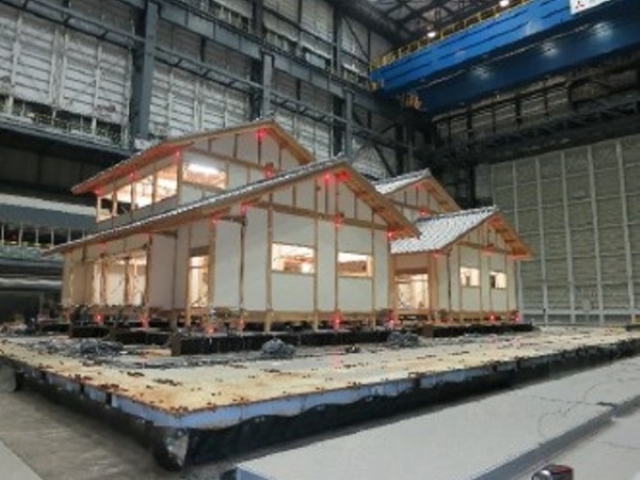
1105 Characteristics of Dynamic Behavior of Small-Scale Base-Isolated Structures under Long-Period Earthquake Motion, Part 2
(Dec. 2011) ( Test Number: E201105 )Timber Isolation/Damping - Input Ground Motion
-
Dec. 26 - Kashiwazaki motion (the Niigataken Chuetsu-oki Earthquake in 2007) in 45-degree input 100%
Bird view: E201105_111226_1.mpg
Around a velocity-sensing performance-variable damper: E201105_111226_2.mpg
Around a base isolation device: E201105_111226_3.mpg )
-
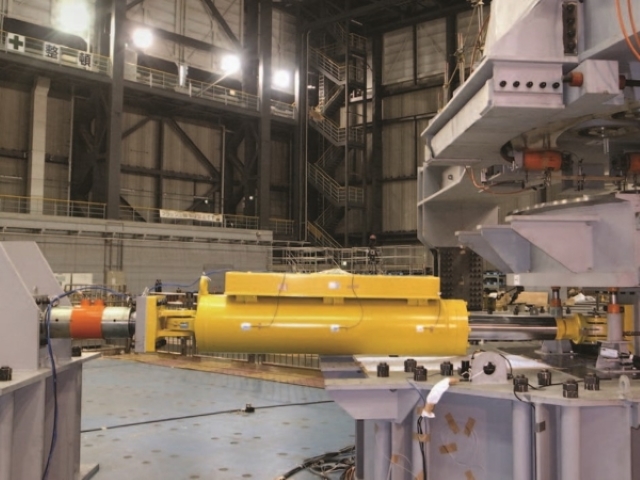
1106 Study on Verification Methods for Isolated Buildings in Long-period Earthquakes, Part 1
(Jan. and Feb. 2012) ( Test Number: E201106 )Isolation/Damping - Input Ground Motion
-
Feb. 7, Oil damper - Sine motion, period 2.5 s, 100 %
Bird view: E201106_120207_1.mpg
Oil damper: E201106_120207_2.mpg
-
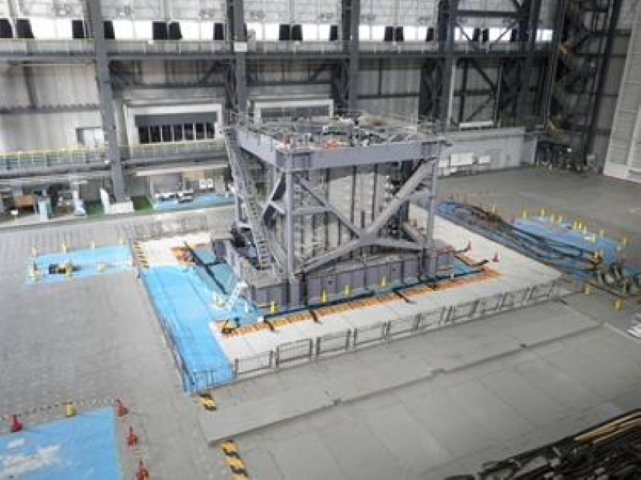
1107 Experimental Study of Soil and Underground Structure
(Feb. 2012) ( Test Number: E201107 )Geotech - Input Ground Motion
-
Feb. 28 - JR Takatori motion (the 1995 Southern Hyogo Prefecture Earthquake) 80%
Overall view: E201107_120228_1.mpeg
Around a vertical structure: E201107_120228_2.mpg
Inside of the circular-shaped underground structure: E201107_120228_3.avi
Around a connection between vertical and horizontal underground structures: E201107_120228_4.avi
-
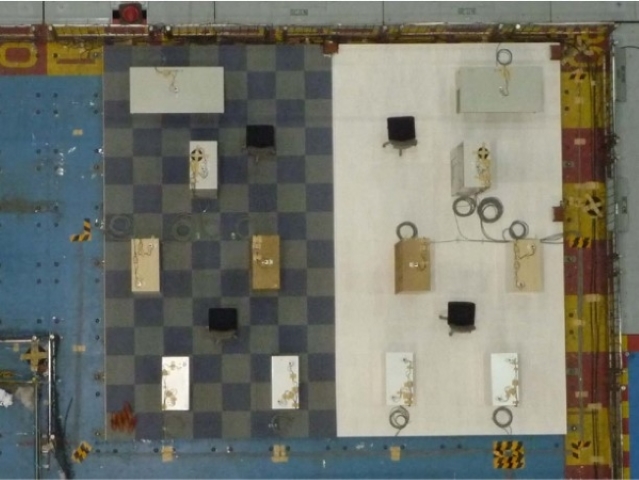
1108 Verification of Shake Table Performance and the Behaviors of Indoor Utensils under the Shake of 6 Degrees of Freedom
(Mar. 2012) ( Test Number: E201108 )Isolation/Damping Furniture - Input Ground Motion
-
Mar.15 - Kashiwazaki motion (the Niigataken Chuetsu-oki Earthquake in 2007)
Bird view: E201108_120315_1.mpg
Small-scale base-isolated structure model: E201108_120315_2.mpeg
-
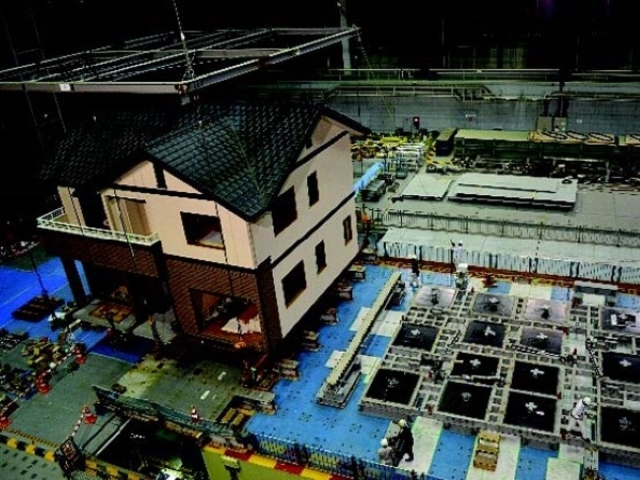
1201 Characteristics of Dynamic Behavior of Small-Scale Base-Isolated Structures under Long-Period Earthquake Motion, Part 4
(Jul. 2012) ( Test Number: E201201 )Timber Isolation/Damping - Input Ground Motion
-
Jul. 19 - Kashiwazaki motion (the Niigataken Chuetsu-oki Earthquake in 2007) 100%
Bird view: E201201_120719_1.mpg
Around a velocity-sensing performance-variable damper: E201201_120719_2.mpg
Around a base isolation device: E201201_120719_3.mpg
-
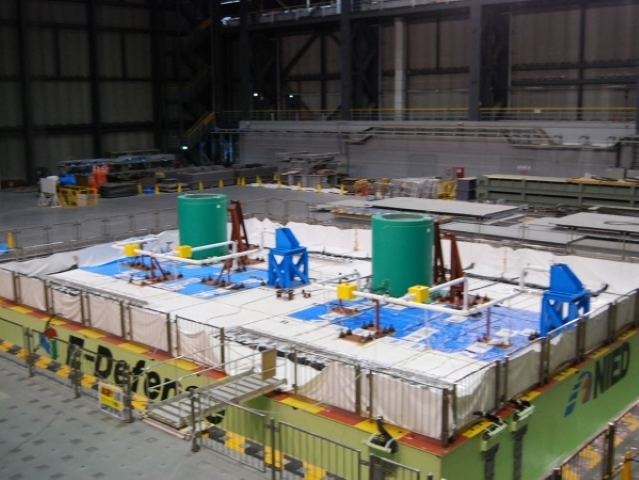
1202 Experiment Study of Equipment and Piping System
(Aug. 2012) ( Test Number: E201202 )Equipment - Input Ground Motion
-
Aug. 9 – Expected seismic motion 125%
Overall view: E201202_120809_1.mpeg
Around a flexible support: E201202_120809_2.mpeg
Around a rigid support: E201202_120809_3.mpeg
-
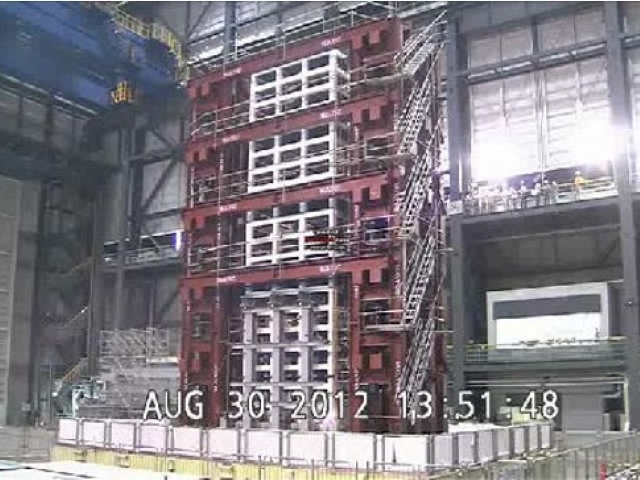
1203 Study on Verification of Seismic Performance of RC Buildings subjected to Long-Period Ground Motion
(Aug. 2012) ( Test Number: E201203 )Reinforced Concrete - Input Ground Motion
-
Aug. 30 - Expected seismic motion in Nankai Trough Earthquake, Tsushima motion 200%
Overall view from South: E201203_120830_1.mpeg
Around a column base at the 1st floor: E201203_120830_2.mpeg
Around a beam-column joint at the 6th floor: E201203_120830_3.mpeg
-
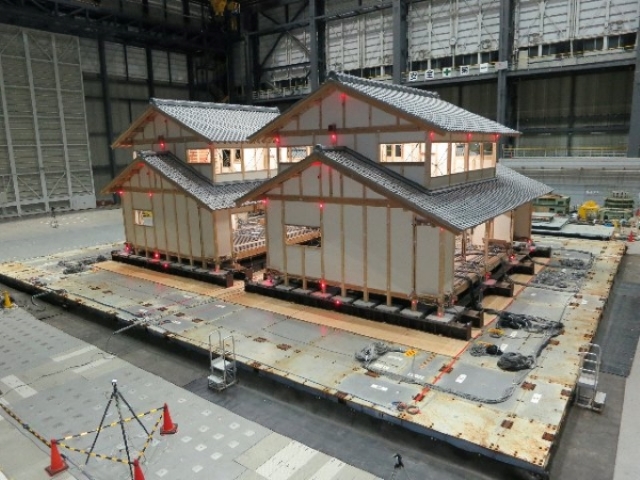
1204 Verification Experiment on Seismic Performance of Wooden Building built by Traditional Construction Method
(Sep. 2012) ( Test Number: E201204 )Timber - Input Ground Motion
-
Sep. 19 - JMA Kobe motion (the 1995 Southern Hyogo Prefecture Earthquake) 100%
Overall view from South: E201204_120919_1.mpeg
In-room: E201204_120919_2.mpeg
Around a base stone: E201204_120919_3.mpeg
-
1205 Study on Verification Methods for Isolated Buildings in Long-period Earthquakes, Part 2
(Oct. 2012) ( Test Number: E201205 )Isolation/Damping - Input Ground Motion
-
Oct. 12, High-damping rubber bearing - 2 cycles of sinusoidal motion, maximum displacement 400 mm
Bird view: E201205_121012_1.mpeg
High-damping rubber bearing: E201205_121012_2.mpeg
-
1206 Performance Verification Test on Long-periodization Upgrade of E-Defense
(Mar. & Apr., 2013) ( Test Number: E201206 )Reinforced Concrete Isolation/Damping - Input Ground Motion
-
Apr. 1 - K-NET Furukawa motion (the 2011 off the Pacific coast of the Tohoku earthquake) 100%
Bird view: E201206_130401.wmv
0807
Five-story Steel Building with Supplemental Dampers
(Mar. 2009) (
Test Number: E200807 )
The performance enhancement by damping devices was examined in a full-scale, 5-story, steel moment-resisting frame building. Validation of supplemental damping systems was needed because these systems have never been exposed to a major earthquake event. The building was tested under five conditions: with steel, viscous, oil, and viscoelastic dampers, and without dampers. Nonstructural elements (cladding, ceiling, partition walls) were installed to simulate a realistic office building. The JR Takatori record was used with various amplitudes.
Detailed information and acquired data and images from this experiment are available in E-Defense Data Archive, ASEBI.
DOI: https://doi.org/10.17598/NIED.0020-E200807
Experiment Overview: E200807.pdf
Application for Use of Video Materials
×
0901
Human Body Dummy Test
(Jun. 2009) (
Test Number: E200901 )
In order to investigate the psychological effects of seismic motion on humans, it is necessary to expose test subjects to seismic motion by placing people on a shaking table. However, because E-Defense can destroy structures, there is also a risk of injuring test subjects. Therefore, when considering experiments that involve placing test subjects on E-Defense, it is necessary to take precautions against the inherent risks. To help make a quantitative assessment of the response of the human body when subjected to large input motions on a shake table, shaking table tests were conducted using human body dummies. To see the differences in response between individuals and the differences due to posture, four dummies were used: a male pedestrian type, a male seated type, a female seated type, and a 3-year-old child seated type. Inputs such as the observed motion of the 1995 Southern Hyogo Prefecture Earthquake were used. Based on the results, an examination was carried out into the impact of seismic motion on the human body during an earthquake.
Detailed information and acquired data and images from this experiment are available in E-Defense Data Archive, ASEBI.
DOI: https://doi.org/10.17598/NIED.0020-E200901
Application for Use of Video Materials
×
0902
Study on Operation and Control of Shaking Table in Structural Failure Process
(Jun. 2009) (
Test Number: E200902 )
In this study, 16 RC column specimens were subjected to simultaneous excitation using E-Defense in order to evaluate uncertainties in their dynamic response. The test specimens were constructed by assuming a real pier with a square cross section of 2.4 m x 2.4 m and a girder of approximately 560 t at a height of 12 m from the base, which was reduced so that the aspect ratio of the length of the pier was 1/7.5. The specimen consists of a footing, a column and a deadweight. The column section was 320 mm x 320 mm square, and a reinforced concrete deadweight was fabricated on top of the column section to load the column with axial stresses. According to the scaling law, the center of gravity of the weight is designed to be 1600 mm above the pier base so that the axial stress at the pier base is equal to that of the original model. Seismic response and fracture characteristics such as input earthquake motion, response acceleration and response displacement of the specimens, and the variation in the behavior of the 16 specimens were considered, and their distribution shapes were quantitatively evaluated using the mean, standard deviation and coefficient of variation. As a result of inputting JR Takatori motions with gradually increasing scaling law consideration, it is found that the distribution shapes of various responses change as the response changes from linear to nonlinear.
Detailed information and acquired data and images from this experiment are available in E-Defense Data Archive, ASEBI.
DOI: https://doi.org/10.17598/NIED.0020-E200902
Application for Use of Video Materials
×
0903
NEES Wood Project “7-story Building using Wooden Panel Construction Method” Experiment of Full-scale Building
(Jul. 2009) (
Test Number: E200903 )
As a part of international collaborative research of NIED and the George E. Brown, Jr. Network for Earthquake Engineering Simulation (NEES), a shaking table experiment on a full-scale 7-story wood building was conducted by NEESWood, which is responsible for study in wood structure at NEES, (PI: Professor John W. van de Lindt, Colorado State University) and NIED. The first story of the test structure was a steel frame simulating a basement parking area. The 2nd to 7th stories were the residential area constructed by the wood-frame structure. The test structure was 12.4 m wide, 18.4 m long and 20.4 m high. In the experiment, the seismic motion recorded at Canoga Park during 1994 Northridge earthquake was used. The test structure was shaken by the 180% of the seismic motion, and the response of the structure under the severe input motion was investigated.
Detailed information and acquired data and images from this experiment are available in E-Defense Data Archive, ASEBI.
DOI: https://doi.org/10.17598/NIED.0020-E200903
Experiment Overview: E200903.pdf
Application for Use of Video Materials
×
0904
NEES/E-Defense Collaborative Experimental Study on Controlled Steel Rocking Frame
(Aug. 2009) (
Test Number: E200904 )
This experiment was conducted under the international collaborative research agreement between NIED and the George E. Brown, Jr. Network for Earthquake Engineering Simulation (NEES). Participants comprised US researchers from Stanford University and the University of Illinois and Japanese researchers from NIED, Tokyo Institute of Technology, Hokkaido University, and the private sector. The objective of the experiment was to evaluate the dynamic properties of a new structural system named the Controlled-Rocking Frame. The study focused on the self-centering mechanism of the system and the performance of the energy absorbing devices. The test specimen is seen in the video as a two-dimensional frame painted in yellow. Six horizontal-mass devices referred to as testbeds, three of which piled up on each side of the test structure, delivered inertia to the specimen. The specimen was subjected to unidirectional motions (JMA Kobe and Northridge records) with varying amplitude.
Detailed information and acquired data and images from this experiment are available in E-Defense Data Archive, ASEBI.
DOI: https://doi.org/10.17598/NIED.0020-E200904
Experiment Overview: E200904.pdf
Application for Use of Video Materials
×
0905
Development of Response Mitigation Methods for High-rise Buildings subject to Long-period Ground Motion
(Sep. & Oct. 2009) (
Test Number: E200905 )
The test structure was designed to reproduce the seismic response of an 80-m-tall, 21-story building. The lower four stories of the test structure were constructed as an actual steel frame. Substitute layers, which consisted of concrete slabs and rubber bearings, were placed above the steel frame to simulate the 5th to 21st floors of the building. The structure was subjected to a series of synthetic long-period ground motions: one for Tokyo from a scenario Tokai earthquake and another for Nagoya from a scenario Tokai-Tonankai earthquake.
Detailed information and acquired data and images from this experiment are available in E-Defense Data Archive, ASEBI.
DOI: https://doi.org/10.17598/NIED.0020-E200905
Experiment Overview: E200905_1.pdf
、E200905_2.pdf
Application for Use of Video Materials
×
0906
Verification Experiment on the Design Method for Three-story Traditional Wooden Frame Structure
(Oct. 2009) (
Test Number: E200906 )
NIED and the Council to Promote Wood Oriented Architecture conducted collapse experiments to verify the design method for 3-story Wood Houses by Post and Beam conventional Japanese wood houses under the support of Ministry of Land, Infrastructure, Transport and Tourism. There were two specimens (specimen 1, specimen 2), both of which were 3-story wood houses with the same specifications including floor area and height of each floor except design of joint parts. In the experiment, damage and behavior of specimens under strong earthquake were confirmed by inputting a synthetic ground motion in one direction.
Detailed information and acquired data and images from this experiment are available in E-Defense Data Archive, ASEBI
DOI: https://doi.org/10.17598/NIED.0020-E200906
Experiment Overview: E200906.pdf
Application for Use of Video Materials
×
0907
Research on the Tank Sloshing Effect
(Nov. 2009) (
Test Number: E200907 )
【Facility Rental Experiment Conducted by Toshiba Corporation】
The flat-bottomed cylindrical tanks installed in BWR power plants are required to maintain their integrity and containment of internal fluids under design earthquake motions. However, since there is no established method for reasonably evaluating the effects of internal fluid sloshing colliding with the tank top, many tanks are designed with the tank top positioned at a height higher than the maximum sloshing height expected to occur due to the assumed seismic forces. Considering this, E-Defense shaking tests were conducted to obtain data on the behavior of internal fluids and the dynamic pressure acting on the tank due to internal fluid sloshing in flat-bottomed cylindrical tanks. Through the experiments, time-history data on wave heights and dynamic pressures of the highly nonlinear internal fluid were obtained. By comparing the results of three-dimensional simulation-based flow analysis with the experimental results, the validity and reproducibility of the simulation were verified. Additionally, verification is being conducted toward the establishment of a method for evaluating the effects of sloshing on the tank top plate.
Detailed information and acquired data and images from this experiment are available in E-Defense Data Archive, ASEBI.
DOI: https://doi.org/10.17598/NIED.0020-E200907
Application for Use of Video Materials
×
0908
Experiment Study of Steel Frame Building, Innovative Experiment
(Dec. 2009) (
Test Number: E200908 )
E-Defense experiments were conducted using the methods validated in “E200701 - Preliminary Experiment for Plane Frame Specimen with Testbed Loading Device” to load plane frames with seismic damping devices. Buckling-constrained braces, innovative dampers, and steel pipe dampers were used as seismic damping devices. These specimens were subjected to inputs of mainly JR Takatori motion of various levels to compare and verify their performance.
Detailed information and acquired data and images from this experiment are available in E-Defense Data Archive, ASEBI.
DOI: https://doi.org/10.17598/NIED.0020-E200908
Application for Use of Video Materials
×
0909
Experimental Study of Seismic Performance of Bridge Component (C1-6)
(Feb. & Mar. 2010) (
Test Number: E200909 )
Shaking experiments of damage free reinforced concrete bridge pier were conducted at E-Defense. The bridge pier specimen was designed based on the current design specifications; however, the specimen had two special attributes, one was a new material, polypropylene fiber mixed reinforced cementitious composite, used to enhance the ductility capacity of the pier base where the severe damage occurs under strong excitation and the other was 0.4 m round corners in a square cross-section of the pier specimen. The pier specimen was 7.5 m tall and its foundation was 7.0 m long, 7.0 m wide and 1.8 m tall. Weight of superstructure was 310 tons. Shaking experiments were conducted for three days. The specimen was subjected to JR Takatori record (the 1995 Southern Hyogo Prefecture Earthquake) with varying amplitude. Small cracks were found at the base of the pier specimen after design level excitation, which was expected result. After that the specimen was excited twice same as before simulating aftershocks, it developed large crack but covering concrete of the new material did not spall off. It was clarified that damage free bridge pier with the new material enhanced seismic performance.
Detailed information and acquired data and images from this experiment are available in E-Defense Data Archive, ASEBI.
DOI: https://doi.org/10.17598/NIED.0020-E200909
Experiment Overview: E200909.pdf
Application for Use of Video Materials
×
1001
Research on Quantitative Evaluation of Seismic Performance of Aging Piping System
(Aug. 2010) (
Test Number: E201001 )
In Japan, commercial nuclear power plants began operating in the 1960s, and as of the end of December 2010, there were 54 commercial nuclear reactors in operation, 36 of these having been in operation for more than 20 years. Facilities that have been in use for a long time are expected to experience deterioration of their components and piping due to aging, and it is necessary to take appropriate measures to deal with this deterioration. In piping systems, corrosion and other factors can cause thinning deterioration, as one example of aging. In addition, Japan is prone to earthquakes, so it is essential to evaluate the seismic performance of aging plants.
Based on the above, to evaluate and verify the effects of deterioration on the seismic response and performance of piping systems, two types of piping system test specimens - a healthy test specimen without deterioration and a reduced-wall-thickness test specimen - were fabricated, mounted on the E-Defense facility, and subjected to simulated seismic motions at the same time. Simulated earthquake motions covering the frequency range of 1.5 Hz to 5.5 Hz, including the first to third modal frequencies of the test specimens, were generated and applied to the test specimens. In the experiment, the reduced-wall-thickness test specimen suffered damage due to internal pressure failure associated with the ratchet phenomenon, and thereafter, continued shaking resulted in fatigue cracking damage to the healthy test specimen.
Detailed information and acquired data and images from this experiment are available in E-Defense Data Archive, ASEBI.
DOI: https://doi.org/10.17598/NIED.0020-E201001
Application for Use of Video Materials
×
1002
Shaking Table Experiments for Enhancing the Functional Integrity of Important Facilities
(Aug. & Oct. 2010) (
Test Number: E201002 )
In the event of a major earthquake in an urban area, it is important to maintain and continue urban functions such as politics, economy, medical care, and information distribution even after the disaster. However, the functional integrity of important facilities that constitute these urban functions is mostly unknown, and effective methods to enhance their functional integrity have not been adequately established. Therefore, as part of the “Special Project for Earthquake Disaster Mitigation in the Tokyo Metropolitan Area” commissioned by the Ministry of Education, Culture, Sports, Science and Technology (MEXT), a series of E-Defense experiments were conducted to investigate the functional integrity of important facilities with seismic-resistant and seismic-isolation structures.
The test specimen was a four-story reinforced concrete (RC) structure modeled a typical medical facility, with actual span and floor heights. First, an experiment was conducted on the seismic isolation structure by installing seismic isolation devices between the test specimen and the shaking table. Subsequently, the seismic isolation devices were removed, and the test specimen was bolted to the shaking table to conduct an experiment on the seismic-resistant structure. Main medical equipment and information and communication systems were installed in each room of the test structure, along with equipment such as sprinklers, fire hydrants, and medical gas pipes. During the shaking tests, short-period earthquake motions such as the El Centro and JMA Kobe motions, and long-period earthquake motions such as the San'no-maru motion were applied. The experiments provided various data and video footage regarding indoor and equipment damage in both earthquake-resistant and seismic isolation structures.
Detailed information and acquired data and images from this experiment are available in E-Defense Data Archive, ASEBI.
DOI: https://doi.org/10.17598/NIED.0020-E201002
Application for Use of Video Materials
×
1003
Experimental Study on Development of Seismic Retrofitting Method for Existing Wooden School
(Nov. 2010) (
Test Number: E201003 )
In June 2008, the Act on Special Measures Concerning Countermeasures for Large-Scale Earthquakes was revised, making seismic assessment of public elementary and junior high school buildings mandatory. However, for large-scale wooden buildings such as school buildings, there are currently no established methods for seismic assessment or reinforcement techniques. In particular, wooden school buildings that serve as symbols of their communities and hold historical and emotional significance for residents have generated significant demand for their preservation. Accordingly, there is a strong need to explore methods for seismic retrofitting that maintain the buildings' appearance and wooden structures.
Based on the above, Hyogo Prefecture and Kobe University collaborated to conduct E-Defense experiments aimed at developing a seismic reinforcement system for existing wooden school facilities. As test specimens, a two-story wooden school building (built in 1936) in Takasago City, Hyogo Prefecture, was disassembled and transported to E-Defense, where two test specimens (reinforced structure and existing structure) were constructed. As a result of inputting a notice motion and other motions, it was confirmed that the reinforced test specimen showed excellent seismic performance. The reinforcement methods verified through this experiment have been applied to seismic retrofitting projects at schools such as the Sasayama Elementary School in Sasayama City.
Detailed information and acquired data and images from this experiment are available in E-Defense Data Archive, ASEBI.
DOI: https://doi.org/10.17598/NIED.0020-E201003
Application for Use of Video Materials
×
1004
Experiment of Concrete Building, Equipment and Piping
(Dec. 2010) (
Test Number: E201004 )
A series of full-scale shaking experiments on a precast and post-tensioned concrete (PPC) structure were conducted to establish high-quake-resistant, productive and reparable concrete buildings. And experiments on a reinforced concrete (RC) structure with almost the same shape of the PPC structure were conducted to acquire usable data for the future development of seismic design method. In the experiments, both the PPC and RC structures were shaken at the same time (the PPC structure at the front and the RC structure at the back of the video). As for the two 4-story buildings, the story height of each floor was 3.0 m, and the long side of the rectangular plane was 14.4 m and the short side was 7.2 m.
Detailed information and acquired data and images from this experiment are available in E-Defense Data Archive, ASEBI.
DOI: https://doi.org/10.17598/NIED.0020-E201004
Experiment Overview: E201004.pdf
Application for Use of Video Materials
×
1005
Verification Experiment on Seismic Performance of Wooden Building built by Traditional Frame Construction Method, Part 2
(Jan. 2011) (
Test Number: E201005 )
【Facility Rental Experiment Conducted by Green Architectural.】
Traditional timber-frame buildings in Japan have a long history of adapting to local climates and environments while reflecting regional cultures, thereby forming unique urban landscapes and communities. In many regions, these buildings are being preserved and renovated as symbols of regional culture, and their value is being reevaluated. However, the Building Standard Law does not clearly describe the structural design methods for traditional construction methods. In light of this, verification experiments using a full-scale shake table have been conducted with the aim of establishing design methods for traditional wooden buildings. In this experiment, we examined design methods for traditional wooden buildings, including the stone-based construction method, based on the results of previous surveys and experiments. Artificial earthquake motions (notified waves) and the JMA Kobe motion observed during the 1995 Southern Hyogo Prefecture Earthquake were input to measure the conditions for the occurrence of column base sliding, the amount of sliding, the friction between the column base and the foundation stone, the resistance of the superstructure, and the relationship with the input earthquake motion level. The results clearly indicate that predicting slip amounts is extremely challenging, as columns may slip in a twisting manner even without eccentricity, and slip amounts can vary significantly depending on the direction of excitation.
Detailed information and acquired data and images from this experiment are available in E-Defense Data Archive, ASEBI.
DOI: https://doi.org/10.17598/NIED.0020-E201005
Application for Use of Video Materials
×
1006
Verification Test of High Seismic Resistance PWR Spent Fuel Rack
(Feb. & Mar. 2011) (
Test Number: E201006 )
【Facility Rental Experiment Conducted by Mitsubishi Heavy Industries, Ltd.】
The freestanding fuel rack system is a method that ensures high seismic resistance without using foundation bolts or wall supports to secure the rack, and this freestanding system is the mainstream approach overseas. Based on experimental research conducted both domestically and internationally, it has become possible to design appropriate structures that incorporate effects such as reducing rack slippage and minimizing movement underwater. To facilitate the practical application of free-standing fuel racks, the conduct of full-scale shake table tests was highly desired. With the aim of confirming the feasibility of designing structures with sufficient seismic reliability and incorporating the results into practical design evaluation methods, an E-Defense shake table test was conducted. A test specimen was prepared by installing a rack with dimensions of 3 m in length, 2 m in width, and 4.5 m in height inside a water tank with internal dimensions of 7 m in length, 7 m in width, and 7 m in height. Experiments were conducted with and without water in the tank. The results confirmed that it is possible to design a free-standing rack with sufficient seismic reliability, and that the test results and analysis results showed good agreement, confirming the feasibility of analytical evaluation in actual design.
Detailed information and acquired data and images from this experiment are available in E-Defense Data Archive, ASEBI.
DOI: https://doi.org/10.17598/NIED.0020-E201006
Application for Use of Video Materials
×
1101
Characteristics of Dynamic Behavior of Small-Scale Base-Isolated Structures under Long-Period Earthquake Motion, Part 1
(Jul. 2011) (
Test Number: E201101 )
【Facility Rental Experiment Conducted by H.R.D. Singapore Pte. Ltd., Ichijo Housing Research Institute Co., and Ichijo Co., Ltd.】
To confirm the behavior of seismic isolation houses under inputs exceeding the movable range of the isolation devices, and to investigate the method that minimizes damage to the superstructure and interior furnishings while constraining displacement within the movable range, an E-Defense shaking table test was conducted. First, shaking tests were conducted without displacement restraint devices to confirm the maximum response displacement. Subsequently, shaking tests were conducted with several types of displacement restraint devices installed to verify the displacement restraint effect while also examining the deformation and impact of the superstructure when displacement was restrained. Additionally, shaking tests were conducted with the seismic isolation layer fixed in a non-seismic isolation state, and the behavior was compared with that of the seismic isolation structure combined with displacement restraint devices. The experimental results indicated that as the input level increased, the displacement restraint devices either failed or, while displacement restraint was achieved, the response acceleration of the superstructure significantly increased.
Detailed information and acquired data and images from this experiment are available in E-Defense Data Archive, ASEBI.
DOI: https://doi.org/10.17598/NIED.0020-E201101
Application for Use of Video Materials
×
1102
Japan-US Collaborative Research on Innovative Seismic Isolation Solution
(Aug. 2011) (
Test Number: E201102 )
In collaboration with the University of Nevada, Reno in USA and National Research Institute for Earth Science and Disaster Resilience, the shake table experiments on a base-isolated building were conducted to evaluate the effectiveness of seismic isolation technology. Specimen was a five-story steel building and isolation devices were installed at the base of the specimen. In the experiment, two different types of isolation system were used; 1) nine triple-pendulum bearings and 2) combination of five lead-rubber bearings and four cross linear sliders. Base-fixed specimen also excited to compare response of the specimen and behavior of furniture installed in the specimen. The record observed at K-NET Iwanuma station during the 2011 Off the Pacific coast of Tohoku earthquake was imposed. Duration of this record is about three minutes and it affects various structures because it contains long-period components, which resonate with base-isolated buildings, and short-period components, which affects low to middle height base-fixed buildings.
Detailed information and acquired data and images from this experiment are available in E-Defense Data Archive, ASEBI.
DOI: https://doi.org/10.17598/NIED.0020-E201102
Experiment Overview: E201102en.pdf
Application for Use of Video Materials
×
1103
Research and Development of the Measures for Damage Mitigation caused by Long-period Ground Motion
(Oct. 2011) (
Test Number: E201103 )
In this study, two cases were used for the experiment: a high-rise building model and a low-rise building model. The high-rise building model was based on a 30-story building with a height of 120 meters. The test specimen consisted of the lowest steel frame, which was designed to produce the same shaking as a 6-story high-rise building, and the two upper steel frames, which were designed to produce the same shaking as a 27-story and 28-story high-rise building. The remaining middle part was replaced with a heavy concrete slab and laminated rubber. In the low-rise building model, the middle part was fixed with steel plates to prevent the laminated rubber from working. The test specimen had the widest floor area of any of the previous experiments, and included office and residential spaces. The office space had a suspended ceiling, incorporating both the line ceiling that has been used in many buildings to date, and the grid ceiling, which is advantageous from the perspective of earthquake resistance. Furthermore, the ceiling also incorporated general equipment such as air conditioning units, as well as firefighting equipment such as sprinklers, fire alarms and emergency lighting, reproducing the same equipment functions as in a real building.
Detailed information and acquired data and images from this experiment are available in E-Defense Data Archive, ASEBI.
DOI: https://doi.org/10.17598/NIED.0020-E201103
Experiment Overview: E201103.pdf
Application for Use of Video Materials
×
1104
Shake Table Experiments on Slopes around Nuclear Power Plant
(Dec. 2011) (
Test Number: E201104 )
Facility Rental Experiment Conducted by Japan Nuclear Energy Safety Organization】
In the event of an earthquake, it is necessary to confirm that slope failures in the vicinity of nuclear power plant facilities will not significantly affect the facility's functions. To achieve this, it is important to reasonably evaluate the possibility of slope failure and the extent of the failure area. To develop and improve evaluation methods for the seismic stability of rock slopes, it is important to clarify the mechanisms through model experiments that reproduce the phenomena and to verify the validity of numerical analyses based on the results obtained from these experiments. Therefore, shake table experiments on rock slopes and numerical analyses have been conducted. However, these shake table experiments only used horizontal seismic motions, and the effects of vertical motions on the seismic behavior of slopes have not been sufficiently investigated. In light of this background, E-Defense shake table experiments were conducted with the aim of evaluating the effects of vertical motion and scale effects of models on the seismic behavior of slopes and incorporating the results into seismic safety evaluation methods for slopes. A slope model with a height of 3 meters was constructed as the test specimen, and horizontal and vertical simultaneous excitation was applied. Based on the results obtained, the applicability and usefulness of the conventional evaluation method and DEM for slope deformation analysis were investigated.
Detailed information and acquired data and images from this experiment are available in E-Defense Data Archive, ASEBI.
DOI: https://doi.org/10.17598/NIED.0020-E201104
Application for Use of Video Materials
×
1105
Characteristics of Dynamic Behavior of Small-Scale Base-Isolated Structures under Long-Period Earthquake Motion, Part 2
(Dec. 2011) (
Test Number: E201105 )
【Facility Rental Experiment Conducted by H.R.D. Singapore Pte. Ltd., Ichijo Housing Research Institute Co., and Ichijo Co., Ltd.】
As a result of “Characteristics of Dynamic Behavior of Small-Scale Base-Isolated Structures under Long-Period Earthquake Motion, Part 1”, several issues with the method using displacement restraint devices were identified, and it became clear that research and development of displacement control devices for practical application were necessary. Based on these results, a “velocity-sensing performance-variable damper” was developed to detect situations where the seismic isolation layer is likely to undergo large deformations using relative velocity, and to increase stiffness and damping. The house test specimen constructed in (Part 1) was repaired, and the developed damper was installed to verify its performance through E-Defense experiments. The experimental results indicated that the device could control all input earthquake motions within the design limit displacement; however, there is still room for improvement in the response acceleration.
Detailed information and acquired data and images from this experiment are available in E-Defense Data Archive, ASEBI.
DOI: https://doi.org/10.17598/NIED.0020-E201105
Application for Use of Video Materials
×
1106
Study on Verification Methods for Isolated Buildings in Long-period Earthquakes, Part 1
(Jan. and Feb. 2012) (
Test Number: E201106 )
In past earthquake disasters, seismic isolation buildings have demonstrated their performance and significantly contributed to mitigating damage. However, in the anticipated Nankai Trough mega-earthquake, long-period ground motions with durations of several seconds to tens of seconds are expected to occur, and the duration of seismic ground motion could extend to several minutes to tens of minutes. This could result in ground motions exceeding those experienced during the 2011 off the Pacific coast of the Tohoku earthquake, potentially subjecting seismic isolation buildings to more severe shaking. To prepare for such earthquakes, it is an urgently required task to evaluate the performance of seismic isolation components, ensure their quality, and establish testing methods. Considering the above, as part of the Ministry of Land, Infrastructure, Transport and Tourism's Building Standards Improvement Promotion Project, E-Defense shake table experiments with full-scale sliding bearing and oil damper were conducted to reproduce the heat generation and dissipation environment and the rate of cumulative energy increase associated with repeated sliding in conditions close to reality. The experiments have provided data essential for verifying changes in the characteristics of sliding bearings and dampers under repeated loading.
Detailed information and acquired data and images from this experiment are available in E-Defense Data Archive, ASEBI.
DOI: https://doi.org/10.17598/NIED.0020-E201106
Application for Use of Video Materials
×
1107
Experimental Study of Soil and Underground Structure
(Feb. 2012) (
Test Number: E201107 )
Based on the above, large-scale model tests were conducted using the E-Defense facility, with the aim of clarifying the behavior of underground structures during earthquakes and the mechanisms that lead to their failure, focusing on the connection between vertical structures and horizontal underground structures, and the boundary between hard and soft ground. The test model was a large-scale model of a ground and underground structure, built inside a cylindrical laminar container with a diameter of 8 m and a height of 6.5 m. The test specimen was composed of dry sand ground, two vertical structures inter-connected with a rectangular horizontal underground structure, and two circular horizontal underground structures. When the test specimen was subjected to the actual seismic motion observed during the 1995 Southern Hyogo Prefecture Earthquake, it was found that localized responses occurred around the connection area.
Detailed information and acquired data and images from this experiment are available in E-Defense Data Archive, ASEBI.
DOI: https://doi.org/10.17598/NIED.0020-E201107
Application for Use of Video Materials
×
1108
Verification of Shake Table Performance and the Behaviors of Indoor Utensils under the Shake of 6 Degrees of Freedom
(Mar. 2012) (
Test Number: E201108 )
Since seismic motions that exceeded the E-Defense's capacity (maximum acceleration and duration) were observed during the off the Pacific coast of Tohoku Earthquake, the reproducibility of large acceleration and long duration seismic motions within the performance limitations of the E-Defense was evaluated. In addition, to effectively utilize the 6-DOF shaking capability of E-Defense, the characteristics of the shaking table itself were evaluated for a wide variety of shaking including vertical and pitching motion. In addition, by focusing on the interior space, the effects of rotational and vertical motion on the behavior of equipment, fixtures, etc. were clarified. Experimental method: A floor assembly was installed in a 10m x 7.5m area of the shake table, and the floor finish was tile carpet and homogeneous vinyl tiles. Furniture and fixtures (6 short cabinets, 2 bookcases, 2 cupboards, and 2 desks) were placed on the floor, and the furniture was loaded with concrete bricks for book loads. Servo accelerometers and crash test accelerometers were installed on the fixtures to determine their behavior.
【Shaking Table Sharing Test by H.R.D. Singapore Pte. Ltd.】 “Characteristics of Dynamic Behavior of Small-Scale Base-Isolated Structures under Long-Period Earthquake Motion, Part 3“
With the aim of establishing “displacement control technology” to prevent large displacements of small-scale seismic isolation structures beyond their design clearances, a shaking table test was conducted assuming that it is difficult to widen the clearance in one direction of the site, but that the clearance can be widened significantly in the other three directions. Specifically, the damper forces are provided in only one direction where it is difficult to widen the clearance, and almost no damper forces are provided in the opposite direction. The final response displacement, response acceleration, etc. during 6-DOF excitation are verified.
Detailed information and acquired data and images from this experiment are available in E-Defense Data Archive, ASEBI.
DOI: https://doi.org/10.17598/NIED.0020-E201108
Application for Use of Video Materials
×
1201
Characteristics of Dynamic Behavior of Small-Scale Base-Isolated Structures under Long-Period Earthquake Motion, Part 4
(Jul. 2012) (
Test Number: E201201 )
【Facility Rental Experiment Conducted by H.R.D. Singapore Pte. Ltd., Ichijo Housing Research Institute Co., and Ichijo Co., Ltd.】
In December 2011, the experiment E201105—Vibration Characteristics of Small-Scale Seismically Isolated Structures under Long-Period Earthquake Motions (Part 2) was conducted. In this experiment, velocity-sensitive performance-variable dampers were installed to control displacement under various earthquake motions, and the response displacement, response acceleration, and dynamic mechanical characteristics of the damping devices themselves were examined. In this Part 4 experiment, the safety of a test specimen was confirmed by developing a “speed-sensing variable performance damper” that revises the relationship between speed and damping force based on a reexamination of issues identified in the previous test results, and by installing fail-safe sliders. The housing portion was newly constructed with the same structure and floor plan as the Part 2 experiment. The results of the experiment indicate that the special oil damper newly developed in this study can suppress the deformation of the seismic isolation layer to a realistic level for all seismic motions input in this experiment, while ensuring the safety of the building interior.
Detailed information and acquired data and images from this experiment are available in E-Defense Data Archive, ASEBI.
DOI: https://doi.org/10.17598/NIED.0020-E201201
Application for Use of Video Materials
×
1202
Experiment Study of Equipment and Piping System
(Aug. 2012) (
Test Number: E201202 )
Equipment and piping systems are critical components of energy facilities. If damaged by an earthquake, these systems may cause long-term facility shutdowns, disrupting energy supply to external users and delaying post-earthquake recovery efforts. Therefore, it is essential to ensure structural integrity during earthquakes and to make reasonable and prompt decisions regarding restarting operations as soon as possible after an earthquake. To better understand the seismic performance of equipment and piping systems, it is necessary to not only focus on damage occurring within the piping system itself but also to clarify the damage modes that occur when the system is connected to supporting structures and other equipment, thereby determining the overall seismic margin of the equipment and piping system. Furthermore, current seismic design standards are established with the aim of preventing damage during earthquakes and do not incorporate the perspective of evaluating post-earthquake reusability. Therefore, it is important to accumulate data that can be used for integrity assessment and restart decisions when seismic motions exceeding design standards are experienced. Considering this background, an E-Defense experiment was conducted to fabricate test specimens of equipment and piping systems composed of piping, supporting structures, valves, tanks, etc., with the aim of understanding the influence of elastic-plastic deformation of supporting structures on piping responses and the seismic response behavior of joints between equipment and piping. As a result of applying simulated seismic motions exceeding design allowable standards, structural failure of support structures and leakage at flange joints were confirmed.
Detailed information and acquired data and images from this experiment are available in E-Defense Data Archive, ASEBI.
DOI: https://doi.org/10.17598/NIED.0020-E201202
Application for Use of Video Materials
×
1203
Study on Verification of Seismic Performance of RC Buildings subjected to Long-Period Ground Motion
(Aug. 2012) (
Test Number: E201203 )
As part of the Ministry of Land, Infrastructure, Transport and Tourism's Building Standards Improvement Promotion Project for Fiscal Years 2010–2012, titled “Study on Verification of Seismic Performance of Reinforced Concrete Buildings Subjected to Long-Period Earthquake Motions,” E-Defense shake table tests were conducted to verify the seismic performance of super-high-rise reinforced concrete buildings under long-period earthquake motions. In the experiment, a 20-story super-high-rise RC test specimen (1/4 scale model) was constructed, and long-period seismic motions, including the observed ground motion of the 2011 Off the Pacific Coast of Tohoku Earthquake (Shinonome motion) and expected seismic motions of the Nankai Trough earthquake (Tsushima motion), were input to directly verify the behavior of the structure under these conditions. As planned, the maximum response inter-story drift angle of 1/200, 1/100, and 1/50 was achieved, and damage to beam ends, buckling, and slab deformation behavior were identified.
Detailed information and acquired data and images from this experiment are available in E-Defense Data Archive, ASEBI.
DOI: https://doi.org/10.17598/NIED.0020-E201203
Application for Use of Video Materials
×
1204
Verification Experiment on Seismic Performance of Wooden Building built by Traditional Construction Method
(Sep. 2012) (
Test Number: E201204 )
【Facility Rental Experiment Conducted by Green Architectural.】
The objective of this study was to establish an earthquake-resistant design method suitable for traditional timber-frame buildings. In fiscal year 2010, a full-scale shake table test (E201005) was conducted, during which sliding of the column bases in the stone-based construction method was observed. To utilize this characteristic of the traditional construction method, a full-scale shake table test was conducted with the aim of reducing deformation on the first floor, mitigating column deformation, and preventing damage. Test specimens were constructed: a traditional wooden residential building with first-floor column bases directly placed on flat foundation stones, and a wooden residential building where “beam running” were installed between the first-floor column bases to connect them. BCJ motions and JMA Kobe motion were input into the specimens. The results indicated that no significant sliding of the column bases was observed in the level 1 of BCJ motion, but approximately 100 mm of sliding was confirmed in the level 2 of BCJ motion. Additionally, in the stone-based test specimen, some columns remained tilted, while in the test specimen with the beam running, although small cracks developed in the braces, no significant damage was observed.
Detailed information and acquired data and images from this experiment are available in E-Defense Data Archive, ASEBI.
DOI: https://doi.org/10.17598/NIED.0020-E201204
Application for Use of Video Materials
×
1205
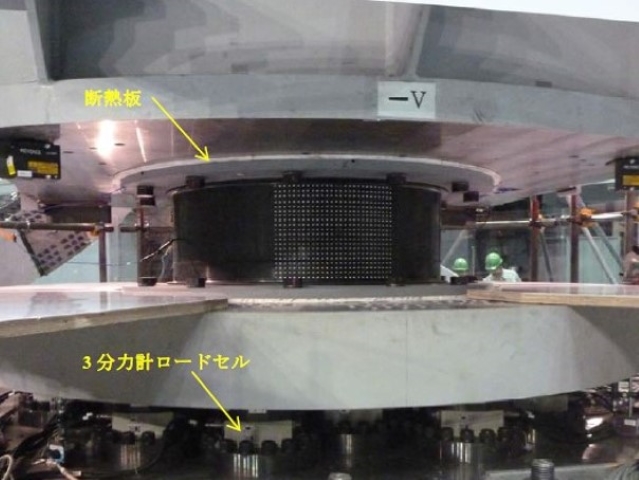
Study on Verification Methods for Isolated Buildings in Long-period Earthquakes, Part 2
(Oct. 2012) (
Test Number: E201205 )
In past earthquake disasters, seismic isolation buildings have demonstrated their performance and significantly contributed to mitigating damage. However, in the anticipated Nankai Trough mega-earthquake, long-period ground motions with durations of several seconds to tens of seconds are expected to occur, and the duration of seismic ground motion could extend to several minutes to tens of minutes. This could result in ground motions exceeding those experienced during the 2011 off the Pacific coast of the Tohoku earthquake, potentially subjecting seismic isolation buildings to more severe shaking. To prepare for such earthquakes, it is an urgently required task to evaluate the performance of seismic isolation components, ensure their quality, and establish testing methods.
In light of the above, as part of the Ministry of Land, Infrastructure, Transport and Tourism's Building Standards Improvement Promotion Project, using E-Defense, a series of repeated shaking tests were conducted on full-scale lead rubber bearing and high-damping rubber bearing. The results of the tests provided data essential for verifying the changes in the characteristics of seismic isolation devices under multiple seismic motions.
Detailed information and acquired data and images from this experiment are available in E-Defense Data Archive, ASEBI.
DOI: https://doi.org/10.17598/NIED.0020-E201205
Application for Use of Video Materials
×
1206
Performance Verification Test on Long-periodization Upgrade of E-Defense
(Mar. & Apr., 2013) (
Test Number: E201206 )
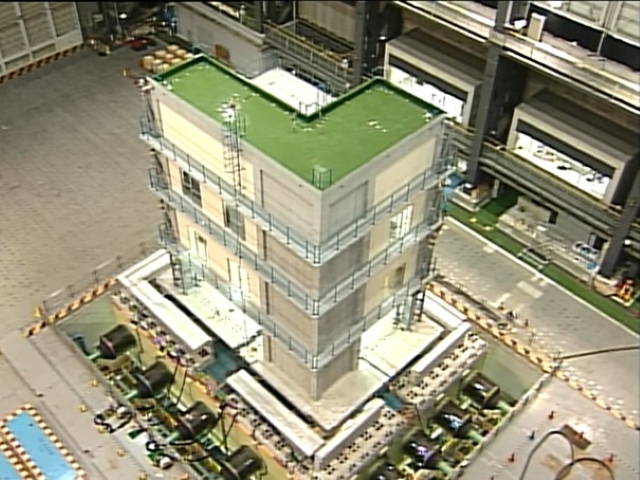
In the 2011 off the Pacific coast of Tohoku Earthquake, the complicated rupture process of the fault that was the source of the seismic motion caused large earthquakes to continue for a long time. Research and development to clarify the damage caused by long-duration, long-period seismic motion and to develop mitigation technology for such damage, which occurs when a large subduction earthquake occurs, is an important issue, as is research and development for directly below earthquakes.
The National Research Institute for Earth Science and Disaster Resilience (NIED) is engaged in research and development using the E-Defense facility, and to promote research and development into long-period, long-duration seismic motion that occurs when a major subduction earthquake occurs, facilities have been upgraded to increase the long-period, long-duration capabilities of E-Defense. As a test to verify the performance improvements made by this upgrade, a full-scale 4-story seismic isolation building (reinforced concrete construction, size: 11.8m x 8.0m x 14.9mH) weighing approximately 1,000 tons was placed on the shake table and shaken by earthquake motion containing a large amount of long-period components, which could not be fully reproduced before the upgrade.
Detailed information and acquired data and images from this experiment are available in E-Defense Data Archive, ASEBI.
DOI: https://doi.org/10.17598/NIED.0020-E201206
Application for Use of Video Materials
×