
Experiment Videos and Materials
Experiment Videos
When using these videos or other materials in public settings, please click on “Application for Use of Video Materials” at the bottom of each experiment introduction page. After agreeing to the “Terms of Use” described on the application page, submit your application for use.
Furniture
-
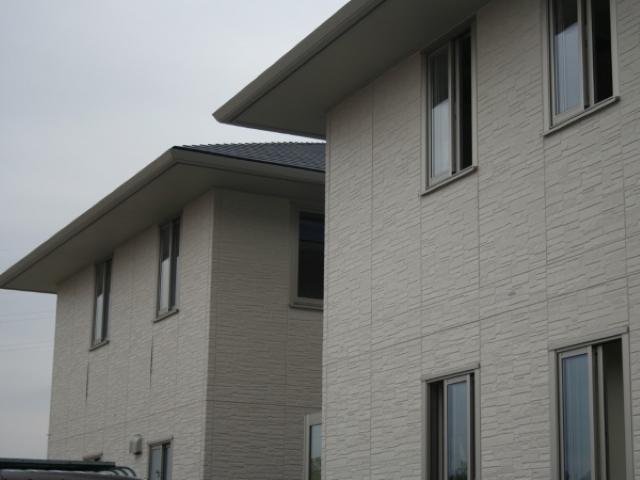
0601 Verification Experiment of Seismic Performance and Damping Effect of 2-story Steel Frame House
(Jun. 2006) ( Test Number: E200601 )Steel Frame Isolation/Damping Furniture - Input Ground Motion
-
Jun. 29 - K-NET Ojiya motion (the Mid Niigata prefecture Earthquake in 2004) 70%
Overall view: E200601_060629_1.mpeg
Living room at the 1st floor of seismic control housing: E200601_060629_2.mpeg
Kids room at the 2nd floor of earthquake-resistant housing: E200601_060629_3.mpeg
-
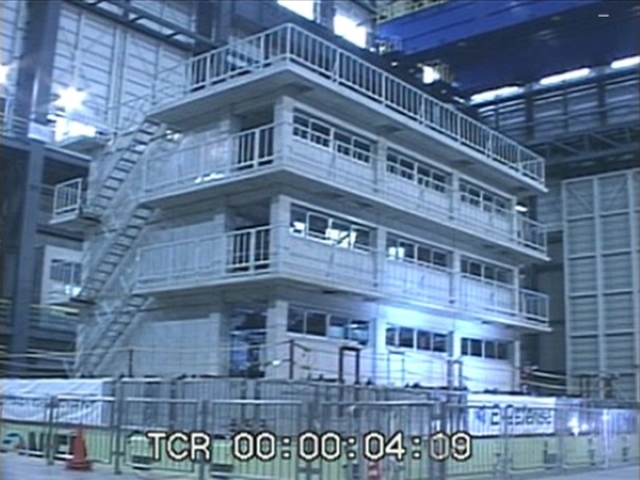
0604 Experiment of 3-stories RC Building imitating School Structure
(Sep. - Oct. 2006) ( Test Number: E200604 )Reinforced Concrete Furniture - Input Ground Motion
-
Oct. 2, Unreinforced specimen - JMA Kobe motion (the 1995 Southern Hyogo Prefecture Earthquake) 100%
E200604_061002.wmv
Nov. 1, Retrofit specimen - JMA Kobe motion 130%
E200604_061101.wmv
-
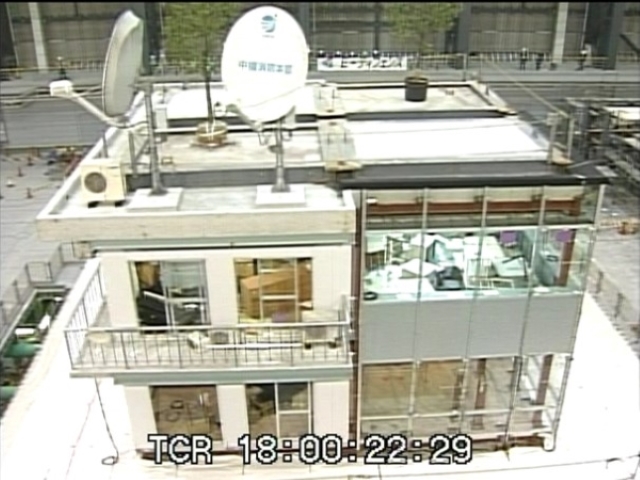
0608 Examination of Destruction of Non-structural Members and Fall of Utensils by Long-period Earthquake Ground Motion in High-rise Building
(Mar. 2007) ( Test Number: E200608 )Non-structural Furniture - Input Ground Motion
-
Mar. 29 - Expected ground motion from a scenario Nankai earthquake (continued period: 180 seconds)
E200608_070329.wmv
-

0704 7-story XLam Wood Panel Building (Japan-Italy Collaborative Research)
(Oct. 2007) ( Test Number: E200704 )Timber Furniture - Input Ground Motion
-
Oct. 23 - JMA Kobe motion (1995 Southern Hyogo Prefecture Earthquake) 100%
Panoramic view (skew): E200704_071023_1.wmv
7F (inside of the room): E200704_071023_2.wmv
-
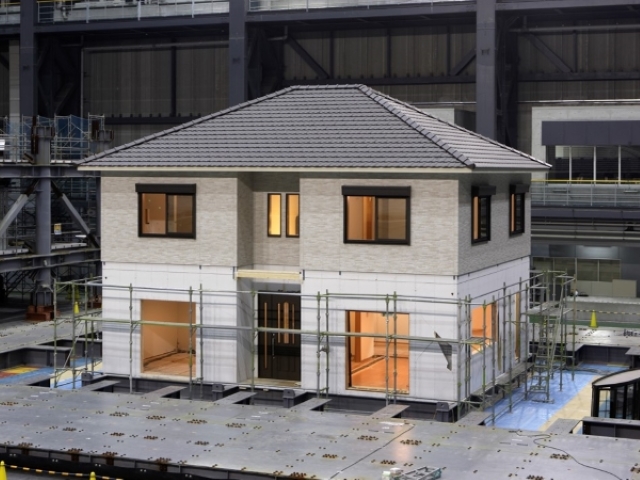
0706 Experiments on Seismic Performance of 2-story Wooden Houses
(Jan. 2008) ( Test Number: E200706 )Timber Furniture - Input Ground Motion
-
Jan. 10, Wooden house with seismic grade 2 - JMA Kobe motion (the 1995 Southern Hyogo Prefecture Earthquake) 100%
Bird view: E200706_080110_1.mpg
Column base at the 1st floor: E200706_080110_2.mpg
Living room: E200706_080110_3.mpg )
-
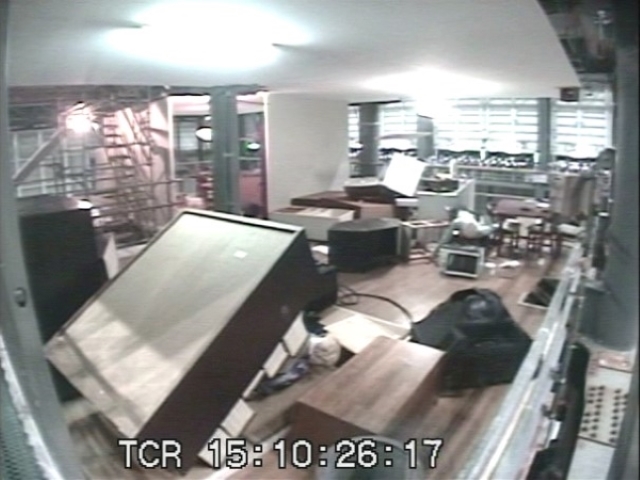
0707 Experimental Study on the Safety and Functionality of Indoor Spaces in High-rise Buildings during Large-amplitude Motion
(Jan. 2008) ( Test Number: E200707 )Furniture - Input Ground Motion
-
Jan. 24 - Expected ground motion from a scenario Nankai earthquake
E200707_080124.wmv
Conclusion paper: E200707_2.pdf
-
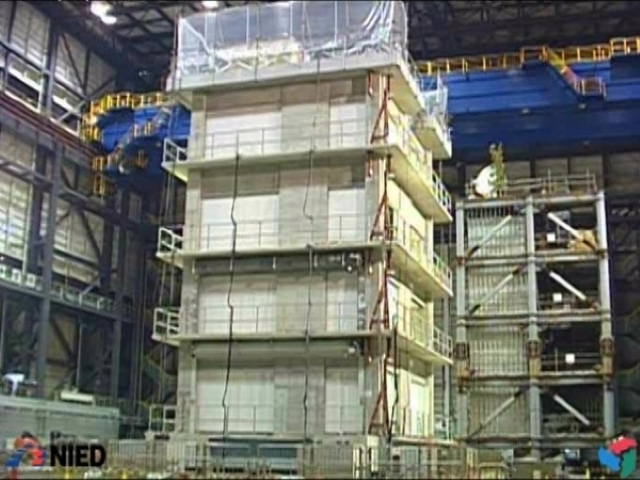
0805 Experiment to Evaluate Maintenance of Functions of Important Facility, Medical Facility
(Dec. 2008 & Jan. 2009) ( Test Number: E200805 )Reinforced Concrete Isolation/Damping Equipment Furniture - Input Ground Motion
-
JMA Kobe motion (the 1995 Southern Hyogo Prefecture Earthquake) 80%,
near fault earthquake & Expected ground motion for Sannomaru area,
Nagoya from a scenario Tokai-Tonankai earthquake
Comparison of the fixed- and isolated-base structures
E200805_090122.wmv
-
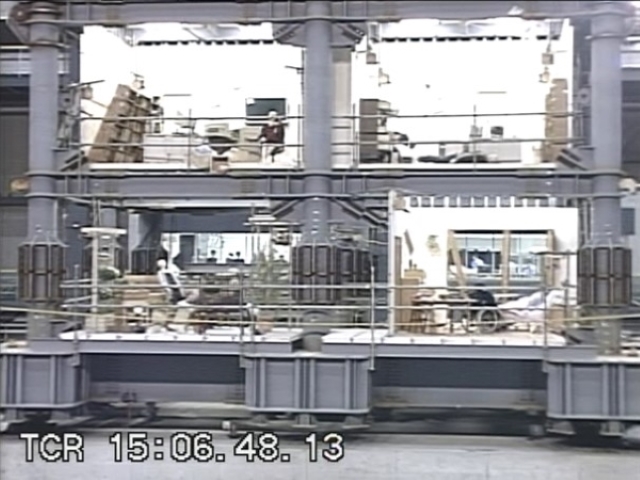
0806 Experimental study on Securing Indoor Safety in High-rise Buildings during Large Earthquakes
(Feb. 2009) ( Test Number: E200806 )Furniture - Input Ground Motion
-
Feb. 4 - Higashi Yuenchi motion 100%
Overall view: E200806_090204_1.mpeg
Amplifiers: E200806_090204_2.mpeg
Nursing room: E200806_090204_3.mpeg
Copy machine: E200806_090204_4.mpeg
- Summary
- E200806_2月6日公開実験.mpeg
-
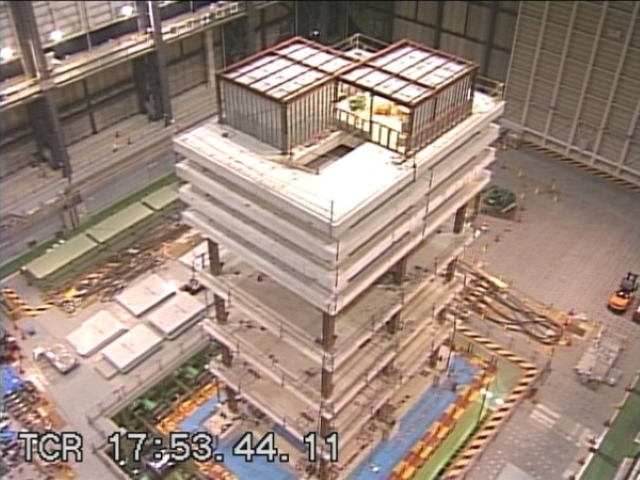
0905 Development of Response Mitigation Methods for High-rise Buildings subject to Long-period Ground Motion
(Sep. & Oct. 2009) ( Test Number: E200905 )Steel Frame Furniture - Input Ground Motion
-
Case 1 :
Sep. 15 - Expected ground motion for Nagoya from a scenario Tokai-Tonankai earthquake
Overall view of test structure:E200905_case1-4.wmv
Steel frames in lower part: E200905_case1-12.wmv
Brace steel damper: E200905_case1-19.wmv
Steel damper in upper substitute layer: E200905_case1-24.wmv
Meeting room on the roof level corresponding to 19th floor: E200905_case1-room.wmv
Case 2 : Sep. 18 - Expected ground motion for Nagoya from a scenario Tokai-Tonankai earthquake
Overall view of test structure: E200905_case2-4.wmv
Steel frames in lower part: E200905_case2-12.wmv
Brace steel damper: E200905_case2-19.wmv
Meeting room on roof level corresponding to 19th floor: E200905_case2-room.wmv
Case 3 : Sep. 25 - Expected ground motion for Nagoya from a scenario Tokai-Tonankai earthquake
Overall view of test structure: E200905_case3-4.wmv
Steel frames in lower part: E200905_case3-12.wmv
Oil brace damper: E200905_case3-19.wmv
Office room on roof level corresponding to 19th floor: E200905_case3-room.wmv
Case 4 : Oct. 2 - Expected ground motion for Nagoya from a scenario Tokai-Tonankai earthquake
Overall view of test structure:E200905_case4-4.wmv
Dining room on roof level corresponding to 19th floor: E200905_case4-room.wmv
-
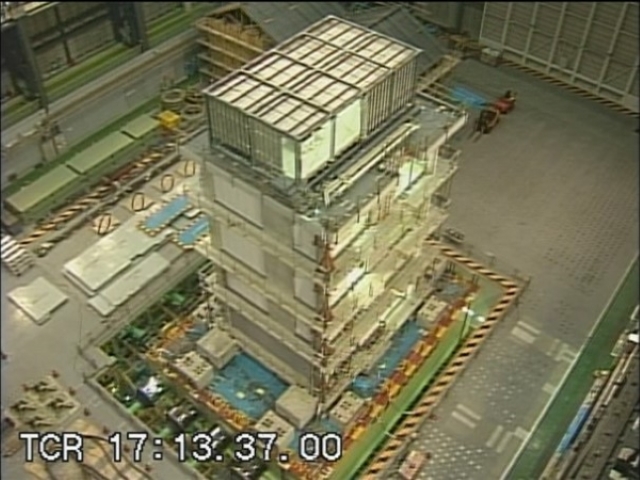
1002 Shaking Table Experiments for Enhancing the Functional Integrity of Important Facilities
(Aug. & Oct. 2010) ( Test Number: E201002 )Reinforced Concrete Isolation/Damping Equipment Furniture - Input Ground Motion
-
Oct. 10, Seismic-resistant structure - JMA Kobe motion (the 1995 Southern Hyogo Prefecture Earthquake) 2-horizontal directions 80%
Overall view: E201002_101021_1.mpeg
Staff station at the 2nd floor: E201002_101021_2.mpeg
Operation room at the 3rd floor: E201002_101021_3.mpeg
-
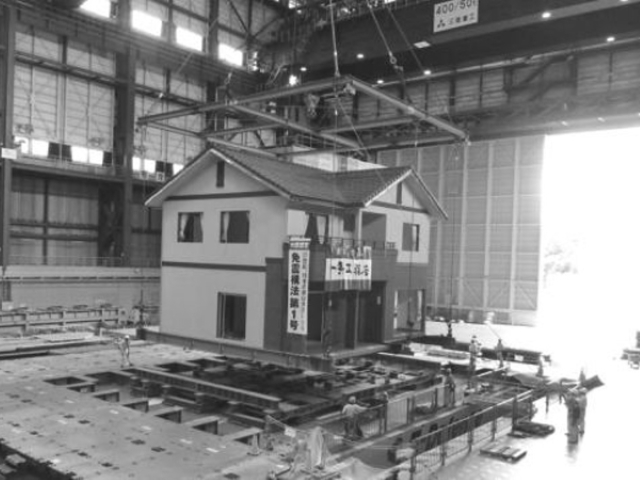
1101 Characteristics of Dynamic Behavior of Small-Scale Base-Isolated Structures under Long-Period Earthquake Motion, Part 1
(Jul. 2011) ( Test Number: E201101 )Timber Isolation/Damping Furniture - Input Ground Motion
-
Jul. 25, Isolated house with no displacement restraint device - Kashiwazaki motion (the Niigataken Chuetsu-oki Earthquake in 2007) 100%
Top view: E201101_110725_1.mpg
Around a base isolation device: E201101_110725_2.mpg
Indoor: E201101_110725_3.mpg
-
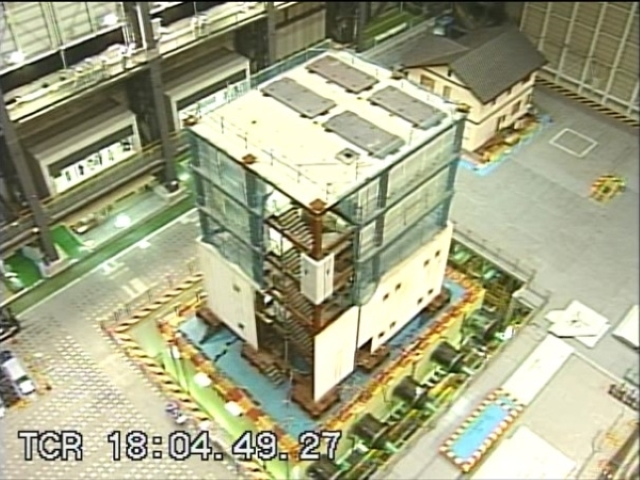
1102 Japan-US Collaborative Research on Innovative Seismic Isolation Solution
(Aug. 2011) ( Test Number: E201102 )Steel Frame Isolation/Damping Non-structural Furniture - Input Ground Motion
-
Aug. 18, 26 and 31 - K-NET Iwanuma motion (the 2011 off the Pacific Coast of Tohoku Earthquake) 70% and 100%:
E201102_1108en.mpeg
-
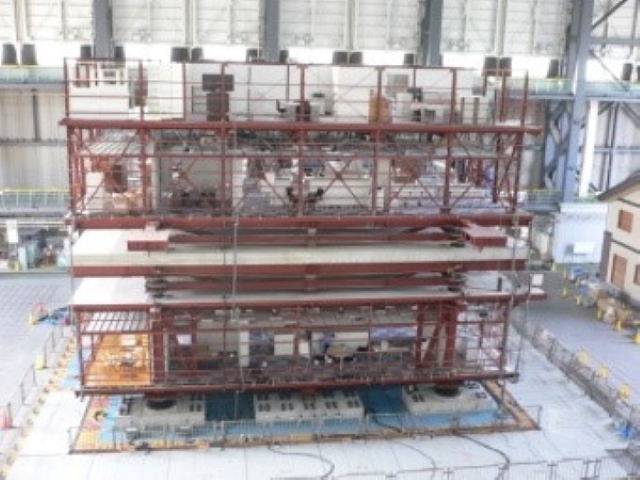
1103 Research and Development of the Measures for Damage Mitigation caused by Long-period Ground Motion
(Oct. 2011) ( Test Number: E201103 )Non-structural Equipment Furniture - Input Ground Motion
-
Oct. 7, Case 1 The high-rise building model
Nishi-Shinjuku motion (aftershock in the 2011 Off the Pacific Coast of Tohoku Earthquake) 330%
1007Shinjuku330_CCD1.wmv: E201103_1007_1.wmv
1007Shinjuku330_CCD4.wmv: E201103_1007_2.wmv
1007Shinjuku330_HV1.wmv: E201103_1007_3.wmv
1007Shinjuku330_HV3.wmv: E201103_1007_4.wmv
Oct. 12, Case 2 The low-rise building model
JMA Kobe motion (the 1995 Southern Hyogo Prefecture Earthquake) 75%
1012Kobe75_CCD1.wmv: E201103_1012_1.wmv
1012Kobe75_CCD4.wmv: E201103_1012_2.wmv
1012Kobe75_HV1.wmv: E201103_1012_3.wmv
1012Kobe 75_HV3.wmv: E201103_1012_4.wmv
Comparison between the high- and low-rise building models
Shinjuku330%_CCD.wmv: E201103_1007.wmv
Kobe25%_CCD.wmv: E201103_1012.wmv
-
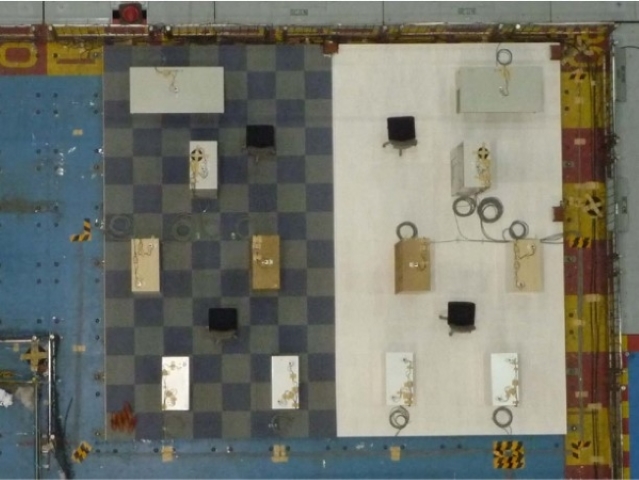
1108 Verification of Shake Table Performance and the Behaviors of Indoor Utensils under the Shake of 6 Degrees of Freedom
(Mar. 2012) ( Test Number: E201108 )Isolation/Damping Furniture - Input Ground Motion
-
Mar.15 - Kashiwazaki motion (the Niigataken Chuetsu-oki Earthquake in 2007)
Bird view: E201108_120315_1.mpg
Small-scale base-isolated structure model: E201108_120315_2.mpeg
-
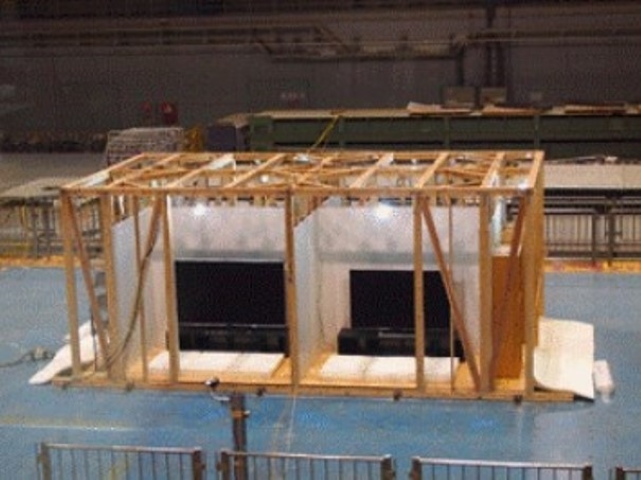
1307 Experiments to confirm Motion Reproducibility prior to Renovation Work on E-Defense Shake Table and to verify Performance under Future Anticipated Seismic Motions
(Mar. 2014) ( Test Number: E201307 )Furniture - Input Ground Motion
-
Mar. 19 - JR Takatori motion (the 1995 Southern Hyogo Prefecture Earthquake) 100%
Large televisions: E201307_140319_1.mp4
Bookshelves and refrigerators: E201307_140319_2.mp4
-
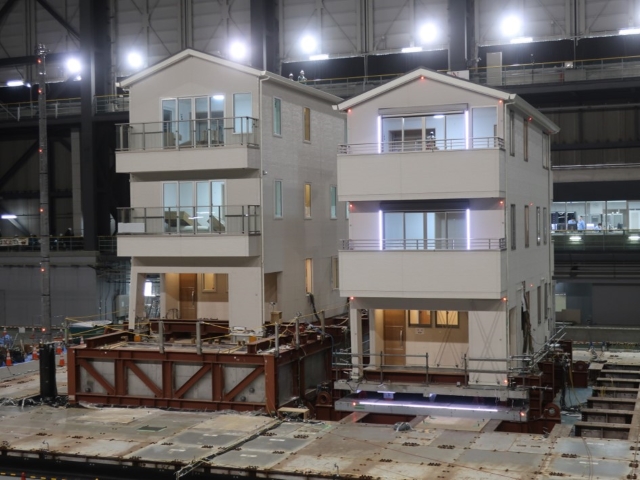
1806 E-Defense Experiment to verify the Function of 3-story Wooden Building including Underground Piping Equipment
(Jan. & Feb. 2019) ( Test Number: E201806 )Timber Geotech Isolation/Damping Non-structural Equipment Furniture - Input Ground Motion
-
Jan. 31 - JMA Kobe motion (the 1995 Southern Hyogo Prefecture Earthquake) 100%
Overall view from North E201806_190131_1.mp4
Overall view from South: E201806_190131_2.mp4
Dining room at the first floor of the isolated house: E201806_190131_3.mp4
Bedroom at the second floor of the seismic-resistant house: E201806_190131_4.mp4
-
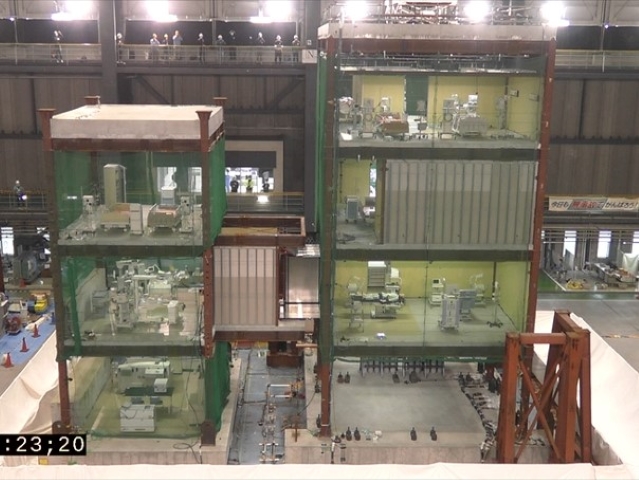
2003 Holistic Seismic Assessment of Critical Buildings with Due Consideration of Non-Structural Component and Equipment
(Dec. 2020) ( Test Number: E202003 )Steel Frame Isolation/Damping Non-structural Equipment Furniture - Input Ground Motion
-
Dec. 8 - JMA Kobe motion (the 1995 Southern Hyogo Prefecture Earthquake), 50% in X- and Y-dir., and 100% in Z-dir.
Overall view: E202003_201208_1.wmv
Operating room at the 3rd floor of earthquake-resistant building: E202003_201208_2.wmv
Dialysis room at the 3rd floor of seismic isolation building: E202003_201208_3.wmv
-
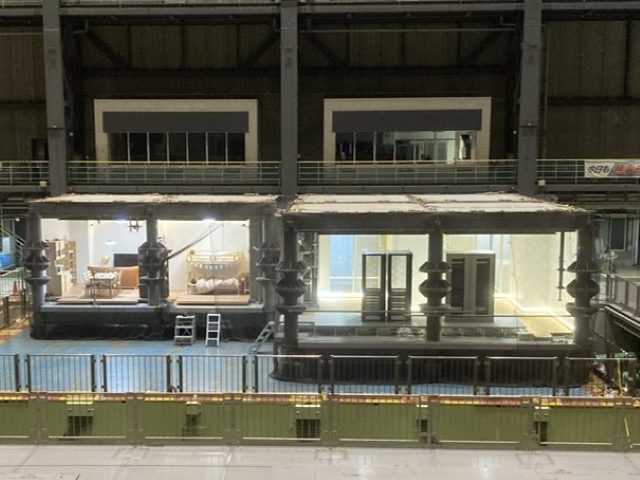
2104 E-Defense Experiment for Earthquake Damage Mitigation and Damage Assessment for Indoor Spaces and Functions
(Dec. 2021 & Jan. 2022) ( Test Number: E202104 )Non-structural Equipment Furniture - Input Ground Motion
-
Jan. 19 - JMA Kobe motion (the 1995 Southern Hyogo Prefecture Earthquake) 75%:
E202104_220119.wmv
-
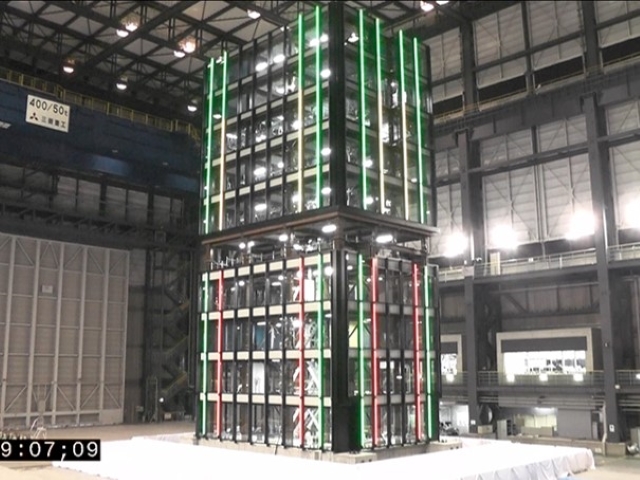
2204 Shake-table Test for Assessing Dynamic Characteristics of Building Structures using a 10-story Steel Office Building
(Feb. 2023) ( Test Number: E202204 )Steel Frame Non-structural Equipment Furniture - Input Ground Motion
-
Feb. 17 - JMA Kobe motion (the 1995 Southern Hyogo Prefecture Earthquake) 100%: E202204_230217.wmv
0601
Verification Experiment of Seismic Performance and Damping Effect of 2-story Steel Frame House
(Jun. 2006) (
Test Number: E200601 )
【Facility Rental Experiment Conducted by Daiwa House Industry Co., Ltd.】
In recent years, housing has been required to have seismic performance capable of withstanding earthquakes of the same intensity as the 1995 Southern Hyogo Prefecture Earthquake without collapsing. While this performance far exceeds design standards, if non-structural components can contribute to seismic performance, the load on the building structure can be reduced, making it possible to achieve the above performance. On the other hand, if the rigidity of the building increases significantly due to non-structural components, localized large stresses may act on the structure, potentially leading to a decrease in the building's seismic performance. To verify the above, experiments were conducted on each component, and based on the results, modeling and response analysis were performed. However, it is currently challenging to appropriately evaluate the combined effects of components and scale effects. Therefore, to understand the stiffness and damping of residential buildings and to develop numerical models, shake table tests were conducted on actual buildings using E-Defense.
Detailed information and acquired data and images from this experiment are available in E-Defense Data Archive, ASEBI.
DOI: https://doi.org/10.17598/NIED.0020-E200601
Application for Use of Video Materials
×
0604
Experiment of 3-stories RC Building imitating School Structure
(Sep. - Oct. 2006) (
Test Number: E200604 )
As a part of “Special Project for Earthquake Disaster Mitigation in Urban Areas,” supported by the Ministry of Education, Culture, Sports, Science and Technology (MEXT), shaking table experiments of 3-story reinforced concrete (RC) school buildings was conducted under the leadership of Prof. Toshimi Kabeyasawa of Earthquake Research Institute, the University of Tokyo. The main objectives were to validate input dissipation and seismic retrofit effect. The test specimens were two 3-story RC building structures. One was a bare RC specimen, simulating an old and non-ductile school building. The other was a retrofit specimen, which was constructed in the exactly same design as the bare RC specimen but strengthened with attached steel braces. Those test structures were constructed on a pool-shaped container each which were simulating the flexible boundary condition of the spread foundation and neighborhood soils.
Detailed information and acquired data and images from this experiment are available in E-Defense Data Archive, ASEBI.
DOI: https://doi.org/10.17598/NIED.0020-E200604
Experiment Overview: E200604.pdf
Application for Use of Video Materials
×
0608
Examination of Destruction of Non-structural Members and Fall of Utensils by Long-period Earthquake Ground Motion in High-rise Building
(Mar. 2007) (
Test Number: E200608 )
A full-scale test structure which was partially extracted from a high-rise building was shaken to reproduce the floor response and story drift. The experiment was conducted in order to clarify those phenomena which may occur in and outside of high-rise buildings under a long-period ground motion. Damage of nonstructural components including exterior wall and ceiling as well as dangerous behavior including overturning and scattering of fixtures and fittings were observed in the test structure. Adopted earthquakes were Nankai earthquake expected in near future and the 1995 Southern Hyogo Prefecture Earthquake.
Detailed information and acquired data and images from this experiment are available in E-Defense Data Archive, ASEBI.
DOI: https://doi.org/10.17598/NIED.0020-E200608
Experiment Overview: E200608.pdf
Application for Use of Video Materials
×
0704
7-story XLam Wood Panel Building (Japan-Italy Collaborative Research)
(Oct. 2007) (
Test Number: E200704 )
As a part of international collaborative research of NIED and CNR-IVALSA “Istituto per la Valorizzazione del Legno e delle Specie Arboree-Trees and Timber Institute - Firenze ITALY”, a shaking experiment of full-scale 7-story wood structure was conducted. This was a part of SOFIE project, PI : Professor Ario Ceccotti, which was CNR-IVALSA leading project to develop the construction method by cross laminate panel, XLam: 7 cm to 20 cm thick laminated panel made of 2 cm thick piece of wood bonded alternately and thickly without any interspace.
A test structure was timber box-frame construction which was 23.5 m height, 7.5 m width, 15 m depth and total weight 285 tonf. The test structure was shaken by the JMA Kobe record (1995 Southern Hyogo Prefecture Earthquake), and the response of the structure under the severe motion was investigated.
Application for Use of Video Materials
×
0706
Experiments on Seismic Performance of 2-story Wooden Houses
(Jan. 2008) (
Test Number: E200706 )
【Facility Rental Experiment Conducted by Tama Home Co., Ltd】
In recent years, seismic performance has come to be one of the key considerations when purchasing a home. To minimize casualties and property damage caused by earthquakes, it is essential for home builders to continue constructing and supplying homes with high seismic performance. With this in mind, the E-Defense experiment was conducted to demonstrate that homes can withstand major earthquakes anticipated in the future without collapsing. As a test specimen, a two-story wooden frame house was constructed using a standard detached house with a floor plan of 8 m × 10 m, a first-floor area of 80 m2, and a second-floor area of 72 m2.
Initially, the structure with seismic grade 3 or higher was subjected to seismic shaking, followed by the removal of some diagonal bracing to simulate seismic grade 2 conditions, after which shaking tests were conducted. The results of the experiments indicated that non-structural components may significantly influence the overall structural performance of the house, among other findings.
Detailed information and acquired data and images from this experiment are available in E-Defense Data Archive, ASEBI.
DOI: https://doi.org/10.17598/NIED.0020-E200706
Application for Use of Video Materials
×
0707
Experimental Study on the Safety and Functionality of Indoor Spaces in High-rise Buildings during Large-amplitude Motion
(Jan. 2008) (
Test Number: E200707 )
A large-amplitude floor response of a high-rise building was reproduced by using 5-story steel frame test structure with two amplifying layers comprised of rubber bearings and concrete slab.
Realistic conditions of residential room as well as office room were reproduced and a tuned synthetic ground motion was input to the shaking table. The large-amplitude floor response corresponding to the maximum displacement of 1.5 m was reproduced in the test structure of 5-story frame. The response of the test structure was tuned to represent the floor response of the 30th floor of a 30-story high-rise building which was subjected to synthetic ground motion for Nagoya from a scenario Tokai-Tonankai earthquake. Dangerous phenomena in the office room, residential room, kitchen and living room were clarified and the resistant measure prepared in the same type of rooms showed significant improvement in terms of safety.
Detailed information and acquired data and images from this experiment are available in E-Defense Data Archive, ASEBI.
DOI: https://doi.org/10.17598/NIED.0020-E200707
Experiment Overview: E200707_1.pdf
Application for Use of Video Materials
×
0805
Experiment to Evaluate Maintenance of Functions of Important Facility, Medical Facility
(Dec. 2008 & Jan. 2009) (
Test Number: E200805 )
Shaking table experiments had been conducted to evaluate ability of functional maintenance of medical facilities under earthquake disaster. A full-scale 4-story reinforced concrete building specimen simulating a hospital which contained a stuff station, a dialysis room, an operating room and a patient’s room each furnished with real medical equipment and furniture was set up to reproduce function of the medical facility more faithfully. Two hospitals of different kind of structure each, one for a base-fixed structure and the other for a seismic isolated structure, were compared and evaluated their functional maintenance by shaking table experiments. Comparative video of the experiments shows risk of the aseismic hospital and ability of functional maintenance of the seismic isolated hospital under a near fault earthquake ground motion. But even a seismic isolated structure which widely reduces damages against earthquake in general can be exposed to risk by long-period, long-duration earthquake ground motion such as synthetic ground motion for Sannomaru area, Nagoya from a scenario Tokai-Tonankai earthquake if one fails to take earthquake countermeasures.
Detailed information and acquired data and images from this experiment are available in E-Defense Data Archive, ASEBI.
DOI: https://doi.org/10.17598/NIED.0020-E200805
Experiment Overview: E200805.pdf
Application for Use of Video Materials
×
0806
Experimental study on Securing Indoor Safety in High-rise Buildings during Large Earthquakes
(Feb. 2009) (
Test Number: E200806 )
Since the 1995 Southern Hyogo Prefecture Earthquake, significant casualties have been caused by the overturning of furniture and fixtures during major earthquakes. Therefore, it is extremely important to ensure not only the seismic performance of buildings but also the safety of the rooms inside. In particular, in the upper floors of super-high-rise buildings, the shaking that propagates and amplifies through the building can continue for an extended period, potentially increasing the risk of damage inside the rooms. Based on the above, in collaboration with Hyogo Prefecture, E-Defense experiments were conducted to evaluate indoor safety in high-rise buildings. Furniture and office equipment were installed inside a test specimen with extremely high rigidity, designed for verifying the performance of the E-Defense shake table, to replicate residence spaces and offices. Additionally, to reproduce the large, slow-moving motions of high-rise buildings, amplifiers consisting of two layers of seismic isolation devices were installed beneath the test specimen. By inputting seismic motions observed during the 1995 Southern Hyogo Prefecture Earthquake and those assumed for the Nankai Trough Earthquake into a numerical analysis model of a super-high-rise building, the response motion of the upper floors was calculated and input into the test specimen. Useful image data on the damage conditions inside the building, as well as the effectiveness of overturning prevention measures, has been obtained.
Detailed information and acquired data and images from this experiment are available in E-Defense Data Archive, ASEBI.
DOI: https://doi.org/10.17598/NIED.0020-E200806
Application for Use of Video Materials
×
0905
Development of Response Mitigation Methods for High-rise Buildings subject to Long-period Ground Motion
(Sep. & Oct. 2009) (
Test Number: E200905 )
The test structure was designed to reproduce the seismic response of an 80-m-tall, 21-story building. The lower four stories of the test structure were constructed as an actual steel frame. Substitute layers, which consisted of concrete slabs and rubber bearings, were placed above the steel frame to simulate the 5th to 21st floors of the building. The structure was subjected to a series of synthetic long-period ground motions: one for Tokyo from a scenario Tokai earthquake and another for Nagoya from a scenario Tokai-Tonankai earthquake.
Detailed information and acquired data and images from this experiment are available in E-Defense Data Archive, ASEBI.
DOI: https://doi.org/10.17598/NIED.0020-E200905
Experiment Overview: E200905_1.pdf
、E200905_2.pdf
Application for Use of Video Materials
×
1002
Shaking Table Experiments for Enhancing the Functional Integrity of Important Facilities
(Aug. & Oct. 2010) (
Test Number: E201002 )
In the event of a major earthquake in an urban area, it is important to maintain and continue urban functions such as politics, economy, medical care, and information distribution even after the disaster. However, the functional integrity of important facilities that constitute these urban functions is mostly unknown, and effective methods to enhance their functional integrity have not been adequately established. Therefore, as part of the “Special Project for Earthquake Disaster Mitigation in the Tokyo Metropolitan Area” commissioned by the Ministry of Education, Culture, Sports, Science and Technology (MEXT), a series of E-Defense experiments were conducted to investigate the functional integrity of important facilities with seismic-resistant and seismic-isolation structures.
The test specimen was a four-story reinforced concrete (RC) structure modeled a typical medical facility, with actual span and floor heights. First, an experiment was conducted on the seismic isolation structure by installing seismic isolation devices between the test specimen and the shaking table. Subsequently, the seismic isolation devices were removed, and the test specimen was bolted to the shaking table to conduct an experiment on the seismic-resistant structure. Main medical equipment and information and communication systems were installed in each room of the test structure, along with equipment such as sprinklers, fire hydrants, and medical gas pipes. During the shaking tests, short-period earthquake motions such as the El Centro and JMA Kobe motions, and long-period earthquake motions such as the San'no-maru motion were applied. The experiments provided various data and video footage regarding indoor and equipment damage in both earthquake-resistant and seismic isolation structures.
Detailed information and acquired data and images from this experiment are available in E-Defense Data Archive, ASEBI.
DOI: https://doi.org/10.17598/NIED.0020-E201002
Application for Use of Video Materials
×
1101
Characteristics of Dynamic Behavior of Small-Scale Base-Isolated Structures under Long-Period Earthquake Motion, Part 1
(Jul. 2011) (
Test Number: E201101 )
【Facility Rental Experiment Conducted by H.R.D. Singapore Pte. Ltd., Ichijo Housing Research Institute Co., and Ichijo Co., Ltd.】
To confirm the behavior of seismic isolation houses under inputs exceeding the movable range of the isolation devices, and to investigate the method that minimizes damage to the superstructure and interior furnishings while constraining displacement within the movable range, an E-Defense shaking table test was conducted. First, shaking tests were conducted without displacement restraint devices to confirm the maximum response displacement. Subsequently, shaking tests were conducted with several types of displacement restraint devices installed to verify the displacement restraint effect while also examining the deformation and impact of the superstructure when displacement was restrained. Additionally, shaking tests were conducted with the seismic isolation layer fixed in a non-seismic isolation state, and the behavior was compared with that of the seismic isolation structure combined with displacement restraint devices. The experimental results indicated that as the input level increased, the displacement restraint devices either failed or, while displacement restraint was achieved, the response acceleration of the superstructure significantly increased.
Detailed information and acquired data and images from this experiment are available in E-Defense Data Archive, ASEBI.
DOI: https://doi.org/10.17598/NIED.0020-E201101
Application for Use of Video Materials
×
1102
Japan-US Collaborative Research on Innovative Seismic Isolation Solution
(Aug. 2011) (
Test Number: E201102 )
In collaboration with the University of Nevada, Reno in USA and National Research Institute for Earth Science and Disaster Resilience, the shake table experiments on a base-isolated building were conducted to evaluate the effectiveness of seismic isolation technology. Specimen was a five-story steel building and isolation devices were installed at the base of the specimen. In the experiment, two different types of isolation system were used; 1) nine triple-pendulum bearings and 2) combination of five lead-rubber bearings and four cross linear sliders. Base-fixed specimen also excited to compare response of the specimen and behavior of furniture installed in the specimen. The record observed at K-NET Iwanuma station during the 2011 Off the Pacific coast of Tohoku earthquake was imposed. Duration of this record is about three minutes and it affects various structures because it contains long-period components, which resonate with base-isolated buildings, and short-period components, which affects low to middle height base-fixed buildings.
Detailed information and acquired data and images from this experiment are available in E-Defense Data Archive, ASEBI.
DOI: https://doi.org/10.17598/NIED.0020-E201102
Experiment Overview: E201102en.pdf
Application for Use of Video Materials
×
1103
Research and Development of the Measures for Damage Mitigation caused by Long-period Ground Motion
(Oct. 2011) (
Test Number: E201103 )
In this study, two cases were used for the experiment: a high-rise building model and a low-rise building model. The high-rise building model was based on a 30-story building with a height of 120 meters. The test specimen consisted of the lowest steel frame, which was designed to produce the same shaking as a 6-story high-rise building, and the two upper steel frames, which were designed to produce the same shaking as a 27-story and 28-story high-rise building. The remaining middle part was replaced with a heavy concrete slab and laminated rubber. In the low-rise building model, the middle part was fixed with steel plates to prevent the laminated rubber from working. The test specimen had the widest floor area of any of the previous experiments, and included office and residential spaces. The office space had a suspended ceiling, incorporating both the line ceiling that has been used in many buildings to date, and the grid ceiling, which is advantageous from the perspective of earthquake resistance. Furthermore, the ceiling also incorporated general equipment such as air conditioning units, as well as firefighting equipment such as sprinklers, fire alarms and emergency lighting, reproducing the same equipment functions as in a real building.
Detailed information and acquired data and images from this experiment are available in E-Defense Data Archive, ASEBI.
DOI: https://doi.org/10.17598/NIED.0020-E201103
Experiment Overview: E201103.pdf
Application for Use of Video Materials
×
1108
Verification of Shake Table Performance and the Behaviors of Indoor Utensils under the Shake of 6 Degrees of Freedom
(Mar. 2012) (
Test Number: E201108 )
Since seismic motions that exceeded the E-Defense's capacity (maximum acceleration and duration) were observed during the off the Pacific coast of Tohoku Earthquake, the reproducibility of large acceleration and long duration seismic motions within the performance limitations of the E-Defense was evaluated. In addition, to effectively utilize the 6-DOF shaking capability of E-Defense, the characteristics of the shaking table itself were evaluated for a wide variety of shaking including vertical and pitching motion. In addition, by focusing on the interior space, the effects of rotational and vertical motion on the behavior of equipment, fixtures, etc. were clarified. Experimental method: A floor assembly was installed in a 10m x 7.5m area of the shake table, and the floor finish was tile carpet and homogeneous vinyl tiles. Furniture and fixtures (6 short cabinets, 2 bookcases, 2 cupboards, and 2 desks) were placed on the floor, and the furniture was loaded with concrete bricks for book loads. Servo accelerometers and crash test accelerometers were installed on the fixtures to determine their behavior.
【Shaking Table Sharing Test by H.R.D. Singapore Pte. Ltd.】 “Characteristics of Dynamic Behavior of Small-Scale Base-Isolated Structures under Long-Period Earthquake Motion, Part 3“
With the aim of establishing “displacement control technology” to prevent large displacements of small-scale seismic isolation structures beyond their design clearances, a shaking table test was conducted assuming that it is difficult to widen the clearance in one direction of the site, but that the clearance can be widened significantly in the other three directions. Specifically, the damper forces are provided in only one direction where it is difficult to widen the clearance, and almost no damper forces are provided in the opposite direction. The final response displacement, response acceleration, etc. during 6-DOF excitation are verified.
Detailed information and acquired data and images from this experiment are available in E-Defense Data Archive, ASEBI.
DOI: https://doi.org/10.17598/NIED.0020-E201108
Application for Use of Video Materials
×
1307
Experiments to confirm Motion Reproducibility prior to Renovation Work on E-Defense Shake Table and to verify Performance under Future Anticipated Seismic Motions
(Mar. 2014) (
Test Number: E201307 )
【Experiment in renting extra space by Kitagawa Industries Co., Ltd.】
Prior to the renovation of the E-Defense shaking table, a shake table test was conducted to confirm the reproducibility of the input ground motion. At that time, the extra space on the shaking table was used to conduct verification tests on furniture and fixture anti-tip devices. Test specimens consisting of large televisions, bookshelves, refrigerators, and racks were placed on the table, and the performance of the anti-tip devices was verified by comparing cases with and without the devices.
Detailed information and acquired data and images from this experiment are available in E-Defense Data Archive, ASEBI.
DOI: https://doi.org/10.17598/NIED.0020-E201307
Application for Use of Video Materials
×
1806
E-Defense Experiment to verify the Function of 3-story Wooden Building including Underground Piping Equipment
(Jan. & Feb. 2019) (
Test Number: E201806 )
In the “Tokyo Metropolitan Resilience Project ” - a project subsidized by the Ministry of Education, Culture, Sports, Science and Technology - E-Defense is being used to collect and maintain data on the maintenance of building functions, including interior and exterior materials, furniture, fixtures, and piping, and on the seismic margin of buildings until they collapse, with the aim of quickly restoring urban functions in the event of a major earthquake, identifying damage, and carrying out repairs.
In this experiment, two three-story wooden houses were tested on a shake table: one with an earthquake-resistant structure that had been reinforced to improve its earthquake resistance, and the other with a seismic isolation structure, which is known to be effective for earthquake countermeasures, from the perspective of ensuring the living functions of residential buildings in densely populated residential areas. The size of the test specimen was 4.5 m x 10 m in plan and approximately 10 m in height. For the seismic-resistant structure, a large-scale soil container with internal dimensions of 7 m x 13 m and a height of 2.5 m was constructed, and a 1.3 m deep soil layer was built inside the container to faithfully reproduce the building conditions from the solid foundation to be constructed on top of the soil layer. Valuable data was collected by inputting observation waves from the 1995 Southern Hyogo Prefecture Earthquake, etc.
Detailed information and acquired data and images from this experiment are available in E-Defense Data Archive, ASEBI.
DOI: https://doi.org/10.17598/NIED.0020-E201806
Application for Use of Video Materials
×
2003
Holistic Seismic Assessment of Critical Buildings with Due Consideration of Non-Structural Component and Equipment
(Dec. 2020) (
Test Number: E202003 )
In the “Tokyo Metropolitan Resilience Project ” - a project subsidized by the Ministry of Education, Culture, Sports, Science and Technology - E-Defense is being used to collect and maintain data on the maintenance of building functions, including interior and exterior materials, furniture, fixtures, and piping, and on the seismic margin of buildings until they collapse, with the aim of quickly restoring urban functions in the event of a major earthquake, identifying damage, and carrying out repairs.
In this research project, with the aim of developing a system to support safe and efficient decision-making by hospital administrators in the aftermath of a disaster, a large-scale shaking table experiment was conducted on hospital buildings equipped with high-performance facilities. The experiment was designed to propose a method for quantitatively assessing the degree of functional loss immediately after an earthquake in regional core hospitals and other facilities expected to maintain continuous operations during disasters, thereby avoiding unnecessary confusion. Two test structures, a four-story earthquake-resistant building and a three-story earthquake-isolated building, are connected by a bridge corridor. Medical equipment was installed inside the test structures to reproduce the conditions of an actual medical facility. Based on the results of the experiment, this study proposes a quantitative evaluation method for determining the building collapse margin, identifying factors that cause a decline in hospital functions, evaluating the performance of individual high-performance facilities, and assessing the loss of facility functions.
Detailed information and acquired data and images from this experiment are available in E-Defense Data Archive, ASEBI.
DOI: https://doi.org/10.17598/NIED.0020-E202003
Application for Use of Video Materials
×
2104
E-Defense Experiment for Earthquake Damage Mitigation and Damage Assessment for Indoor Spaces and Functions
(Dec. 2021 & Jan. 2022) (
Test Number: E202104 )
This research aims to collect data on seismic damage to nonstructural members, indoor facilities, furniture, fixtures, etc., and to propose guidelines for damage verification methods, damage prevention methods, and seismic damage sensing methods. Specifically, a large shaking table test specimen that can reproduce damage caused by earthquake motion to various nonstructural members, indoor facilities, furniture, fixtures, etc. (a test unit that can be used repeatedly by replacing nonstructural members, indoor facilities, furniture, fixtures, etc. installed inside it for each test while the main structural members remain undamaged) was prepared and tested for various types of earthquake motion. The data on damage to each nonstructural member under various earthquake ground motions would be collected. Furthermore, these data sets have been developed and examined with the aim of constructing a damage monitoring method.
In order to achieve the objectives of this research, large-scale shaking table experiments were conducted to evaluate damage to indoor spaces under various seismic motions and to obtain data related to post-earthquake business continuity and so on.
Detailed information and acquired data and images from this experiment are available in E-Defense Data Archive, ASEBI.
DOI: https://doi.org/10.17598/NIED.0020-E202104
Application for Use of Video Materials
×
2204
Shake-table Test for Assessing Dynamic Characteristics of Building Structures using a 10-story Steel Office Building
(Feb. 2023) (
Test Number: E202204 )
To save lives and keep society and the economy going in the event of a big earthquake like the one expected in the Nankai Trough in the near future, it is essential to get ready now and have a plan for after the earthquake so decisions can be made quickly. The National Research Institute for Earth Science and Disaster Resilience is developing a “dynamic characteristic evaluation method” that assesses the dynamic characteristics of buildings, such as their shaking period and ease of settling, based on their shaking patterns. To this end, a joint research project with a private company is underway to develop exterior materials (LED light alert system) that incorporate sensors to measure building shaking and LED lights that instantly display the measurement and evaluation results. Here, shake table tests were conducted to verify and validate the dynamic characteristic evaluation method and LED light alert system. The test specimen was a full-scale 10-story office building with a floor area of 12.0 m × 8.0 m, 10 stories, a height of 26.9 m, and a weight of approximately 700 tons. In the experiments, the test specimen was subjected to repeated small earthquakes with seismic intensities of 2 to 4 and large earthquakes with seismic intensities exceeding 5 to capture changes in dynamic characteristics. An LED light alert system was also installed on the test specimen to demonstrate the immediate light emission display of deformations. The results of the experiments demonstrated that the developed dynamic characteristic evaluation method could capture changes in dynamic characteristics, and that the LED light alert system could accurately measure building deformation and display it in real time using LED lights. Additionally, through a framework for joint research and the provision of surplus space, various interior materials, furniture, fixtures, and equipment were installed inside the building, enabling the acquisition of valuable data on the shaking, movement, and damage caused by earthquakes.
Detailed information and acquired data and images from this experiment are available in E-Defense Data Archive, ASEBI.
DOI: https://doi.org/10.17598/NIED.0020-E202204
Application for Use of Video Materials
×